


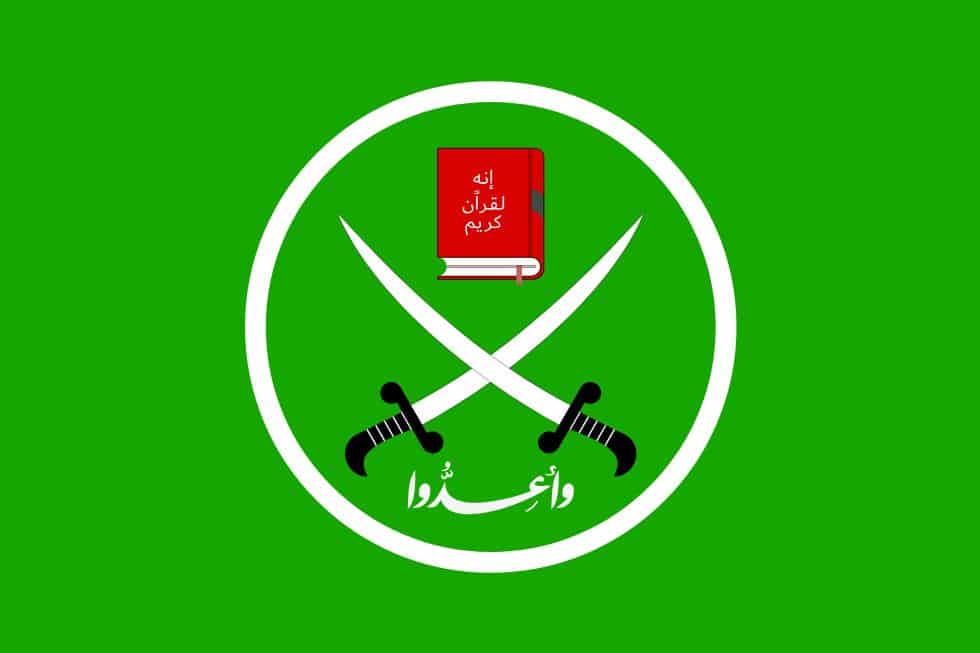



On March 9, US Senior Advisor for Arab and African Affairs, Massad Boulos, announced via his X account that the US designated the Sudanese Muslim Brotherhood (SMB) as a Specially Designated Global Terrorist (SDGT) and a Foreign Terrorist Organization (FTO) effective March 16. The announcement came as the latest attempt to reach a ceasefire agreement between rival Sudan factions in Cairo failed, and calls grew for sanctions on Islamist obstructionists.
The commander of the Sudanese Armed Forces (SAF) and chairman of the Transitional Sovereign Council (TSC), General Abdel Fattah al-Burhan, has continued to rely on Islamist “shadow brigades,” recruiters and financiers, which has placed him between a rock and a hard place. The Quad has explicitly condemned the role played by Islamist factions. Additionally, the US could grow impatient and add to the extensive sanctions list of TSC members and allies.
Al-Burhan recently declared he would not stop fighting until the rebels are defeated. Burhan was referring to the Rapid Support Forces (RSF), led by Mohamed Hamdan Dagalo “Hemedti,” a staunch opponent of the Sudanese Islamic Movement, which comprises Muslim Brotherhood (Kizan) elements and remnants of the Bashir regime. Burhan has often used this line in response to US and Quad statements pushing for a new round of peace talks, intentionally aiming to delegitimize the RSF leadership and echoing the position of Islamist leaders like Ali Ahmed Karti Mohammed. Karti denounced the Quad’s “blatant interference in Sudan’s internal affairs,” calling it “unacceptable bias” following the explicit use of language against Islamist groups.
Islamist factions and the STC
The Muslim Brotherhood (MB) in Sudan followed a path similar to that of the original organization in Egypt. Organized among university students in the 1950s, Hassan al-Banna’s ideology quickly spread under the guise of an Islamic Liberation Movement. Leaders like Hassan al-Turabi paved the way for the National Islamist Front (NIF), which helped bring Omar al-Bashir to power in 1989. The National Congress Party (NCP) is noted for having its origins in organizations led by al-Turabi, which kept Bashir in power until 2019. Remnants of the MB from the Bashir regime played a vital role in the 2021 coup that brought al-Burhan to power and derailed the transition under the civilian-led transitional council.
Since October 2021, when al-Burhan led a coup against the civilian-led transitional council, Islamist figures have worked arduously to pave the way for a return to power. Following mass arrests of civilian officials, including then Prime Minister Abdallah Hamdok, al-Burhan established the STC. Bashir’s former ruling party, the National Congress Party (NCP), has re-emerged behind the scenes as a pillar of Burhan’s power base and the SAF.
Sudanese observers have traced the formation of this new TSC and its composition to Islamist figures such as Ahmed Haroun, NCP leader and former governor of North Kordofan, and Karti, an extension of Hassan Turabi’s Muslim Brotherhood (Kizan) sphere. While initially behind the scenes — with Burhan as the façade of the new regime — other MB affiliates, such as Gebreil Ibrahim Mohamed Fediel (the current Minister of Finance, sanctioned by the US), have openly served alongside Burhan since 2023, when the armed forces split.
The RSF clashed with Burhan, primarily over the growing influence of the Kazan over the Council and the integration of military units. In April 2023, Hemedti split with Burhan and eventually dislodged the SAF and allies from Khartoum, making Port Sudan the base for the SAF and Kazan figures. Aside from Gebreil, other Islamist leaders eventually came to the forefront in the fight between SAF and RSF forces, leading military units, militia and acting as liaisons with new allies. Among these leaders are al-Misbah Abu Zaid Talha (leader of the US-sanctioned Al-Bara’ ibn Malik Brigade [BBMB]), Anas Omar, Hudhayfah Istanbul, Abu Aqla Keikel (leader of Sudan Shield Forces) and Abdel Hai Youssef.
The TSC, seen as an instrument for Islamist re-emergence in the political and military spheres, has also facilitated expanding relations with allies like Iran and Turkey. The relationship with Iran and Turkey has been fundamental to SAF military strength and the growth of Islamist militia like Al-Bara’ ibn Malik Brigade and the Sudan Shield Forces. The militia have been vital to Burhan’s fight against the RSF in Khartoum, Darfur and now in the south. There is no hiding the links between these Islamist militias and the SAF, as Sudanese observers have highlighted al-Misbah Abu Zaid Talha’s ties to MIS and the General Intelligence Service (GIS), particularly with Deputy GIS director Mohamed Abbas Al-Labib.
Burhan and Islamists reject peace
The imminent US listing of al-Kazan as an FTO was the result of a gradual approach aimed at restarting peace talks between Sudan’s rivals. As part of the Quad, along with Saudi Arabia, Egypt and the United Arab Emirates, the US administration has made multiple attempts to bring parties to the table, specifically in September 2025, when members called for a humanitarian ceasefire prior to escalation across Darfur. In that statement, the Quad explicitly noted that “Sudan’s future cannot be dictated by violent extremist groups part of or evidently linked to the Muslim Brotherhood.” The warning was later followed by the sanctions against Fediel and the BBMB.
Following a number of overtures by Quad members last year, Burhan made it absolutely clear that he would not engage in peace talks “with rebels” until the RSF was eliminated. As far back as 2023, the US has pointed to Sudan’s Islamists as major obstacles to peace, sanctioning Karti for “actively obstructing efforts to reach a ceasefire.” Figures like Karti rejected the Quad’s September statement as “blatant interference in Sudan’s internal affairs,” thereby forcing Burhan’s “hard no” on a number of ceasefire proposals.
In early November, just before the US-Saudi Arabia summit in Washington, DC, reports emerged that following Burhan’s rejection of the Quad proposal, it could not be “rule(d) out imposing it by force as violations and atrocities continue in a wide part of the country.”
The latest round of sanctions by the US not only illustrates growing frustration but also a wider understanding of the conflict. The US sanctioned a number of MB branches in early January, but in Sudan, the US widened the umbrella to include “the Sudanese Islamic Movement (SIM) and its armed wing, the al-Baraa Bin Malik Brigade.” The sanctions also linked Sudan’s Islamist to the Islamic Republic of Iran and the Islamic Revolutionary Guard Corps (IRGC).
The Sudan Tribune highlighted that the US listing did not directly mention the NCP linked to al-Turabi’s sphere, or even the Popular Congress Party (PCP). This may be part of the gradual approach employed by the US, reserving such groups for a later time in order to measure Burhan’s reaction and that of Islamist figures within Sudan and abroad.
The SDGT listing by the US will also have an impact on Burhan’s relations with Turkey and Qatar, and may halt the agreement with Pakistan for the delivery of weapons. The SAF has suffered a number of setbacks in recent months, and while Iran has scaled back military support for the SAF and militia since December 2025, Burhan and Islamist allies have opted to side with Iran during the ongoing conflict with Israel and the US, adding pressure on Port Sudan allies who may face consequences for their support of Tehran.
[Kaitlyn Diana edited this piece.]
The views expressed in this article are the author’s own and do not necessarily reflect Fair Observer’s editorial policy.
FO° Talks: Sudan’s Civil War Explained — RSF vs SAF, Darfur Crisis and Red Sea Geopolitics
In this episode of FO° Talks, Rohan Khattar Singh and Fernando Carvajal examine how Sudan’s civil war grew into a...
The UAE Fuels Moves to Ban the Muslim Brotherhood
United Arab Emirates (UAE) Foreign Minister Abdullah bin Zayed’s 2017 warning about Islamist extremism in Europe echoes today as Western...
The Cost of Silence: Why Global Inaction Is Betraying the People of Sudan
After three years of civil war in Sudan between the Sudanese Armed Forces and the Rapid Support Forces military groups,...
Support Fair Observer
We rely on your support for our independence, diversity and quality.
For more than 10 years, Fair Observer has been free, fair and independent. No billionaire owns us, no advertisers control us. We are a reader-supported nonprofit. Unlike many other publications, we keep our content free for readers regardless of where they live or whether they can afford to pay. We have no paywalls and no ads.
In the post-truth era of fake news, echo chambers and filter bubbles, we publish a plurality of perspectives from around the world. Anyone can publish with us, but everyone goes through a rigorous editorial process. So, you get fact-checked, well-reasoned content instead of noise.
We publish 3,000+ voices from 90+ countries. We also conduct education and training programs
on subjects ranging from digital media and journalism to writing and critical thinking. This
doesn’t come cheap. Servers, editors, trainers and web developers cost
money.
Please consider supporting us on a regular basis as a recurring donor or a
sustaining member.
Will you support FO’s journalism?
We rely on your support for our independence, diversity and quality.





Comment