






When the Asian Development Bank (ADB) and the Qatar Fund for Development (QFFD) signed a five-year memorandum of understanding (MOU) in Doha this month, the announcement was framed as a regional milestone. The agreement establishes a framework for cofinancing infrastructure projects across Asia and the Pacific, with energy listed among several priority sectors. It does not single out Indonesia, nor does it explicitly commit to supporting energy transition.
Still, for Indonesia, the partnership could matter a great deal if it is implemented with intention.
The MOU is a framework, not a project list. It specifies no funding volume, no country allocation and no thematic quotas. Instead, it allows QFFD to cofinance ADB-led projects using ADB’s existing pipelines, safeguards and relationships with recipient governments. Projects are expected to begin in 2026, following individual approvals by both institutions and host countries.
This structure gives the partnership flexibility. It also leaves outcomes largely contingent on choices yet to be made, particularly in large, energy-hungry countries like Indonesia.
Transition goes beyond financing
Indonesia’s energy transition remains uneven. Coal continues to dominate the power sector, renewable deployment lags behind stated targets and fiscal constraints limit the government’s ability to finance large-scale change. In this context, new development partnerships are often presented as potential solutions. But financing alone does not guarantee transition.
The ADB–QFFD partnership emphasizes concessional financing, typically in the form of loans with lower interest rates and longer maturities. These instruments can help close financing gaps, but they also add to public debt. For Indonesia — where energy transition investments often produce public rather than commercial returns — debt-heavy financing risks slowing progress rather than accelerating it.
If the partnership is to benefit Indonesia’s energy future, QFFD would need to go beyond concessional lending. Grants, equity participation and risk-sharing instruments would be better suited for renewable energy deployment, grid upgrades and early coal retirement. Without such flexibility, Indonesia may gain infrastructure, but not transition.
Challenges and opportunities
Coal remains the central constraint. Indonesia’s decision to halt the early retirement of the Cirebon-1 coal-fired power plant illustrated how fragile its transition commitments remain. Without retiring coal assets, emissions reductions will be marginal, regardless of new renewable investments.
While the MOU does not address coal explicitly, the partnership could support Indonesia’s transition if it aligns future financing with coal phase-down efforts. Financing new infrastructure alongside operating coal plants risks undermining climate and economic resilience objectives.
Governance will also determine whether Indonesia benefits. Under the agreement, ADB remains the lead implementing agency. QFFD can choose to be a passive financier or an active partner in project design and oversight. If it opts for the former, it will inherit ADB’s long-standing challenges, particularly around social safeguards and community engagement in large infrastructure projects.
A more active role for QFFD, as a project coordinator rather than merely a source of capital, could help improve project quality and accountability, especially in energy projects that affect land use and local livelihoods.
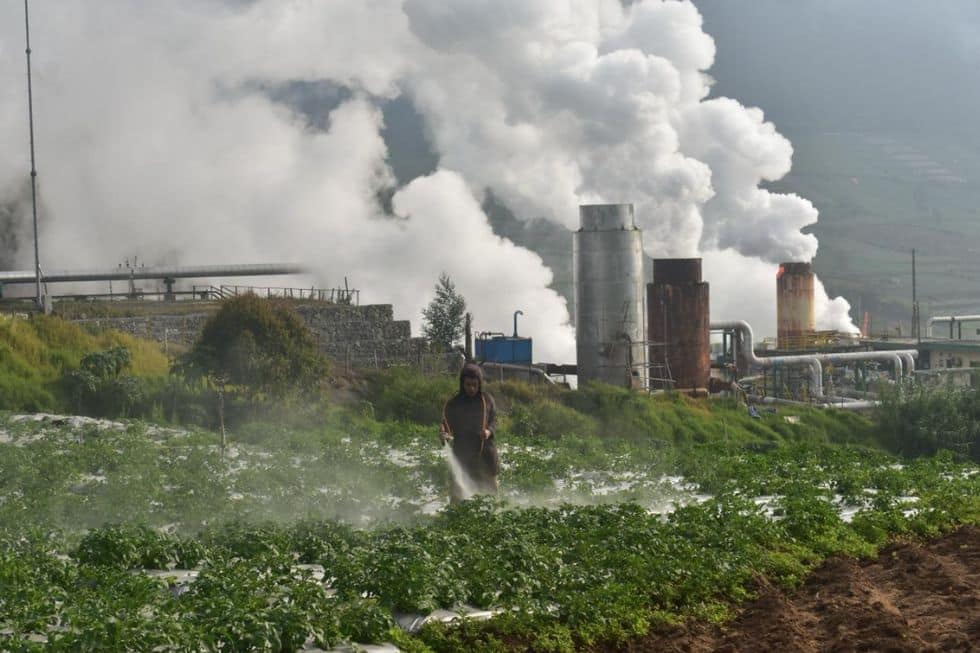
Project selection is another open question. ADB’s energy investments in Indonesia have historically favored capital-intensive projects such as geothermal power. Geothermal energy is considered an abundant renewable resource, but it often creates conflict with local communities in many areas. Meanwhile, distributed renewable solutions such as rooftop solar, community-scale solar and micro-hydropower remain underfinanced despite their suitability for Indonesia’s archipelagic geography.
The partnership could become an opportunity for Indonesia if project selection shifts toward these locally appropriate solutions. This would require a bottom-up approach, informed by community needs rather than institutional preferences.
Finally, who participates in decision-making matters. ADB typically works through central ministries, leaving subnational governments with limited influence. In a decentralized country like Indonesia, this approach often disconnects projects from local energy needs.
QFFD could encourage trilateral coordination among ADB, the central government and subnational authorities. Greater local involvement would increase the likelihood that projects support Indonesia’s actual energy transition rather than abstract development targets.
The ADB–QFFD partnership does not promise Indonesia an energy transition. But it creates a window. If financing moves beyond loans, if coal retirement is not sidelined, and if communities and local governments are meaningfully involved, the partnership could help Indonesia reshape its energy future. If not, it risks becoming another well-funded initiative that leaves the fundamentals unchanged.
[Kaitlyn Diana edited this piece.]
The views expressed in this article are the author’s own and do not necessarily reflect Fair Observer’s editorial policy.
The Green Swap: Recalibrating Sovereign Finance for Climate and Development Symbiosis
The “Green Swap” reframes sovereign finance by converting debt obligations into instruments that fund climate resilience and sustainable development. By...

Indonesia’s Coal Giants Are Losing Ground: Why the Time to Diversify Was Five Years Ago
Indonesian coal companies face falling exports and shrinking profits as global demand from China and India declines and renewable energy...
China and Indonesia Need to Overcome Coal
Even as sea levels rise across the globe, the island nation of Indonesia eyes a lucrative $1.2 billion deal to...

Support Fair Observer
We rely on your support for our independence, diversity and quality.
For more than 10 years, Fair Observer has been free, fair and independent. No billionaire owns us, no advertisers control us. We are a reader-supported nonprofit. Unlike many other publications, we keep our content free for readers regardless of where they live or whether they can afford to pay. We have no paywalls and no ads.
In the post-truth era of fake news, echo chambers and filter bubbles, we publish a plurality of perspectives from around the world. Anyone can publish with us, but everyone goes through a rigorous editorial process. So, you get fact-checked, well-reasoned content instead of noise.
We publish 3,000+ voices from 90+ countries. We also conduct education and training programs
on subjects ranging from digital media and journalism to writing and critical thinking. This
doesn’t come cheap. Servers, editors, trainers and web developers cost
money.
Please consider supporting us on a regular basis as a recurring donor or a
sustaining member.
Will you support FO’s journalism?
We rely on your support for our independence, diversity and quality.





Comment