


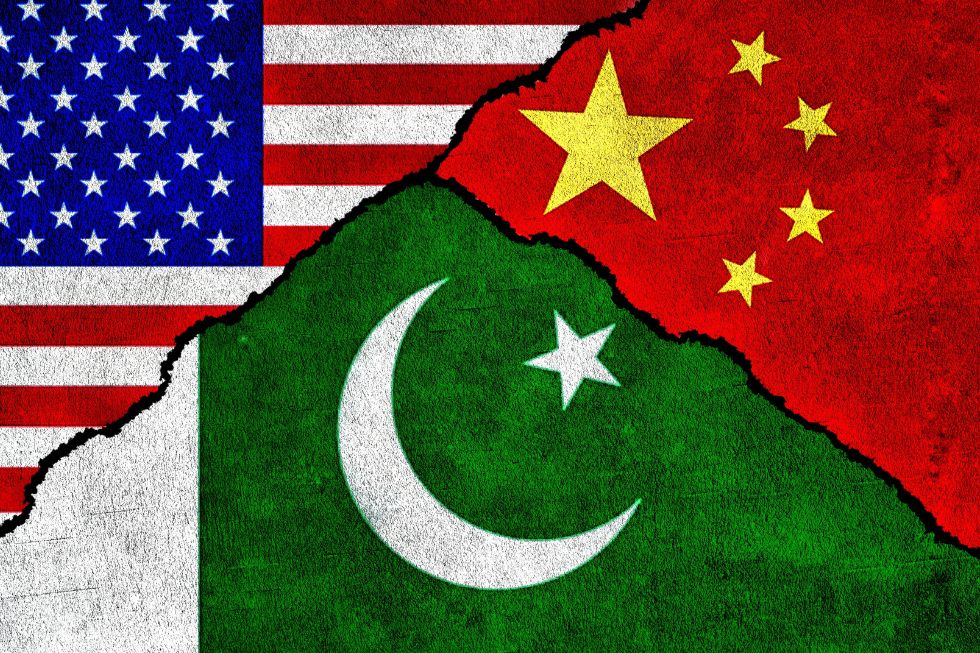



After the skirmish between India and Pakistan in May 2025, Pakistan became America’s new favorite ally — a strategic reset that came as a bolt out of the blue for many. With Pakistan basking in the glory of its military feat, a diplomatic spectacle unfolded, with US President Donald Trump and Pakistan Prime Minister Shehbaz Sharif as costars, showering each other with effusive praise.
From lauding Trump’s “peacemaker” role to floating a Nobel Peace Prize nomination and now jumping on the bandwagon of Trump’s adventurism — the “Board of Peace” — Pakistan has delivered masterful diplomacy, which, although glaringly obsequious, remains well reciprocated.
A strategic windfall for Islamabad
As Islamabad enjoys the perks of this upswing, the diplomatic fanfare remains a strategic hit. Not only have there been back-to-back high-level meetings between the top brass of both countries, but Pakistan is also set to receive US-made Advanced Medium Range Air-to-Air Missiles (AMRAAM) and a $1.2 billion disbursement from the International Monetary Fund (IMF).
Islamabad has also positioned itself as a nascent hub for cryptocurrency mining, as the Pakistan Virtual Asset Regulatory Authority recently reached an agreement with SC Financial Technologies. Eyeing Pakistan’s untapped geological potential worth $6 trillion, the US announced a $1.25 billion financing for critical minerals mining at Reko Diq in Balochistan — a project viewed as a strategic boon for Pakistan’s ailing economy.
With such geopolitical openings, one might question if the tides have actually turned in Pakistan’s favor after years of drift. While a major strategic win for Pakistan out of this detente is that it has regained relevance after a long hiatus and secured a seat at forums of multilateral gravity, this surface-level “bromance” remains, at best, transactional; tethered to Pakistan’s strategic utility, supported by pragmatic calculus.
Trump’s transactional pivot
By offering a lucrative trade deal to develop Pakistan’s oil reserves and reducing reciprocal tariffs to 19%, President Trump is nailing his colors to the mast. The US is mending fences with Pakistan to harness its energy resources and diversify supply chain networks in the Indo-Pacific to circumvent Chinese chokepoints.
Another scenario where the US wants to strike while the iron is hot is Pakistan’s engagement with the Gulf, especially since it recently signed a mutual defense pact with Saudi Arabia. By using Pakistan as a buffer state for its proximity to the region, the US not only aims to deter Iran and curtail Yemen with allies, but also to coordinate in the event of oil market shocks.
Trump’s pivot to Pakistan also left India in the lurch, and New Delhi continued to show open defiance by purchasing Russian oil. As the US–India liaison went awry, what was once America’s darling became Trump’s bete noire. Gone are the days when India was mollycoddled, as it now also faces Trump’s unpredictable “carrot and stick” approach, with the US reducing its “punitive tariff” to 18% exclusively on the condition of India’s commitment to stop purchasing Russian oil, which the Modi administration has not confirmed thus far.
Due to his proclivity for cowboy diplomacy, much of Trump’s second term is also marked by hackneyed appeals to American exceptionalism, a rhetoric that has thus far remained successful, albeit in stirring up a hornet’s nest in the geopolitical arena. Afterall, the fruits of his unilateralism are obvious — Gaza was razed, Venezuela occupied, Greenland is under gambit and Iran is faced with an imminent threat. This hegemonic hubris that the US currently carries should make any country wary of its unctuous support.
Given the confrontational tenor of Trump’s administration, Pakistan’s expectations should remain tempered. Islamabad is now faced with a Washington that weighs partnerships by what they bring to the table. Simply pitching itself as a hub of oil reserves, critical minerals or presenting itself as a willful participant in counterterrorism operations is not sufficient — Pakistan needs to deliver tangible results. Otherwise, this relationship will ebb from these halcyon days of bonhomie.
China: the enduring constant
In contrast to the tactical romance, Beijing has maintained an all-weather friendship with Islamabad throughout the course of history, particularly tilting the scales in its favor during the May 2025 Indo-Pak conflict itself. Not only does Pakistan stand as the largest recipient of Chinese defense hardware, but China also remains its largest trading partner.
Nevertheless, the Sino-Pak ties are not smooth sailing either. As Pakistan has become China’s largest creditor with $29 billion in loans, it now hovers at the precipice of a deadly debt-trap crisis. The partnership faces headwinds as a structural imbalance casts a shadow over economic relations. Regardless of the camaraderie, the escalating security dilemma, owing to insurgency in Balochistan, also remains a bone of contention.
Despite these challenges, however, the $65 billion China-Pakistan Economic Corridor (CPEC) is now in its second phase with enhanced strategic synergy. Under the Action Plan (2025-2029), it offers $8.5 billion in Chinese investments compared to a mere $1.25 billion in US financing.
As the strategic depth of the partnership covers a gamut of cooperation, its salience cannot be supplanted by the transient “honeymoon” phase that the United States has beguiled Pakistan into savoring — and Beijing has spared no effort to highlight the opportunism of such courtship.
Pakistan itself is well aware of the travails at the heart of this triangle. Allaying any concerns Beijing may have about Islamabad’s budding romance with Washington, Pakistan has reassured that this thaw will not eclipse its ties with China and will not provoke its longtime ally’s ire.
Beijing has also maintained high-level engagement with Islamabad as Chinese Foreign Minister Wang Yi and Pakistan Deputy Prime Minister Ishaq Dar co-chaired the 7th round of the Pakistan–China Foreign Ministers’ Strategic Dialogue, terming Pakistan–China friendship “vital” for regional peace and stability.
Navigating the great power tightrope
Now, whether this ironclad brotherhood between China and Pakistan will wane due to the revival of US–Pakistan ties remains to be seen. Sooner or later, it will face a reckoning in the wake of the great power competition.
Regardless, Pakistan should eschew entrapment in the US–China bifurcation that risks pulling it into the labyrinth of bloc politics. It should err on the side of caution. Severing ties with the US would limit Pakistan’s access to global financial institutions and security collaborations, while excessively pivoting towards China would expose Pakistan to economic vulnerabilities should CPEC investments yield limited success.
At this critical juncture, Pakistan needs to redefine the contours of engagement with both powers to reconcile the conflicting expectations and reject zero-sum alignments. The strategic sweet spot lies in maintaining hedging between these powers while also leveraging multivector diplomacy with other partners, predicated on the convergence of interests. Ultimately, Pakistan will have to play chess, not checkers, in this US-China tightrope game.
[Kaitlyn Diana edited this piece.]
The views expressed in this article are the author’s own and do not necessarily reflect Fair Observer’s editorial policy.
From Roads to Reform: China and Pakistan’s Expanding Economic Alliance
Pakistan’s Vision 2035, which aims to build a $1 trillion economy, is closely tied to its deepening friendship with China....
Cracks in the China–Pakistan Partnership: Revealing the Illusion
The China–Pakistan relationship appears strong but is deeply rooted in dependency, with China prioritizing its strategic interests. China treats Pakistan...
US Tilt Towards Pakistan Is A Tactical Power Game
Pakistan Army Chief Asim Munir’s US visit signals a revival of US-Pakistan relations at the detriment of India. The US,...
Support Fair Observer
We rely on your support for our independence, diversity and quality.
For more than 10 years, Fair Observer has been free, fair and independent. No billionaire owns us, no advertisers control us. We are a reader-supported nonprofit. Unlike many other publications, we keep our content free for readers regardless of where they live or whether they can afford to pay. We have no paywalls and no ads.
In the post-truth era of fake news, echo chambers and filter bubbles, we publish a plurality of perspectives from around the world. Anyone can publish with us, but everyone goes through a rigorous editorial process. So, you get fact-checked, well-reasoned content instead of noise.
We publish 3,000+ voices from 90+ countries. We also conduct education and training programs
on subjects ranging from digital media and journalism to writing and critical thinking. This
doesn’t come cheap. Servers, editors, trainers and web developers cost
money.
Please consider supporting us on a regular basis as a recurring donor or a
sustaining member.
Will you support FO’s journalism?
We rely on your support for our independence, diversity and quality.





Comment