


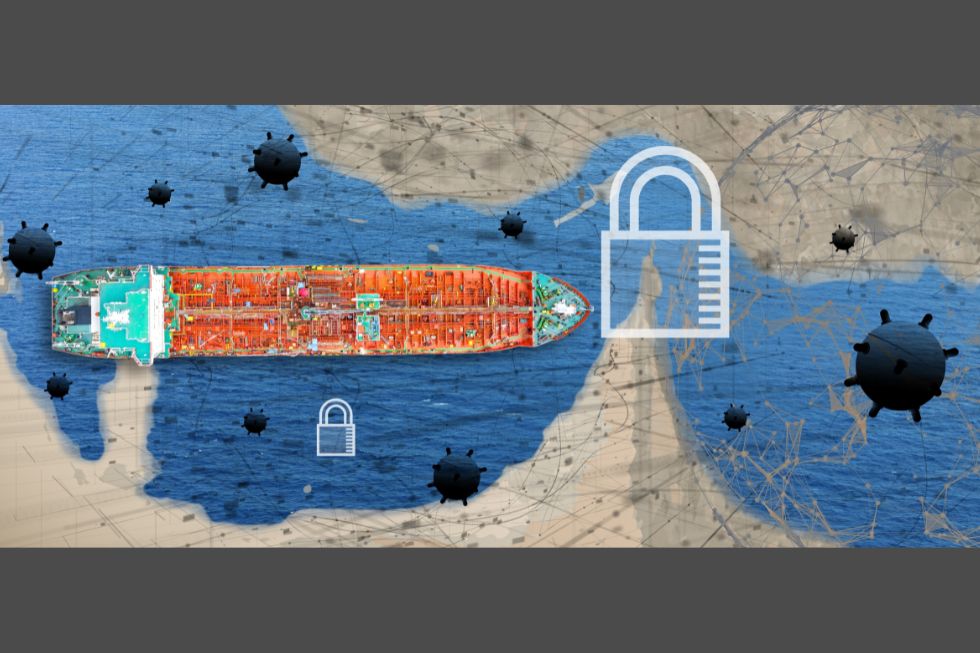



The escalating Hormuz Crisis of 2026 has transformed what was once a remote “tail risk,” confined to academic white papers and dismissed by financial markets, into a potent reality. The markets’ decades-long disregard for this vulnerability is over. For investors worldwide, the potential closure of this critical chokepoint is not just a regional issue, but a profound liquidity event capable of undermining the foundational structure of Western capital markets.
The rich Gulf funds face the risk of the great liquidation
The most immediate threat to consumers is the price of petrol — gas in the US — at the pump. However, there is a bigger threat lurking in the shadows for Western economies. Over the years, the Gulf monarchies have used their oil and gas revenues to create sophisticated sovereign wealth funds (SWFs). By 2024, these Gulf SWFs were managing $4 trillion, representing 38% of all global SWF assets.
Saudi Arabia’s Public Investment Fund (PIF) has put in $45 billion to become the anchor investor in the SoftBank Vision Fund, in addition to taking major stakes in Uber and Lucid Motors. In addition to technology, the PIF has made multibillion-dollar investments in gaming and sports, such as Electronic Arts, Nintendo and LIV Golf.
The Saudis have attracted attention, but Abu Dhabi is the true leader of the Gulf SWFs. This emirate has two SWFs. Abu Dhabi Investment Authority (ADIA) invests to create diversified long-term wealth, while Mubadala focuses on strategic industrial partnerships. A cursory look at ADIA’s website tells us that it invests 45–60% of its $990 billion capital in North America and 15–30% in Europe. ADIA’s investments range from equities and fixed income to hedge funds, real estate, private equity and infrastructure. Mubadala describes itself as a sovereign investor with an entrepreneurial mindset and has invested in US-based semiconductor chipmaker GlobalFoundries, Advanced Micro Devices (AMD) and the Carlyle Group.
Qatar is known for its massive trophy investments from Al Jazeera, a top global news organization, to Paris Saint-Germain, France’s top football club. The SWF, Qatar Investment Authority (QIA), has a portfolio that includes London’s Canary Wharf, stakes in the likes of German automaker Volkswagen, British bank Barclays and Anglo-Swiss multinational commodity trading and mining company Glencore.
Even tiny Kuwait is deeply invested in US Treasuries. The SWF, Kuwait Investment Authority (KIA), has aggressively invested in East Asia, but most of its assets are still in the US. Interestingly, KIA is a long-term major shareholder in Mercedes-Benz.
An oft-overlooked fact is that these Gulf funds have invested tens of billions of dollars in AI. Saudi PIF has a partnership with NVIDIA/AMD, Abu Dhabi’s Mubadala joined with BlackRock and Microsoft to create a $30 billion fund. This capital will fund massive AI data centers and the energy infrastructure to power them. Not to be left behind, the QIA invested in Anthropic’s $30 billion Series G round in early 2026.
After the 2007–09 Great Recession, the Gulf states have been global investors and creditors. They have been able to deploy capital in Western economies struggling with rising debt, stagnant wages and low growth. That may no longer be true. After the US and Israel attacked Iran, Tehran has blocked the Strait of Hormuz. No longer can these Gulf nations export oil and gas or import food. Note that these Gulf nations import almost all their food and depend on desalination for daily life. Gulf revenues have crashed and costs have soared. For the first time in decades, the Gulf states face a catastrophic resource crunch.
It is important to note that these Gulf monarchies run extremely generous welfare states. The rather small number of locals are used to massive state subsidies. Expats perform most of the work, from pilots at Emirates or Qatar Airways to workers on oil rigs. Feeding the local and expat population is essential to avoid social or political upheaval. So, the Gulf monarchies would be compelled to cannibalize their global holdings to survive their liquidity crisis.
Prima facie, we can expect the three following developments:
- Equity Dumping: A massive drawdown of blue-chip holdings in the US and Europe as SWFs seek immediate liquidity, causing stock prices to fall significantly.
- AI Winter: A sudden pause, if not a stop, in the funding of speculative tech and AI infrastructure, where Gulf capital has been a primary engine of growth, leading to the bursting of the AI bubble.
- Treasury Volatility: Gulf SWFs cease purchasing American debt because of a shortage of cash, precipitating short-term interest rates to flare uncontrollably, just as US borrowing needs hit record highs.
Note that the US debt has crossed $39 trillion, less than five months after it first hit $38 trillion in late October 2025. When US President Donald Trump first took office in January 2017, this debt was $19.9 trillion. Not only has US debt nearly doubled since 2017, but interest costs have also risen to over $1 trillion per year. This has provoked alarm even in usually complacent Congressional circles. The most recent $69 billion auction of two-year Treasuries “drew tepid investor demand,” and the ten-year yield jumped from 3.94% to 4.38%. The drying up of Gulf demand for US treasuries could not have come at a worse time.
Inflationary triple threat: from disruption to devastation
The recent war in Iran has unleashed a supply-side shock similar to those in the 1970s.
In October 1973, the Organization of Arab Petroleum Exporting Countries (OAPEC) imposed a total oil embargo against countries that had supported Israel at any point during the 1973 Yom Kippur War. This war began after Egypt and Syria launched a massive surprise attack to regain territories they had lost to Israel in the 1967 Six-Day War. This attack was unsuccessful, but the US paid heavily for its support of Israel. Note that OAPEC resented the persistent decline in the value of the dollar, which was no longer convertible into gold after August 15, 1971.
By the end of the OAPEC embargo in March 1974, the price of oil had risen by 300%, triggering a decade of stagflation. This is a scenario where low growth, i.e., stagnation, combines with high inflation to cause much economic pain. Output shrinks, unemployment rises, wages don’t rise and purchasing power goes down. As economic pain increases, social unrest and political upheavals follow.
The 1979 Iranian Revolution led to another energy crisis. Although the global oil supply decreased by only 4%, oil prices more than doubled over the next twelve months. Major Western economies avoided prolonged stagnation thanks to increased oil production and greater energy efficiency.
More recently, the world experienced an energy shock once the Russia–Ukraine War began in February 2024. Western sanctions forced Russian oil and gas off global markets. Because Russia has used a “dark fleet” to bypass Western sanctions and mitigate the supply shock to the global economy.
The current supply shocks are stickier than either 2022 or 1979. A synchronized spike of oil, gas and fertilizer prices threatens to cause sustained inflation. A third of the fertilizers shipped globally pass through the State of Hormuz, and they are no longer reaching their destinations. As a result, crop yields will fall. Prices have already risen by 30% in many parts of the world. Farmers have been fretting about fuel and fertilizer driving up food prices. Additionally, food scarcity will trigger a delayed, yet violent, jump in global food prices.
This inflationary threat has come at a time when central banks have followed loose monetary policies, including quantitative easing (de facto printing of money to buy assets), for years. A supply shock at a time when excess money sloshes around in the economy threatens to unleash hyperinflation and a painful period of stagnation.
Asian economies that are dependent on Gulf energy are suffering. Japan gets over 90% of its crude oil from the Gulf. Rising energy prices are already “threatening factory closures, raising prices for consumers and halting wage rises that help drive consumption growth.” Japanese markets have tumbled. So have markets elsewhere, from South Korea to Thailand. Emerging markets are likely to suffer even more.
In a nutshell, Asian markets that are structurally dependent on Gulf energy will experience a more sustained asset price decline than is currently priced in by markets. We are no longer looking at a “V-shaped” recovery, but a protracted period of global stagflation.
The medium-term: from disruption to devastation
While the current market volatility is severe, the medium-term grey swan events — foreseeable high-impact, potentially catastrophic developments — are even more chilling. There is now a real question about the sustainability of the Gulf economies. Escalating risks might cross the sustainability threshold itself.
So far, Iran has largely spared the region’s water desalination and treatment infrastructure. If Iran abandons this restraint, the Gulf would lose access to clean water. It would become physically uninhabitable, and oil production would become operationally impossible.
A water crisis has not yet started, but a food crisis is imminent. Ships carrying food to Gulf ports cannot get through the Strait of Hormuz. The collapse of exports lowers earnings precisely at a time when imports cost more. In a region of generous subsidies, the Iran war will cause a fiscal squeeze in Gulf monarchies. This squeeze would erode the social contracts of Gulf monarchies, increasing the risk of instability and regime collapse. The prospect of the current leadership in Gulf countries giving way to factions less interested in maintaining energy flows is very real.
Finally, Israel/US and Iran are firmly climbing up the escalatory ladder. Neither Israel nor the US is designed or has the stomach for a long war. The US is running short of interceptor missiles and spending a lot of money on a daily basis. Israel is suffering constant attacks and has been at war against Hamas and Hezbollah for over two years. Recently, Iran struck the towns of Arad and Dimona near the Shimon Peres Negev Nuclear Research Center in response to an Israeli attack on its Natanz nuclear facility in Isfahan province. As the kinetic conflict exhausts Israel’s traditional defenses and its capacity for endurance diminishes, the probability of an Israeli nuclear strike on Iran has moved from the unthinkable to the probable.
The Iran war has unleashed the 2026 Hormuz Crisis. To quote Stefan Angrick, Japan economist at Moody’s Analytics, “There is no Goldilocks scenario where the conflict ends, and everything just snaps back to the way it was.” The crisis will inexorably cause a structural realignment and very possibly a global stagflation. This is a time to prioritize liquidity, hedge aggressively against general inflation, and pivot away from dependencies on high-risk markets. We are entering a cycle where the cost of energy, together with the cost of political survival, will rewrite the rules of the global economy.
The views expressed in this article are the author’s own and do not necessarily reflect Fair Observer’s editorial policy.
Imperial Decline in the Straits of Hormuz: The Iran War as America’s Very Own Suez Crisis
Empires rise and fall — one major example being the British Empire following the 1956 Suez Crisis. The US–Israel war...
FO Exclusive: A New Iran–US Conflict Looms Large
In this section of the February 2026 episode of FO Exclusive, Atul Singh and Glenn Carle examine the rising risk...
FO° Talks: Will Iran Deploy Thousands of Sea Mines in the Strait of Hormuz?
In this episode of FO° Talks, Rohan Khattar Singh and Abdullah O Hayek discuss the possibility of sea mines in...
Support Fair Observer
We rely on your support for our independence, diversity and quality.
For more than 10 years, Fair Observer has been free, fair and independent. No billionaire owns us, no advertisers control us. We are a reader-supported nonprofit. Unlike many other publications, we keep our content free for readers regardless of where they live or whether they can afford to pay. We have no paywalls and no ads.
In the post-truth era of fake news, echo chambers and filter bubbles, we publish a plurality of perspectives from around the world. Anyone can publish with us, but everyone goes through a rigorous editorial process. So, you get fact-checked, well-reasoned content instead of noise.
We publish 3,000+ voices from 90+ countries. We also conduct education and training programs
on subjects ranging from digital media and journalism to writing and critical thinking. This
doesn’t come cheap. Servers, editors, trainers and web developers cost
money.
Please consider supporting us on a regular basis as a recurring donor or a
sustaining member.
Will you support FO’s journalism?
We rely on your support for our independence, diversity and quality.





Comment