





The EU is going through a period of serious political, economic and social crisis. Governments are falling, growth is stalling, and divisions are deepening. Like in the US, polarization has risen in Europe. The established parties have failed to meet people’s expectations, and the far right is on the rise. Over the last two and a half years, the Russia–Ukraine War has unleashed inflation and caused great economic pain. This has exacerbated social and political divides, making many countries in the EU almost ungovernable.
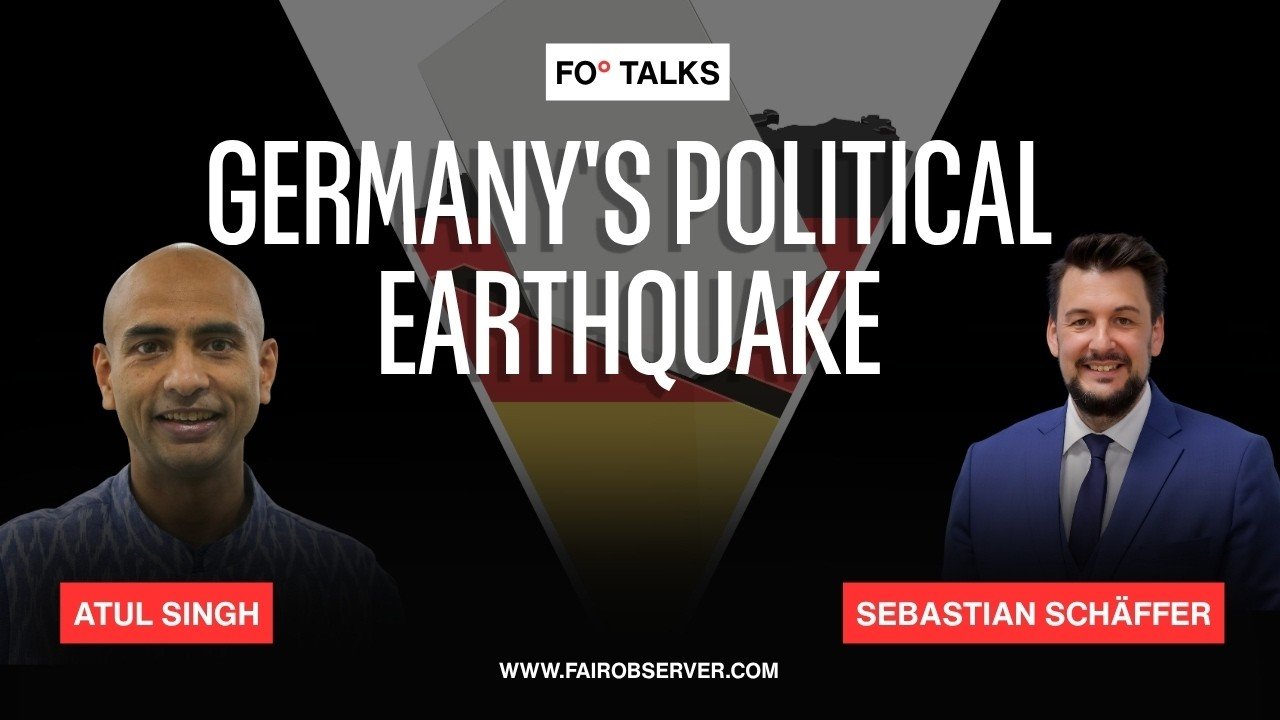
The German traffic light coalition government of the Social Democrats, Free Democrats and Greens (respectively red, yellow and green) has fallen. So has the French minority government led by Michel Barnier of Les Republicains. Now, neither France nor Germany has a government or a budget. Note this has not happened before.
Social divisions and political polarization
Germany and France are the two beating hearts of the EU. They created the EU and still drive it. With both in political limbo, the EU is lost.
Internally, both these countries are no longer homogenous or cohesive anymore. They have experienced unprecedented levels of immigration. This has created problems of assimilation since, unlike the US, Europe does not have a tradition of mass immigration. In Germany and France, immigrants form a greater percentage of the population in the US. Furthermore, Muslim immigrants in these countries tend to be more conservative than the local population or even their relatives back home. For example, German Turks voted for Recep Tayyip Erdoğan in much higher percentages than in Turkey. Many Muslim women also tend to wear headscarves in societies where sunbathing nude or topless is no longer a big deal.
Most people find change uncomfortable. Europeans are no exception. People do not like the way their communities are changing so rapidly. They may not be racist, but they want to retain their character. The French want to remain French and the Germans want to preserve their Germanness. Yet the political correctness that blights expression in the US also censors conversations in Europe. If someone is uncomfortable with headscarves or Turks voting for Erdoğan, she or he is denounced as a racist and an Islamophobe. People find such denunciation deeply alienating and often turn to the far right in revolt.
European economies are in big trouble
Economically, European countries are in trouble. They have huge debts, high deficits, slow productivity growth and low birth rates. There is no way Greece or Italy can pay back all their debts. Furthermore, the Russia–Ukraine War has increased energy prices, weakened industry and unleashed inflation in the economy. People are hurting. Naturally, they do not want to keep paying for a war with no end in sight.
In contrast, European elites have committed themselves to Ukraine’s defense. So, they want to keep spending on the war even as they seek budget cuts elsewhere. Naturally, legislators are unable to agree upon the cuts and governments are falling. At the moment, no resolution to the budget crisis in either Berlin and Paris is in sight.
The euro is not the world’s reserve currency. That privilege belongs to the dollar; so, unlike the US, Europe cannot print money to finance its deficits and prosecute endless war. So, Germany, France and the EU find themselves in a bind; their monetary and fiscal options are limited.
Europe has other problems too. Europe needs to increase the flexibility of its labor markets. Given an aging population, this can only happen with immigration and less rigid labor laws. The oppressive regulatory state is throttling growth and needs urgent reform. None other than German Chancellor Olaf Scholz has called for a war on red tape despite his socialist roots. European countries also have to reform and even shrink the welfare state. Only British Prime Minister Margaret Thatcher ever really achieved that in the last 50 years in Europe.
European economies have also suffered from external shocks. Chinese demand has declined and the US has taken a protectionist turn under both Republican and Democratic administrations. This protectionism will only increase once Donald Trump takes charge of the White House in January.
At a time of such upheaval, European political culture is in total flux. The traditional left and right are dead in France. They have been replaced by a constellation of pro-business centrists, the far right and a hodgepodge combination of leftist groups. German politics is also fragmenting, and the rise of the far-right Alternative für Deutschland (AfD) shows the degree of disaffection with the status quo in a country still haunted by Adolf Hitler. Something was not right in the state of Denmark and some things are certainly not hunky dory in Europe today. A full-blown crisis is now underway.
The views expressed in this article/video are the author’s own and do not necessarily reflect Fair Observer’s editorial policy.































Comment