


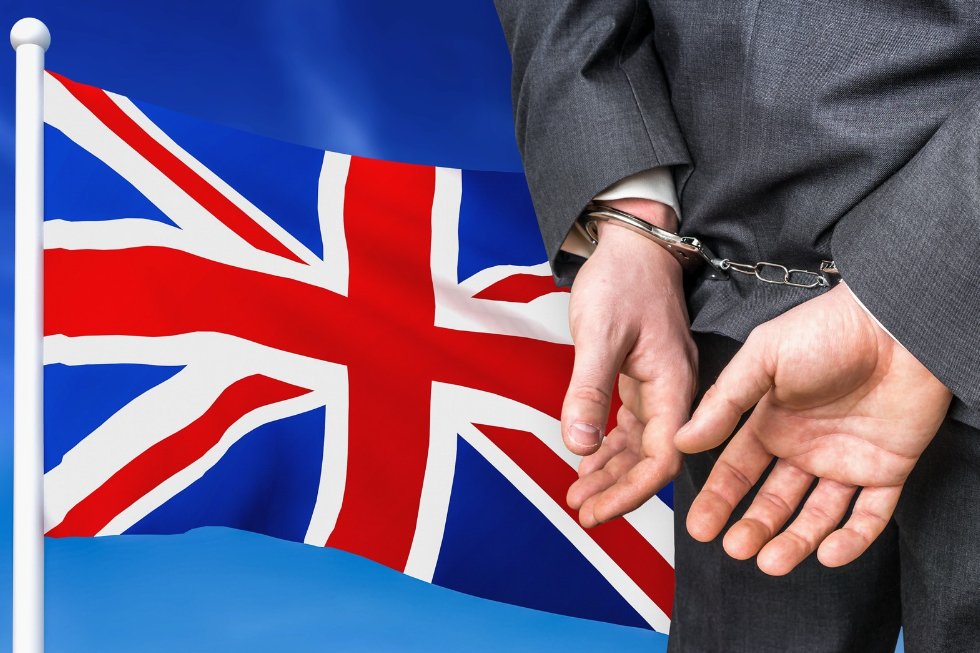


The days are long gone when (according to the old unofficial anthem “Rule Britannia”) Britain should rule the waves, and many Britons believed that the “sun never set” on their Empire. The voluntary systematic dissolution of the British Empire began as far back as 1867 with Canada becoming a self-governing dominion, followed by Australia and New Zealand (1907), the Union of South Africa (1910) and the Irish Free State (1922), with the bulk of the remainder in the Near and Middle East, Africa, Asia and the Caribbean between 1945 and 1975. With Hong Kong’s sovereignty being returned to China in 1997, only a few small scattered overseas territories, such as the Falklands and Gibraltar, remain British.
To be sure, just as a few people believe that the earth is flat rather than spherical, even as late as the 1960s, deluded pockets of Brits denied that the British Empire would finally disappear. For example, the far-right League of Empire Loyalists was formed in 1954 by A.K. Chesterton, a former pre-World War II (WWII) member of the British Union of Fascists, and attracted some 3,000 members plus 8,000–10,000 supporters at its peak.
Finally acknowledging that the colonial independence momentum was unstoppable, in 1967 the League dissolved and, in a move of possibly “misguided patriotism,” promptly joined with the Racial Preservation Society and the Greater Britain Movement to help create the far-right National Front, which later spawned the British National Party (BNP) and thence a number of derivative far-right groups such as the English Defence League (EDL), Britain First, Patriotic Alternative, Homeland Party, Pegida UK and For Britain. Most of these are still active but small and insignificant. A few are both disruptive and dangerous.
The post-WWII evolution of the British radical- and far-right is important for understanding the contemporary malaise in Britain, not just public concerns and despair about a range of economic, social, justice and governance issues seemingly continually propagating crisis, but also how these have become fertile ground for far-right exploitation and agitation.
Far-right subversion and agitation in 2020s Britain
Some of these far-right entities are more strident and thuggish than others. Some openly proclaim their far-right ideology and encourage intimidation and violence against ethnic and religious minorities. Many of their leaders and members have criminal convictions and jail sentences for hate-related or violence offenses (e.g. Britain First, BNP, Patriotic Alternative). Britain First’s leaders’ convictions have been high-profile. Leaders and members of proscribed extreme-right terrorist groups such as National Action and its derivatives also have convictions (2018, 2020, 2021, 2022) under terrorism laws. One-time National Action leader Jack Renshaw is serving life for murder plots, and attempted and actual murder.
More slippery far-right leaders include Tommy Robinson (aka Stephen Yaxley-Lennon). His far-right credentials include variously being a BNP member, co-founding and leading the EDL, co-leading Pegida UK, brief membership of For Britain and at one time advising Member of the European Parliament (MEP) Gerard Batten, the leader of the former Brexit Party, on anti-Muslim strategy. Robinson abandoned his earlier street thuggery and reinvented himself as a “political activist” and even self-styled “journalist.”
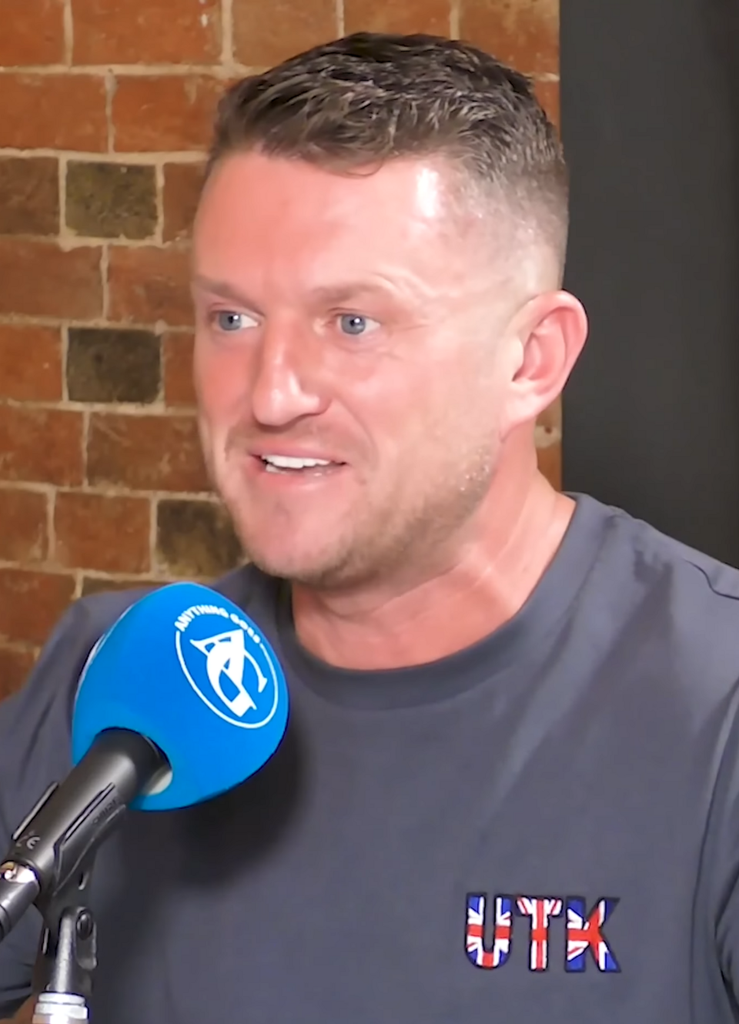
For years, Robinson, who was bankrupted in 2022, has had close ties with, and reportedly received financial support from, radical or far-right US sources such as Elon Musk (2025, 2026), Robert Mercer and Robert Shillman. He has contributed input to the Mercer-funded Rebel Media and Alex Jones’s Infowars, funded by Shillman.
Despite his list of criminal convictions relating not only to ethnoreligious intimidation and hate-mongering but also to assault, fraud, a false passport and contempt of court, plus civil judgments against him for libel, Robinson has also been supported by none other than senior Trump personnel in both Trump presidencies. Steve Bannon, US President Donald Trump’s strategy adviser up to August 18, 2017 — who was later jailed in 2024 for contempt of Congress and in 2025 received a 3-year suspended sentence for his “Mexican Wall” fraud (later pardoned by Trump) — described Robinson (then in jail) as “the [expletive] backbone of this country” off-air following an LBC radio interview in London and ranted at the LBC host.
In May 2026, US Vice President JD Vance attended a “Unite the Kingdom” protest rally organized in London by Tommy Robinson and praised the protesters. Trump himself also favorably retweeted unverified anti-Muslim claims by the former deputy leader of Britain First, Jayda Fransen, who has also been jailed for hate-related crimes.
Robinson has also not been shy of courting support and finances from right-wing sources and regimes across Europe, and even paradoxically Israel (2025, 2026) and hostile states such as Russia in 2021 and 2026.
Some radical-right groups and their leaders assert publicly that they are simply “patriotic” and deny that they are at all anti-democratic, or racist or extremist. Many groups appear to attract a range of confused and noisy attention-seekers, such as the oddball Pink Ladies, who include far-right agitators linked to the Restore UK party.
Nevertheless, wherever they sit on the radical-right spectrum, they all commonly seek to stoke public fears about legitimate concerns, such as large-scale immigration, social housing and benefits for immigrants and asylum seekers, inadequate policing, overcrowded prisons, and inadequate sentences and early release of violent criminals and sex offenders. The radical right typically seeks to inflame and exploit public outrage by a mixture of a few facts liberally overdosed with exaggerated narratives, fake “facts” and stories, and wild assertions that lay blame both at the door of foreigners, immigrants, and benefit claimants and their own political opponents.
Hate-filled religious nationalism
More recently, the UK radical right has sought to hijack the Christian religion to justify themselves, asserting that Britain must become an exclusively Christian country, with all their hate targets converted, repressed, deported or disposed of. The irony of such un-Christian animosity and hate-filled demands appears to have escaped their attention. In this, they seem to share the same hate-filled objectives expressed by Pete Hegseth, US Secretary of Defense, and JD Vance.
Hegseth’s book American Crusade and his public rhetoric, Vance’s strong support for the Seven Mountains Mandate, and Trump’s unconstitutional Christian nationalism Rededicate 250 White House jamboree in May 2026 — which implicitly repudiated the 1st and 14th Amendments — indicate just how much far-right militant “Christian” supremacist nationalism now has control of the Trump administration. The infamous Project 2025, which underpins Trump’s dismissal and deconstruction of US democracy in his second Presidency, closely aligns with American Crusade and Seven Mountains.
Although most unlikely to succeed, the UK far right clearly think they can emulate Trump and co’s hijacking and distortion of Christianity to sanctify their own agenda.
The radical- and far-right narrative asserts that the “weak-and-woke” policies of the legacy mainstream political parties are to blame for creating a multicultural Britain that is described as underproductive, crime-ridden, and collapsing under the weight of uncontrolled immigration and so-called “progressive” legislation and policies. At the same time, post-Brexit Britain is still not free of allegedly stifling EU and EU legislation. This is the particular mantra of Reform UK and Restore Britain, which each claims to be the only realistic salvation from Britain’s alleged demise.
Scandal-tarnished Reform UK
Reform UK is derived from the former UK Independence Party (UKIP) and its Brexit Party successor. Numerous members and supporters also have pasts linked to far-right organizations such as the BNP. Despite Reform UK’s policy to ban such individuals, examples regularly surface of them infiltrating the party. Some have argued that Reform is a far-right party, although more accurately it is populist radical-right, as, although frequently abrasive and obnoxious, it lacks the nastier credentials of far-right entities e.g. EDL, Britain First, Patriotic Alternative.
Nigel Farage, the controversial high-profile populist leader of Reform UK, has a long but checkered political career in various radical-right guises. He was a founding member of UKIP in 1993, a party dedicated to getting the UK out of the EU. He served as UKIP leader twice, from 2006–2009 and 2010–2016. After helping secure the 2016 Referendum outcome to leave the EU, Farage quit as UKIP leader in 2016 and then left UKIP in 2018.
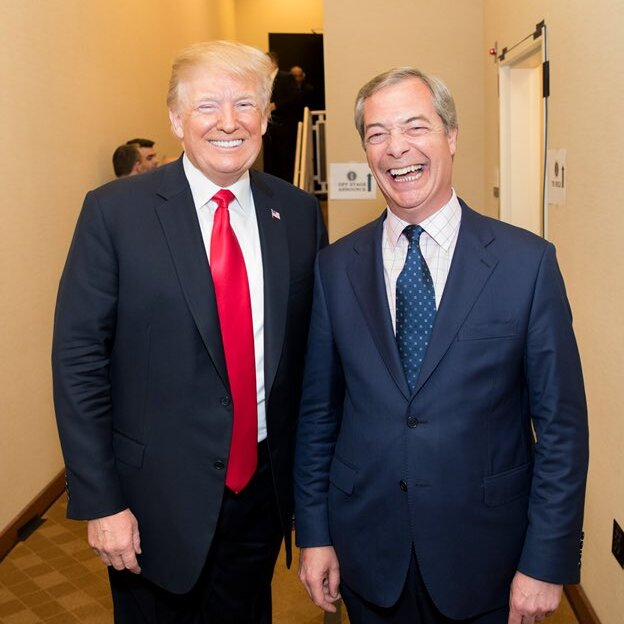
Farage then formed the Brexit Party, aimed at holding the British government to account (then under Conservative Party rule) in carrying through the full terms of Britain’s EU departure scheduled for 2019. Thereafter, the Brexit Party rebranded as Reform UK in 2021. Farage returned to lead Reform UK in 2024.
He has stood many times as a UK parliamentary candidate but only succeeded in 2024, for the constituency of Clacton, a small rural town on the Essex coast with an unenviable reputation for high levels of social deprivation, poor housing, unemployment, benefit claimants and substance abuse. His performance there as a local constituency Member of Parliament (MP) has been lackluster and has attracted local and national criticism for his absenteeism, especially for spending time visiting his political confrere Trump, his cabinet and the Republican Party (GOP) coterie in the US. Farage has defended himself by asserting that he was “putting Clacton on the map” so residents would no longer be seen as “nobodies”.
From 1999 to 2020, Farage was an MEP, alongside a small contingent of other UKIP MEPs who then became Brexit Party MEPs. This MEP contingent drew heavy criticism for being elected to the European Parliament (EP) for their admitted sole political purpose of undermining and ultimately destroying both the EP and the EU. In 2010, Farage, a superb and witty orator and advocate, gained mass publicity and attention across Britain and Europe for his devastating criticism in the EP of EU Council President Hermann von Rompuy, in which he described von Rompuy as having “the charisma of a damp rag and the appearance of a low-grade bank clerk” that no one had ever heard of. Such legion antics became part of Farage’s signature over his 20 years as an MEP.
In addition to Farage’s charismatic political performances (whether applauded or loathed), he has long been the subject of scrutiny and criticism, and now also UK parliamentary and police investigations, over his personal and party finances. In 2016, Farage’s financial links to the controversial British oligarch Arron Banks came under suspicion. Banks reportedly donated several million pounds to UKIP over some years, in addition to at least £12 million to the Leave.EU Brexit campaign, which UKIP heavily supported. Banks himself became embroiled in the Electoral Commission’s investigation into whether his Leave.UK political campaigning fund had broken a range of UK electoral and accounting laws connected with the lead-up to the 2016 Brexit Referendum.
Just as controversial was the confirmed allegation that, over the year after the Referendum, Banks also provided “grace and favour” gifted funding for Farage’s living costs and overseas political engagements, to the tune of some £450,000 (~$580,000).
More recent damning revelations are that Farage and/or Reform broke strict UK Parliamentary rules governing MPs’ financial probity and conduct. In one instance, he acknowledged the receipt of a £5 million “gift” from the Thailand-based British crypto oligarch Christopher Harborne in the 12 months prior to the 2024 General Election in which he was elected as an MP. But he claimed that it was a private gift for his elevated personal security protection and was not subject to MPs’ declaration obligations. The Parliamentary Standards Committee is investigating. If found in breach, Farage could face significant sanctions.
In a second instance, the Metropolitan Police and the National Crime Agency are investigating the alleged circuitous transfer of large illicit donations to Reform from Farage’s long-time British associate from UKIP and Brexit Party days, George Cottrell, a Montenegro-based crypto entrepreneur with a fraud conviction in the US. Potential criminal offenses include money laundering, deception and evading restrictions on unlawful political donations from foreign sources. Cottrell’s mother allegedly donated two sums totaling £500,000 ($677,181) to Reform in May 2024 via its Deputy Leader, Richard Tyce MP. Cottrell’s mother has admitted she received the money from her son and passed it to Reform. A further £1 million ($1.354 million) from Cottrell was allegedly donated by his mother to Britain Means Business, Tyce’s private fundraising entity, with half allegedly passed on to Reform.
On September 3, 2026, a third scandal befell Farage and Reform, involving an alleged conspiracy to induce illicit foreign donations from America and pro-Reform polls portrayed as “independent” but allegedly paid for by Reform. A Channel 4 (C4)/Verbatim undercover investigation revealed how such undeclared donations in the £4,000 to £30,000 bracket (illegal under UK electoral laws) were possible. Covert video purportedly showed a further proposed £500,000 ($675,190) donation being finalized in Farage’s presence, but this never went through as the C4/Verbatim investigation concluded and was broadcast. Reform’s political rivals have demanded a major police criminal investigation. Farage tried to deflect attention by denigrating the Verbatim investigation. Two senior Farage aides who featured in this scandal resigned, protesting their innocence.
In the midst of Farage’s and Reform’s financing controversies, on September 12 came the announcement that two individuals were each providing Reform with £36 million ($48.7 million) donations. One donor is the same Thai-based Christopher Harborne being investigated over the £5 million “gift” to Farage. The other is Ben Delo, a wealthy British businessman reportedly relocating from Hong Kong to the UK.
In 2022, Delo was convicted in the US on banking violations and sentenced to 30 months’ jail. He was pardoned by Trump. With this new £72 million donation dwarfing the total of all other UK political party donations, public, parliamentary, and government alarm is growing that Reform is trying to subvert the democratic process through US-style undue political influence by a few uber-wealthy individuals and their views and vested interests. While perhaps normal in some countries, in Britain such purchase is widely regarded as corruption. Tightened retrospective regulation is now expected.
In characteristically ebullient salvationist style, Farage and senior officials at Reform’s annual conference, which coincided with the C4 broadcast, announced that a Reform victory at the next general election would require a 100-day “emergency cabinet” to save Britain from its many alleged existential threats, barely disguising their intentions for authoritarian rule and imposed radical-right hegemony.
Total lack of self-awareness
For all Farage’s charisma and undoubted political skills, he suffers from an affliction common to populist politicians (e.g. Trump), namely TLoSA (Total Lack of Self-Awareness). For example, he loves to convey an image of a patriotic but humble “man of the people,” average Joe — someone who ordinary voters can relate to, someone who enjoys a pint of beer in the local pub and knows personally what struggling to “make ends meet” or to get a reasonably paid job means, or what hospital waiting lists mean. However, Nigel Farage actually comes from a totally different background, one of relative privilege and affluence. He attended the fee-paying independent private school Dulwich College before becoming a commodities and metals trader at various brokerages in the City of London, and eventually a campaigner and politician.
Since 2024, his annual earnings from TV broadcasting, brand ambassadorship for a gold bullion company, and other income streams have been estimated at well over £1 million ($1.36 million) and possibly over £1.5 million ($2.039 million), on top of his MP salary of some £96,000 ($130,521). In addition to eye-watering financial “gifts” or gifts-in-kind from wealthy supporters such as Arron Banks and Christopher Harborne, he also enjoys an annual pension of £73,000 ($99,253) from his time as an MEP (from an institution which he had set out to destroy!).
Thus, although Farage’s financial status is strikingly different to that of the vast majority of voters, he persists in trying to project a public image of “ordinariness” and modest wealth, as if voters will not notice the deception or care. His rhetoric expresses a steadfast animus against “the Establishment,” that is, the dominant, informal network of powerful and socially prominent people and institutions purported to hold social, political and economic control of the nation. He regularly swipes at the UK political system, the media and the “ruling class,” despite the irony of his having been for decades a stalwart member and beneficiary of that very Establishment.
For example, while repeatedly berating the “ruling class” for allegedly abandoning disadvantaged white working-class males, he nonetheless is a staunch supporter of, participant in and beneficiary of elite capital interests that are not remotely concerned about such “losers” (the term often used by Farage’s political hero and confidant President Trump).
Reform currently claims a 270,000 membership. Recent independent polls suggest that Reform’s indicative electoral support may have reached its likely maximum potential and plateaued at some 24%, perhaps reflecting a public tiring of Farage’s “salesman’s patter,” unconvincing and unpalatable policies, unsavory chums (domestic and foreign), and dubious financial probity.
Restore Britain — a harsher version of Reform UK
The Restore Britain party is yet another in the chain of successors to UKIP. The party was formed in 2025 by ex-Reform MP Rupert Lowe, following a much-publicized falling out with Farage. Restore’s official policies are a much harsher, more strident version of Reform’s, placing it closer to the far right.
Throughout 2026, Lowe has drawn significant media attention and public outrage for his various utterances. For example, he has made frequent disparaging anti-immigrant and racist remarks, a notable example occurring in July. He has also belittled the Dunblane School Gun Massacre in Scotland, in which 16 children and a teacher were killed, by falsely stating on the Joe Rogan Experience in the US that there had been only “one murder” and suggesting that Britain’s strict gun controls were overkill.
Another ex-UKIP member of Restore’s national team is Henry Bolton, who was forced out as UKIP’s leader in disgrace in 2018. He then formed the short-lived One Nation party, registered as the Our Nation party. In July 2026, he joined Restore as its national security and policy spokesperson. While in UKIP, his social media friendship with over 500 members of other, more far-right groups, such as Britain First, attracted adverse comment.
Restore Britain is targeting the same voter segment as Reform UK. However, it lacks the charismatic leadership of Reform’s Farage and Reform’s membership numbers and organizational resources. Restore Britain currently claims approximately 96,000 members. Moreover, Restore’s even more brutal policies than Reform’s are likely to attract only the most extreme elements among Reform supporters to switch to Restore.
Overall, Reform and Restore are fringe populist radical-right parties which, despite relentless noisy, colorful, controversial and sometimes outrageous publicity, and vote surges in by-elections, remain essentially protest parties rather than serious contenders for governing Britain. Nevertheless, some of the radical right’s contrary anti-social beliefs and attitudes often find strange bedfellows among mainstream party political expedience, corporate malfeasance and Establishment self-interest.
Cruel Britannia
One of the most infuriating aspects of Britain today is the embedded “forked tongue” duplicity of politicians of all parties at all levels. While publicly projecting much concern and piety on a whole range of topics heavily impacting many citizens, a panoply of ministers and legions of MPs in a succession of governments plus hordes of local authority councilors have instead opted for a cynical laissez-faire “too much trouble, too many obstacles, not the right time” posture when it comes to taking necessary and timely action. Many are only interested in easy “low-hanging fruit” topics that will deliver them electoral votes more readily.
Britain’s radical- and far-right enthusiastically exploit such governance failures, especially scandals, of those in power or authority, by portraying themselves to an increasingly disillusioned electorate as the only salvation, the only antidote.
Scandals in Britain in recent years involve variously incompetence, negligence, corporate crimes, corruption, government collusion and establishment protection. Legion examples of official negligence, if not complicity, provide fertile ground for exploitation, exaggeration and agitation by the radical and far right. However, the latter tend to “cherry-pick” which topics are closest to their political ideology and which are most likely to gain them the most public support. The following are just a few examples of such scandals:
Contaminated blood
Over 30,000 patients were infected with HIV and/or hepatitis from infected blood transfusions from the 1970s to 1990s. Many were not informed for decades. More than 3,000 have died as a result. Some 3,500 have received government compensation, but tens of thousands more are still waiting.
Failure to detain known mentally disturbed individuals with violent histories
Two high-profile cases with tragic consequences, including multiple murders, have highlighted the lack of “joined-up supervision and control” of potentially dangerous individuals with known mental illnesses such as schizophrenia. In June 2023, Valdo Calocane, a paranoid schizophrenic, murdered three strangers in Nottingham and attempted to murder three others, all in less than one-and-a-half hours. In July 2024, Axel Rudakubana, previously diagnosed as autistic and exhibiting violent episodes but not as dangerously psychotic, killed three schoolgirls attending a dance class in Southport and severely wounded eight others plus two adults in a frenzied attack.
Overcrowded prisons and early release of prisoners
Britain’s prisons are chronically inadequate and full to capacity. Early release schemes to relieve overcrowded prisons have resulted in mistaken releases through faulty administration as well as ill-conceived potential releases of dangerous offenders guilty of domestic violence, murder and sex crimes. Following a public outcry, Prime Minister Andy Burnham has announced that killers, and notably the convicted killers of police officer PC Andrew Harper, will no longer be eligible for early release.
Political corruption
Sleaze, corruption and a general decline in maintenance of moral standards in British public life have been recognized at least since the 1990s and transcend different political parties in government. For example, from 2019 to 2023 alone, at least ten senior Conservative government ministers and MPs were involved in sleaze, corruption or sex scandals, as detailed in my 2023 Fair Observer article in the section headed A Collapse of Moral Standards in Public Life (the litany of florid financial scandals involving Farage and Reform UK are described earlier).
Since coming to power in 2024, the Labour government has also been beset by scandals centered on ethics, although thus far not on a scale comparable to previous Conservative administrations.
Two particular scandals, still running after two decades or more, have involved large corporations and incompetent, colluding government ministers and administrators. These are the Post Office Horizon scandal and the Water Industry scandal involving both deliberate pollution and hyper-inflated price rises.
Post Office Horizon Scandal
As my Fair Observer articles in 2024 reported in detail, the Post Office Horizon Scandal involves the UK’s government-owned national Post Office corporation and Fujitsu, which supplied it with supposedly “fool-proof” but in fact deeply flawed Horizon accounting software from 1999 onwards. As a result, over 1,000 sub-postmasters (independent contractors in small towns and villages) were falsely accused of accounting fraud, prosecuted, fined large sums and some imprisoned. A number of attributable suicides and premature deaths are recorded among victims. The scandal has been described officially as “the most widespread miscarriage of justice in UK legal history.”
Group civil actions by aggrieved sub-postmasters against the Post Office were all found in their favor. Judges noted in 2019 that the Post Office’s steadfast denials were untenable and one of “bare assertions and demands that ignore what actually occurred” amounting to “the 21st century equivalent of maintaining the earth is flat.”
The much vaunted government compensation scheme has regrettably so far been a half-risen, if not half-collapsed, soufflé. Of the claims received as at 31 March 2026, while some 12,000 had been settled to the tune of £1.519 billion ($2.05 billion), a further 1,500 to 2,400 remain unsettled. Critics cite structural failings and bureaucratic delays.
Meanwhile, a number of senior executives and administrators of the Post Office and its Fujitsu supplier, as well as lawyers, are under criminal investigation for perjury and perverting the course of justice, as part of the massive Operation Olympos investigation. Whether any of the as-yet-unidentified eight prime suspects will ever face prosecution remains uncertain. The status of the discredited and much vilified former Post Office Chief Executive, Paula Vennells, in the Olympos investigation is unknown.
Mismanaged, polluting and price-scamming water companies
Since privatization in 1989, many UK water companies (mostly owned by foreign corporations and investors) have been mismanaged at all levels, including causing large-scale pollution through raw sewage dumping (often deliberately) and overcharging customers so flagrantly that it amounts to mass corporate fraud. Recently commenting on outrageous bills, an “angry” Prime Minister Burnham accused water companies of treating customers “like a blank cheque.” Yet, despite the obvious harm to customers, a complex system of state regulation to protect the public has failed abysmally for years and instead enabled and encouraged wayward water companies to continue their greedy, anti-social and often criminal activities.
In recent years, to justify massive rises in customer bills, water companies have pleaded poverty, unavoidable rising operational costs, and the need for costly infrastructure renewal and therefore new capital investment. This ignores the fact that, for years, many of them paid out huge investor dividends while ignoring the need to reinvest in infrastructure renewal. It also evades the fact that capital investment is normally obtained from institutional and corporate investors, equity funds and the capital markets, not by billing ordinary customers who will receive no equity for their non-notified and hidden “investment.” Customer bills should cover actual consumption and not include hidden charges for capital investment that would be more costly if obtained from conventional sources. Such deception amounts to mass corporate fraud, given the millions of customers being scammed.
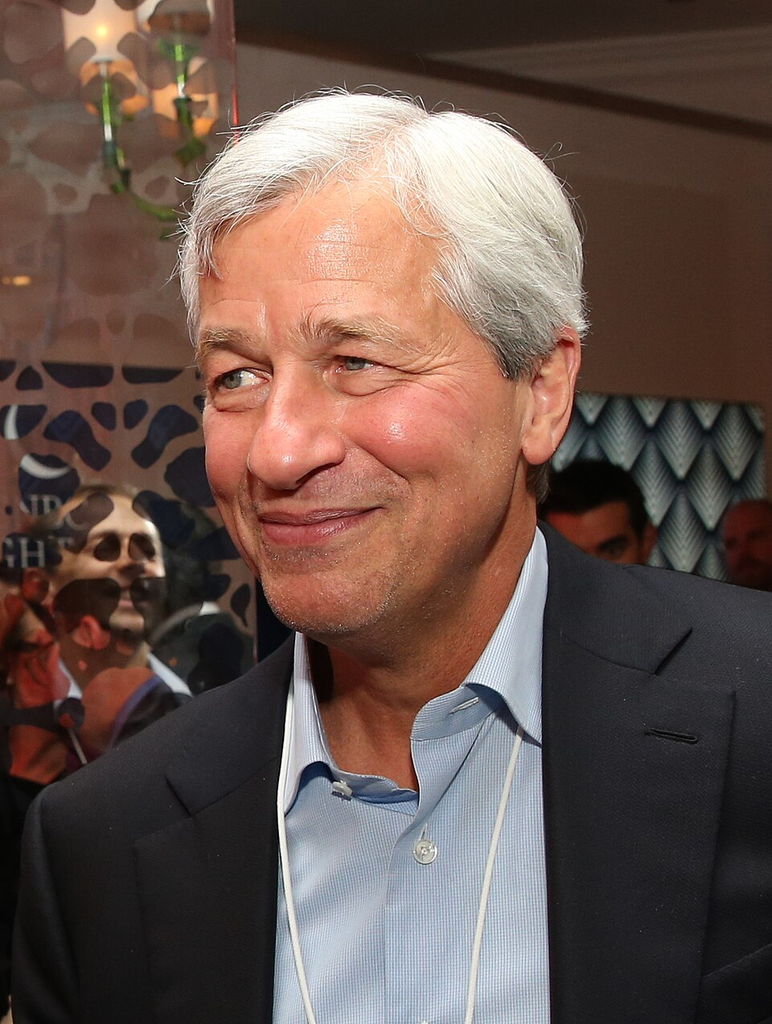
For example, by 2024, the foreign-owned Southern Water Limited had been fined a total in excess of £216 million ($292.6 million) for large numbers of environmental crimes relating to unlawful pollution discharges into watercourses and coastal areas. Some were accidental, some deliberate and many involved raw sewage. In one major court case in 2021, Southern Water was fined £90 million ($122 million), with the judge commenting that the company had shown “a disregard for the law from the top down.” In a further case in 2026, the same judge imposed fines totaling £7.126 million ($9.654 million) on the company relating to 51 pollution offenses across 17 sites.
In September 2026, the former CEO, three former Southern Water senior executives and three others were charged with conspiracy to defraud for falsifying environmental pollution data between 2012 and 2017 to avoid £45 million in fines for pollution offenses. Previously, all criminal cases had related to causing actual pollution. For the first time, prosecutors have laid fraud charges. Observers are wondering why fraud investigations and charges have been conspicuously absent regarding the present company management’s hyper-inflated bills, which for 2024–5 alone imposed for many of its 4.8 million customers a 55–65% increase (not the Ofwat assertion of 47–53% over 5 years) compared to a core inflation rate of some 3%. For example, my own annual Southern Water bill just for wastewater services for a typical two-person household shot up 56.5% from £306 to £479 and is projected to double again by 2030.
Instead of acting as the pricing regulator to impose price caps on cavalier water companies, Ofwat has acted more as a rubber stamp for their outrageous demands. The incoming Labour government in 2024 decided to replace the delinquent Ofwat and several other discredited water regulators with a single “high-powered” regulator to “create stronger protections to keep bills predictably affordable and fair.” However, the new regulator is unlikely to start before 2028 or 2029, and even then may not deliver what is promised to millions of customers.
Despite decrying the environmental crimes of water companies, leaders and MPs of all parties have proposed no concrete, practical proposals to rapidly and effectively stop the abuse of hyper-inflated customer bills. Only a handful of MPs (e.g. 2025-1, 2025-2, 2026) have publicly raised the Southern Water bills scam. The Parliamentary Department for Environment, Food and Rural Affairs (DEFRA) Committee did summon the company’s CEO to explain and justify the hyper-inflated bills, but no corrective actions, immediate or planned, resulted. Overall, government, MPs and Parliament appear to have abandoned the public to fine words and sympathy. This forsaking of the “presumption of regularity” entices a disillusioned and cynical public into the arms of radical- and far-right salvationist parties.
For his part, Farage (perhaps true to his capitalist free-market beliefs in unfettered corporatism) could only suggest that failing water companies should be allowed to go bust. However, he has failed to acknowledge that this would also then force nationalization at taxpayers’ cost since millions of customers would require continuity of daily water and wastewater services. Perhaps the specter of nationalization costs is what tempts hypocritical ministers and timorous MPs to utter empty sympathy and look the other way.
In conclusion, a decline in contemporary Britain in political and corporate governance and in moral integrity in public life, coupled with a failure to eradicate multiple iniquities imposed on the public, is encouraging radical political opportunists to offer them an unrealistic fast-track fake salvation. Continuity of Cruel Britannia thus seems assured.
[Kaitlyn Diana edited this piece.]
The views expressed in this article are the author’s own and do not necessarily reflect Fair Observer’s editorial policy.
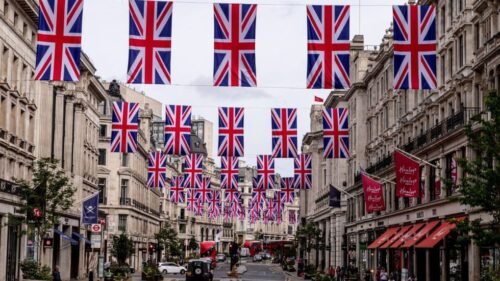
Great Britain is Now in Great Crisis
Great Britain is going through a polycrisis reminiscent of the 1970s. The feisty deputy prime minister has resigned, bond markets...
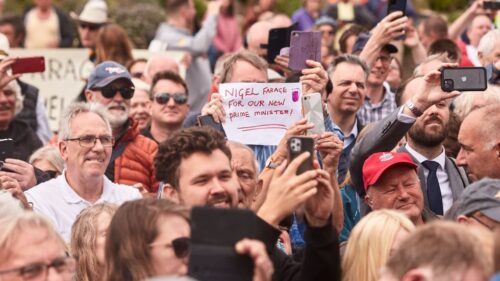
Nigel Farage is Ushering in a New Era in British Politics
Nigel Farage, the leader of Reform UK and the political strategist behind Brexit, has gained support by tapping into Britain’s...
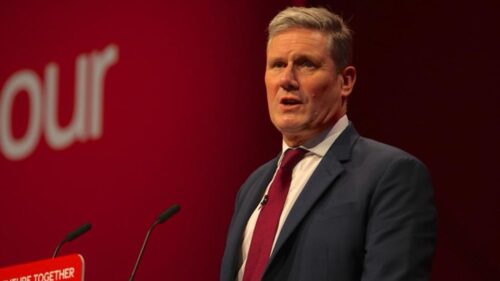
The Left Won Big in the UK — But Look Deeper
Sir Keir Starmer led Labour to a whopping win, but his party won fewer votes than it did in the...
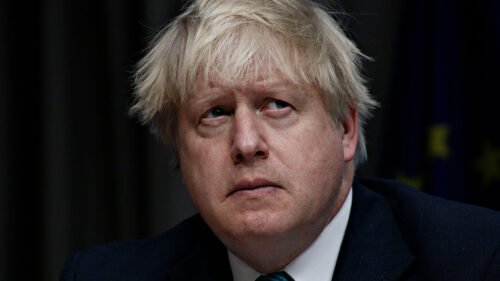
Elective Dictatorship: The Plot by Britain’s Radical Conservatives
Since the middle of the last decade, the British Conservative Party has become increasingly captured by a radical right-wing faction...
Support Fair Observer
We rely on your support for our independence, diversity and quality.
For more than 10 years, Fair Observer has been free, fair and independent. No billionaire owns us, no advertisers control us. We are a reader-supported nonprofit. Unlike many other publications, we keep our content free for readers regardless of where they live or whether they can afford to pay. We have no paywalls and no ads.
In the post-truth era of fake news, echo chambers and filter bubbles, we publish a plurality of perspectives from around the world. Anyone can publish with us, but everyone goes through a rigorous editorial process. So, you get fact-checked, well-reasoned content instead of noise.
We publish 3,000+ voices from 90+ countries. We also conduct education and training programs
on subjects ranging from digital media and journalism to writing and critical thinking. This
doesn’t come cheap. Servers, editors, trainers and web developers cost
money.
Please consider supporting us on a regular basis as a recurring donor or a
sustaining member.
Will you support FO’s journalism?
We rely on your support for our independence, diversity and quality.





Comment