






In January 2026, Indonesia’s Ministry of National Development Planning, known as Bappenas, signed a cooperation agreement with the Chinese Society of Environmental Sciences to develop Low Emission Palm Oil Mills, called PaMER. The initiative aims to promote cleaner processing, carbon reduction methods and support for smallholders. Officials say the technology could reduce emissions by up to 79% compared with conventional mills, a promising step toward a greener palm oil industry.
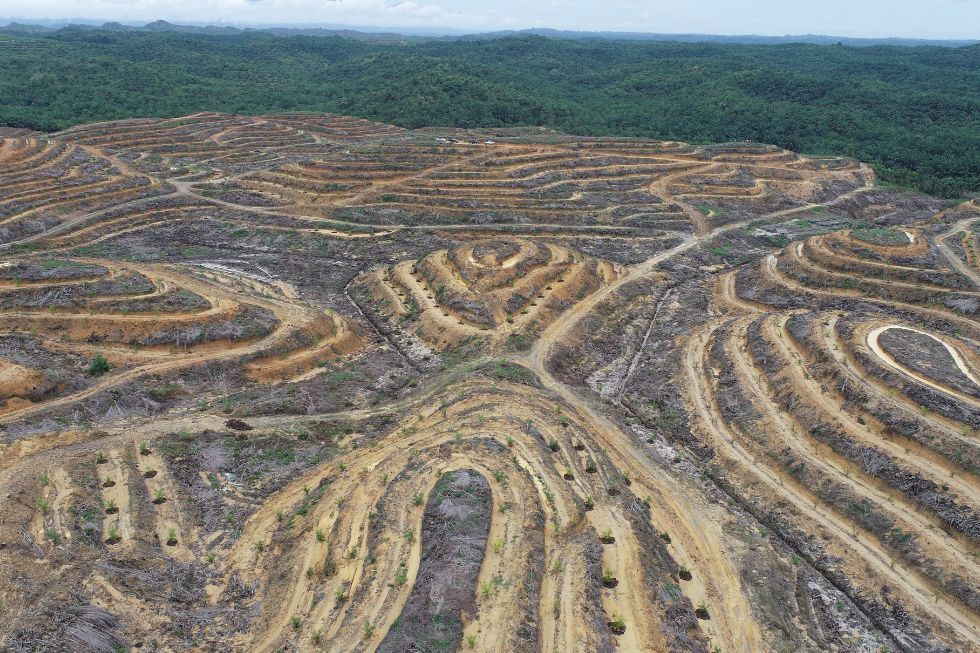
While technology is important, it addresses only part of the problem. The largest source of environmental harm lies upstream, in land clearing and peatland drainage. Forests are cut, carbon is released and ecosystems are fragmented long before palm oil reaches a mill. Financing biofuel projects without strict safeguards allows these impacts to continue, creating a gap between cleaner mills and destructive cultivation practices. This gap undermines any claims of meaningful sustainability.
Indonesia has already experienced the consequences of unchecked expansion. Between 2001 and 2023, the country lost millions of hectares of tree cover, much of it tied to agricultural development. In many cases, forests were intentionally cleared using fire, which not only destroyed ecosystems but also harmed public health, displaced communities and strained regional relations. These patterns should not repeat in a country with one of the world’s last large intact forest landscapes.
Indonesia’s forests store massive amounts of carbon and support biodiversity found nowhere else on earth, giving them extraordinary ecological value. Large-scale plantation development threatens to fragment these ecosystems and undermine indigenous land rights. Once damaged, such environments are difficult, if not impossible, to restore.
China’s financial influence gives it leverage to prevent this outcome. As a major investor and energy consumer, China can set clear conditions for cooperation. Halting funding for biofuel projects associated with deforestation would send a strong market signal: that economic partnership does not require environmental compromise.
This is not an argument against cooperation, but rather an argument for better cooperation. China can redirect investment toward projects that increase productivity on existing plantations rather than expanding into forests. Supporting replanting programs, yield improvements and methane capture technology would reduce emissions without triggering new land conversion.
Practical steps
To make this approach practical, Chinese policy banks, commercial lenders and Indonesian regulators should anchor cooperation in four measures.
First, lenders should require verifiable zero deforestation commitments as a condition of financing, backed by satellite monitoring and public reporting. Second, Indonesian authorities must secure indigenous and local community land rights before project approval, with lenders verifying compliance. Third, both governments should mandate full supply chain disclosure, including independent verification of emissions and sourcing. Fourth, financing contracts should include automatic suspension clauses when violations occur, enforced jointly by regulators and financial institutions.
These steps are also strategic. Global markets are increasingly restricting imports of commodities linked to deforestation, and investors are screening portfolios for environmental risk. Projects that ignore these trends risk becoming stranded assets. For Indonesia, higher standards strengthen long-term market access while protecting livelihoods. Short-term gains from deforestation are fleeting; credible, sustainable practices ensure economic stability over decades.
The Low Emission Palm Oil Mills initiative can still play a constructive role if paired with firm upstream protections. Technology should complement conservation, not distract from it. Sustainability begins with decisions about where plantations are allowed and where they are not.
China and Indonesia can become a model
Cleaner mills alone cannot prevent forest loss, but when integrated with strong land-use standards, transparency and community protections, they can reinforce sustainable production. The real test of progress is simple: forests remain intact, communities retain their rights and emissions decline across the full supply chain. If these outcomes are met, cooperation between Indonesia and China can become a model of green growth for tropical commodities.
Ending biofuel financing tied to deforestation is not a retreat from partnership. It is a commitment to responsible development, recognizing that once primary forests disappear, no mill, no matter how advanced, can restore them. Protecting forests, enforcing standards and supporting communities is the path to a palm oil industry that is both economically valuable and environmentally credible.
[Kaitlyn Diana edited this piece.]
The views expressed in this article are the author’s own and do not necessarily reflect Fair Observer’s editorial policy.
A Nation’s Rivers Remember What Was Cut Away: Indonesia’s Flood Crisis
Legal deforestation has stripped Sumatra’s watersheds of natural flood defenses, turning extreme rainfall into a predictable humanitarian disaster. Plantation expansion...
COP30 in Belém: Joint Effort, Tensions and a Path to the End of Fossil Fuels
The 30th UN Climate Change Conference (COP30) in Belém brought governments, Indigenous peoples and civil society to the Amazon to...

The Amazon Rainforest Can Only Be Saved by Harnessing Its Wealth for Local Communities
Over the last few years in particular, there has been large-scale destruction of the Amazon rainforest. The massive scale of...

Support Fair Observer
We rely on your support for our independence, diversity and quality.
For more than 10 years, Fair Observer has been free, fair and independent. No billionaire owns us, no advertisers control us. We are a reader-supported nonprofit. Unlike many other publications, we keep our content free for readers regardless of where they live or whether they can afford to pay. We have no paywalls and no ads.
In the post-truth era of fake news, echo chambers and filter bubbles, we publish a plurality of perspectives from around the world. Anyone can publish with us, but everyone goes through a rigorous editorial process. So, you get fact-checked, well-reasoned content instead of noise.
We publish 3,000+ voices from 90+ countries. We also conduct education and training programs
on subjects ranging from digital media and journalism to writing and critical thinking. This
doesn’t come cheap. Servers, editors, trainers and web developers cost
money.
Please consider supporting us on a regular basis as a recurring donor or a
sustaining member.
Will you support FO’s journalism?
We rely on your support for our independence, diversity and quality.





Comment