






The contemporary global economy stands at a pivotal inflection point — one at which debt sustainability and climate resilience can no longer be regarded as orthogonal policy domains but as mutually constitutive imperatives within a single macro-financial system. For many emerging and developing economies (EMDEs), the convergence of mounting debt-servicing obligations and intensifying climate-induced losses has produced a structural impasse that systematically corrodes fiscal sovereignty and constrains developmental agency.
As International Monetary Fund (IMF) economists Kristalina Georgieva, Marcos Chamon and Vimal Thakoor underscore, nations most exposed to climate volatility paradoxically possess the least fiscal latitude to invest in adaptation, thus perpetuating a self-reinforcing cycle of fragility, underinvestment and vulnerability. In effect, climate exposure has ceased to be a derivative symptom of economic frailty and has instead become one of its primary causal mechanisms.
Despite the surge in global clean-energy investment — which is now approaching double that of fossil-fuel expenditures — the geographical asymmetry of this transition remains acute. Only about 15% of climate-aligned capital reaches EMDEs outside China. This distortion is symptomatic of pathological asymmetry within the global financial architecture.
Exchange-rate volatility, the elevated sovereign-risk premia investors demand to hold a country’s government bonds and a paucity of concessional financing instruments — special funding that offers better-than-market terms to help impoverished countries develop, such as IMF zero-interest loans — render green investments structurally disadvantaged vis-à-vis carbon-intensive incumbents. As a result, EMDEs find themselves ensnared in a developmental paradox; they are compelled to pursue growth for political legitimacy while constrained to decarbonize for ecological survival.
Amidst this disequilibrium, the “Green Swap” materializes as both a conceptual provocation and practical innovation — an instrument designed to reconceptualize sovereign debt as a proactive vehicle of sustainability rather than a residual fiscal encumbrance. It marks a normative inversion: It reframes environmental responsibility not as a constraint upon fiscal sovereignty but as an enhancer of it, a generator of macroeconomic credibility and intertemporal stability.
The logic of the Green Swap: disentangling development and climate finance
The intellectual architecture of the Green Swap rests on the deliberate disaggregation of two historically conflated spheres: development finance and climate finance. Traditional infrastructure paradigms have demanded that host states internalize both the domestic dividends of development and the global externalities of decarbonization. This conflation distorts project-risk assessments, inflates capital costs and deters participation by institutional investors, thereby misaligning local fiscal rationality with global environmental utility.
To remedy this structural incongruence, the Green Swap introduces a dual-tranche architecture, bifurcating investment flows into two analytically distinct components. The domestic tranche mobilizes local or regional capital to finance socially embedded objectives — employment, industrial upgrading or infrastructure enhancement — while the international tranche underwrites the incremental costs of decarbonization via concessional climate funds, carbon-credit monetization or performance-based investment.
Through this two-tiered framework, each category of financier pursues differentiated objectives — developmental versus environmental — within a unified transaction structure, thereby creating a new equilibrium between sovereign agency and global public goods.
Central to the credibility of this mechanism is quantification — the measurement of the mechanism’s quantity. Instruments such as the International Renewable Energy Agency’s (IRENA) Avoided Emissions Calculator enable the transformation of avoided emissions into fungible, monetizable assets. Once integrated into carbon markets or results-based finance, these quantified benefits generate new streams of climate-linked fiscal capacity, effectively internalizing global externalities within sovereign balance sheets.
This transformation from environmental virtue to fiscal instrumentality represents a paradigmatic shift in economic thought. Under the Green Swap, sustainability ceases to be a moral aspiration and becomes a macroeconomic variable in its own right.
By doing so, the Green Swap narrows the viability gap between brown and green investments, reduces the weighted average cost of capital and reinstates financial rationality to sustainability. It essentially redefines sustainability as a manifestation of market efficiency rather than its moral exception.
From concept to practice: applications and macroeconomic implications
Empirical evidence from diverse jurisdictions illuminates the Green Swap’s transformative potential. In Indonesia, geothermal energy projects have historically underperformed relative to coal due to higher capital intensity and delayed payback. A medium-sized geothermal facility yielded an internal rate of return (IRR) of merely 4.9% versus 10.5% for coal. Yet the avoided emissions were valued at approximately $150 million under a $20 per ton carbon dioxide benchmark. Once they were monetized, the effective IRR exceeded 11%.
A Green Swap mechanism could securitize such climate-linked revenue streams, enhancing investor confidence while neutralizing the structural disadvantages of renewable infrastructure.
Analogous dynamics are observable elsewhere. In India, the introduction of carbon-pricing frameworks modeled after the European Union Emissions Trading System catalyzed the economic competitiveness of wind energy. Chile’s coal-decommissioning initiatives, which are financed through monetized carbon savings, demonstrate how debt-for-climate instruments can sustain fiscal discipline while facilitating a just energy transition.
Collectively, these cases suggest that the Green Swap operates not as a marginal policy device but as an evolutionary adjustment in the calculus of global capital allocation.
At the macroeconomic level, the Green Swap reconfigures the fiscal cartography of states. By distinguishing between domestic and international benefit streams, governments can integrate climate-linked assets and liabilities into medium-term expenditure frameworks, enhancing both transparency and temporal credibility. The Belize 2021 marine-conservation debt swap, which improved the country’s sovereign rating, exemplifies how environmental stewardship has evolved from reputational soft power into an explicit metric of fiscal prudence.
Nevertheless, scalability presupposes a scaffolding of multilateral legitimacy. Mechanisms such as the IMF’s Resilience and Sustainability Trust and the World Bank’s Guarantee Platform act as institutional anchors of credibility, absorbing transaction risk and mobilizing blended finance. By lowering perceived risk and standardizing project pipelines, these platforms help crowd in institutional investors who would otherwise remain sidelined. They also create a consistent global framework that links climate outcomes with fiscal instruments, reducing uncertainty for both donors and markets. In the absence of such global coordination, the Green Swap risks degenerating into an elegant but ephemeral boutique innovation — conceptually potent yet structurally constrained.
Embedding Green Swaps in fiscal governance and global policy
Financial innovation attains durable legitimacy only when embedded within governance architectures that institutionalize accountability, transparency and democratic ownership. The Green Swap’s transformative promise thus lies in its integration within a green-budgeting framework — a fiscal paradigm that systemically aligns public expenditure and revenue management with environmental objectives.
This integration is not theoretical. Across the OECD landscape, governments are pioneering tangible embodiments of fiscal-environmental synergy. Austria has introduced a “green–brown” classification for all budgetary allocations. France’s 2024 budget expanded environmentally beneficial outlays from €32 billion ($37 billion) to €38.6 billion ($44.7 billion) without increasing environmentally harmful spending. Indonesia’s Climate Budget Tagging program reallocates savings from fossil fuel subsidies toward renewable investments.
Collectively, these models demonstrate how fiscal transparency can metamorphose sustainability rhetoric into quantifiable governance metrics, transforming green budgeting from aspirational discourse into an enforceable standard of public finance.
Institutionalizing the Green Swap within such governance ecosystems yields dual dividends: It endogenizes environmental accountability within national fiscal regimes and attenuates reliance on donor-driven conditionality. Environmental performance thus becomes a measure of domestic fiscal discipline rather than an externally imposed compliance criterion.
Ultimately, the Green Swap signifies more than a financial instrument — it represents a conceptual reordering of the global political economy. It transposes environmental responsibility from a peripheral moral adjunct to the foundational precondition of sustainable growth. For nations negotiating the precarious intersection of debt distress and climate exposure, it offers neither technocratic illusion nor utopian idealism, but a structurally coherent possibility: the conversion of debt from an emblem of constraint into an engine of resilience.
In the emerging architecture of post-carbon capitalism, the Green Swap may yet delineate the frontier between adaptive renewal and systemic obsolescence.
[Lee Thompson-Kolar edited this piece.]
The views expressed in this article are the author’s own and do not necessarily reflect Fair Observer’s editorial policy.
Don’t Let the Green Energy Transition Become a New Colonialism
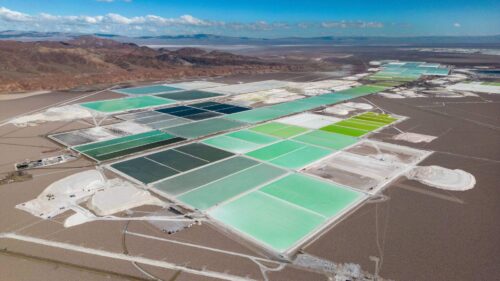
The nations of the Global North made themselves rich on carbon-fueled economies that are no longer an option for developing...
Is (Green) Diplomacy the Only Way Forward Now?
Only a reduction in tensions and military expenditures can save the planet from the catastrophic consequences of both a US-China...

Support Fair Observer
We rely on your support for our independence, diversity and quality.
For more than 10 years, Fair Observer has been free, fair and independent. No billionaire owns us, no advertisers control us. We are a reader-supported nonprofit. Unlike many other publications, we keep our content free for readers regardless of where they live or whether they can afford to pay. We have no paywalls and no ads.
In the post-truth era of fake news, echo chambers and filter bubbles, we publish a plurality of perspectives from around the world. Anyone can publish with us, but everyone goes through a rigorous editorial process. So, you get fact-checked, well-reasoned content instead of noise.
We publish 3,000+ voices from 90+ countries. We also conduct education and training programs
on subjects ranging from digital media and journalism to writing and critical thinking. This
doesn’t come cheap. Servers, editors, trainers and web developers cost
money.
Please consider supporting us on a regular basis as a recurring donor or a
sustaining member.
Will you support FO’s journalism?
We rely on your support for our independence, diversity and quality.
FO° Talks: Here’s What American Companies NEED to Know Before Investing in India
In this episode of FO° Talks, FOI Partner Russell Stamets outlines three major mistakes companies make when entering India: mishandling...






Comment