


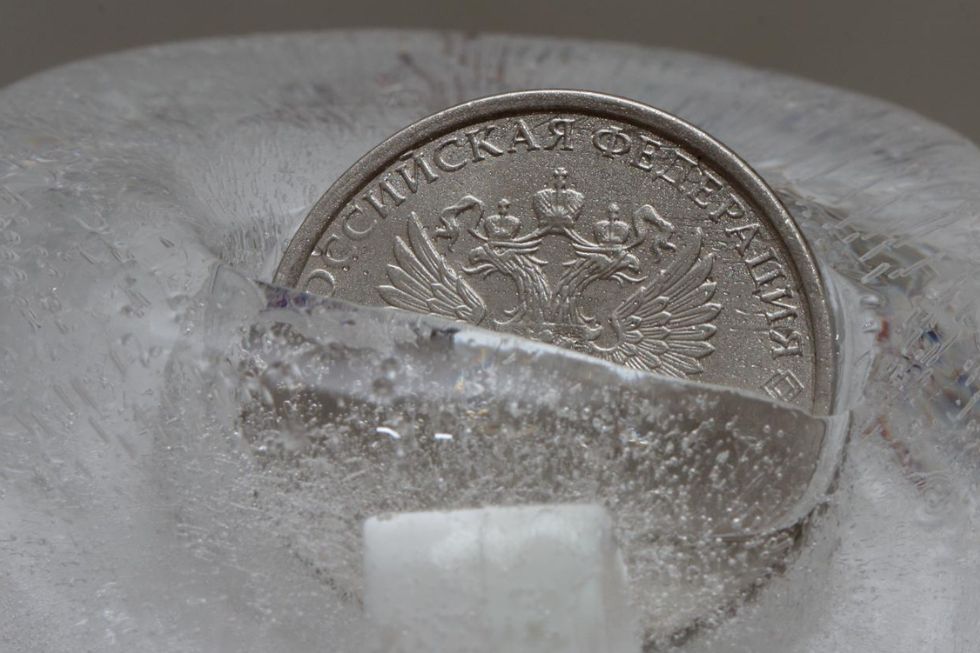



As the war in Ukraine grinds toward its fourth winter, a parallel conflict is being fought not in the trenches of the Donbas, but in Brussels. The weapon of choice is neither artillery nor drones, but sovereign debt and international banking law. At the center of this financial storm lies a cache of wealth: nearly €200 billion in Russian Central Bank assets, immobilized since the onset of the full-scale invasion in 2022.
The European Union has moved beyond merely freezing these funds. In a landmark and legally perilous shift, the bloc has begun to actively utilize the profits generated by this capital to fund Ukraine’s defense and reconstruction. This strategy, however, has exposed deep fissures within the EU and placed a singular, private Belgian company, Euroclear, in the geopolitical crosshairs.
The vault: Euroclear and the mechanics of immobilization
To understand the scale of the situation, one must understand the custodian holding the keys. Euroclear is not a bank in the traditional consumer sense; it is a Central Securities Depository (CSD), a critical piece of the “plumbing” that underpins the global financial system. Headquartered in Brussels, Belgium, and employing approximately 6,000 people, Euroclear settles securities transactions for stock exchanges and major financial institutions, ensuring that when a bond or share is traded, the ownership transfers and the cash is delivered.
A consortium of major international financial players owns Euroclear. Its shareholder registry includes Caisse de Dépôts (a French public-sector financial institution), GIC (the sovereign-wealth fund of Singapore), Euronext (the pan-European stock exchange) and Sicovam, the French central securities custodian (now integrated into the group structure but historically a key stakeholder).
The sheer volume of assets flowing through Euroclear is difficult to visualize. At the end of the third quarter (Q3) of 2025, Euroclear held a staggering €42.5 trillion in custodial assets. Much of this sum is held on behalf of clients — pension funds, central banks and commercial banks — and does not sit on Euroclear’s own balance sheet.
However, income generated by Russian-owned securities does end up on Euroclear’s books. As of the latest financial disclosures, Euroclear Bank’s own balance sheet stood at €229 billion. Of this amount, a massive €194 billion — nearly 85% — is classified as “related to sanctioned Russian assets.” These are primarily maturing bonds and coupon payments belonging to the Central Bank of Russia that sanctions have blocked. Unable to be transferred back to Moscow, this cash piles up in Belgium, requiring reinvestment.
The “windfall”: turning cash into weapons
In the first half (H1) of 2025 alone, these immobilized Russian assets generated €2.7 billion in interest income. Under normal circumstances, this profit would belong to the client (Russia). However, the EU argues that these “windfall profits” are not sovereign assets but rather a byproduct of the sanctions regime itself.
Following legislation passed in May 2024, the EU formalized a mechanism to seize these profits. Of the €2.7 billion earned in H1 2025, €1.8 billion was declared a “windfall contribution.” After Belgian corporate taxes and management fees were deducted, a net total of €1.6 billion was paid out to the EU Commission.
The money is transferred to the Ukraine Facility and the European Peace Facility (EPF), where it is used to directly reimburse EU member states for weapons shipments to Kyiv and to fund the purchase of new ammunition and air defense systems. In effect, the EU has successfully engineered a system where Russia’s own sovereign wealth is partially financing the war effort against it.
The Belgian resistance: fear of the “Euroclear run”
While the EU Commission in Brussels pushes for aggressive use of these funds, the Belgian government, located just a few miles away, has urged extreme caution. Belgium finds itself in the uncomfortable position of being the sole guardian of the vast majority of Russia’s frozen wealth.
Belgium’s resistance is not rooted in sympathy for Moscow, but in fear for the stability of its financial sector and the Euro itself. The Belgian government, along with Euroclear’s management, strongly opposes the full confiscation of the principal assets (the €194 billion itself), as opposed to just the interest profits.
The primary concern is legal precedent and “capital flight.” If the EU were to seize the principal assets, it would cross a Rubicon in international law, effectively declaring that sovereign property is no longer immune. Belgium fears this would send a shockwave through the Global South. Large international asset owners — such as Saudi Arabia, China, Brazil or Indonesia — might look at the precedent and decide that the Eurozone is no longer a safe haven for their reserves.
If these nations were to move their securities custody from Euroclear (EU) to competitors in Dubai, Hong Kong or a potential future BRICS-created depository, it could trigger a “run” on Euroclear. Given that Euroclear holds €42.5 trillion in assets, even a partial exodus would be catastrophic for European capital markets.
Furthermore, Belgium fears it would be left holding the bag for the inevitable legal retaliation. Russia has already filed dozens of lawsuits in Russian courts against Euroclear, seizing the entity’s meager assets within Russia. Belgium worries that if the principal is confiscated, it will face decades of litigation and potential liability for billions of euros, potentially bankrupting the custodian without an explicit backstop from the rest of the EU.
The legal hammer: triggering Article 122
Recognizing that unanimity on Russia policy is becoming impossible due to resistance from member states like Hungary and Slovakia, the EU Commission has resorted to a powerful and controversial legal tool: Article 122 of the Treaty on the Functioning of the European Union (TFEU).
Traditionally designed for economic emergencies (such as the energy crisis or natural disasters), Article 122 allows the Council to adopt measures by a qualified majority, bypassing the need for unanimous consent.
This month, the EU triggered Article 122 to fundamentally alter the sanctions regime. Previously, sanctions on Russian assets had to be renewed every six months by a unanimous vote. This gave leaders like Viktor Orbán of Hungary a biannual opportunity to hold the bloc hostage, threatening to veto the renewal unless concessions were made elsewhere.
By invoking Article 122, the EU has moved to freeze the assets indefinitely until Russia ends the war and compensates Ukraine. This move serves two purposes:
- Political Insulation: It removes the assets from the six-month veto cycle, locking them down regardless of shifting political winds in Budapest or Bratislava.
- Collateralization: It provides the legal certainty needed to use the assets as collateral for larger loans. If the assets are guaranteed to remain frozen for years, G7 nations can issue “Reparations Loans” to Ukraine, to be repaid by the future income streams (or the eventual confiscation) of the Russian funds.
The implication of using Article 122 is profound. It signals a shift in the EU toward a more federalized, majority-rule foreign policy, much to the chagrin of smaller, neutrality-inclined states.
The geopolitical fallout: BRICS+ and the Euro
The aggressive utilization of these assets has not gone unnoticed in Beijing, Riyadh or Brasília. For the BRICS+ nations, the “weaponization of finance” confirms their long-held suspicions about the Western-led order.
The immediate impact has been a “quiet diversification.” While a wholesale dumping of the Euro has not occurred — simply because there are few liquid alternatives to the Dollar and Euro — trust in the EU as a neutral arbiter of capital has eroded. Central banks in the Global South are increasingly repatriating gold reserves and exploring non-Euro settlement mechanisms for trade.
The danger for the Euro is slow but existential. If the perception solidifies that Euro-denominated assets are subject to political seizure, the Euro’s status as an alternative reserve currency could diminish over the next decade. This would raise borrowing costs for all European governments, as demand for European debt softens. Belgium’s resistance is essentially a warning: Do not sacrifice our long-term financial credibility for a short-term cash injection for Ukraine.
Alternative legal avenues
Critics of the EU’s approach argue that there were other, perhaps more legitimate, paths to making Russia pay.
- International Reparations Mechanism: The standard path would be a ruling by the International Court of Justice (ICJ) mandating reparations. However, Russia does not recognize the court’s jurisdiction in this matter, and enforcement would still require the seizure of assets, bringing the EU back to the same legal hurdle.
- The Countermeasures Doctrine: Legal scholars have argued that under international law, states can take “countermeasures” against an aggressor to induce compliance. This theory posits that seizing assets is a lawful countermeasure to Russia’s illegal invasion. The US has largely backed this interpretation, but European legal scholars (and the Belgian government) remain skeptical, viewing it as a slippery slope that blurs the line between executive action and judicial process.
The Trump factor: pressure from across the Atlantic
Hovering over this entire debate is the shadow of the White House. With Donald Trump in office in late 2025, the dynamic has shifted dramatically. The Trump administration has made it clear that American taxpayers should no longer foot the primary bill for a war in Europe’s backyard.
Pressure from Washington has been intense. The US has pushed the EU to stop “dithering” with interest payments and seize the full €194 billion principal to fund the war effort, thereby allowing the US to reduce its own financial aid. Trump’s “Peace through Strength” rhetoric implies that if Europe wants Ukraine to survive, Europe must pay for it, using Russian President Vladimir Putin’s money.
This pressure partially explains the EU’s rush to trigger Article 122 and lock in the loan mechanisms this month. European leaders fear that if they do not present a self-sustaining funding model for Ukraine soon, the Trump administration might cut aid entirely or force a peace deal on terms unfavorable to Kyiv. The mobilization of Euroclear’s assets is, in many ways, Europe’s attempt to “Trump-proof” the defense of Ukraine.
The €194 billion question
The situation at Euroclear represents a defining moment for the intersection of law, finance and war. The EU has managed to uncork a stream of billions to aid Ukraine, paying for weapons with the aggressor’s own accrued interest. Yet, in doing so, it has ventured into uncharted legal territory, risking the reputation of its financial system and bypassing its own democratic unanimity rules.
For now, the €1.6 billion transferred to Ukraine is a lifeline. But as the war drags on and reconstruction costs mount into the hundreds of billions, the temptation to seize the full €194 billion sitting in Brussels will only grow. Belgium stands as the final gatekeeper, holding the line against a move that could redefine the concept of sovereign property forever. Whether that line holds against the combined pressure of a desperate Kyiv, a federalizing Brussels and an isolationist Washington remains the €194 billion question.
[Kaitlyn Diana edited this piece.]
The views expressed in this article are the author’s own and do not necessarily reflect Fair Observer’s editorial policy.
FO° Exclusive: Is the Ukraine War Ending on Putin’s Terms? Decoding Trump’s 28-Point Plan
In this section of the November 2025 FO° Exclusive, Atul Singh and Glenn Carle dissect US President Donald Trump’s 28-point...
The Myth of Economic Armageddon: The Truth About Western Sanctions on Russia
Contrary to expectations, the West's "sanctions from hell" on Russia haven't crippled its economy. Instead, they've triggered unintended consequences, harming...
FO° Exclusive: How Are Ukrainian and Russian War Economies Doing Now?
Russia has weathered the economic damage of Western sanctions fairly well. In contrast, Ukraine’s economy has cratered and is not...
Support Fair Observer
We rely on your support for our independence, diversity and quality.
For more than 10 years, Fair Observer has been free, fair and independent. No billionaire owns us, no advertisers control us. We are a reader-supported nonprofit. Unlike many other publications, we keep our content free for readers regardless of where they live or whether they can afford to pay. We have no paywalls and no ads.
In the post-truth era of fake news, echo chambers and filter bubbles, we publish a plurality of perspectives from around the world. Anyone can publish with us, but everyone goes through a rigorous editorial process. So, you get fact-checked, well-reasoned content instead of noise.
We publish 3,000+ voices from 90+ countries. We also conduct education and training programs
on subjects ranging from digital media and journalism to writing and critical thinking. This
doesn’t come cheap. Servers, editors, trainers and web developers cost
money.
Please consider supporting us on a regular basis as a recurring donor or a
sustaining member.
Will you support FO’s journalism?
We rely on your support for our independence, diversity and quality.





Comment