


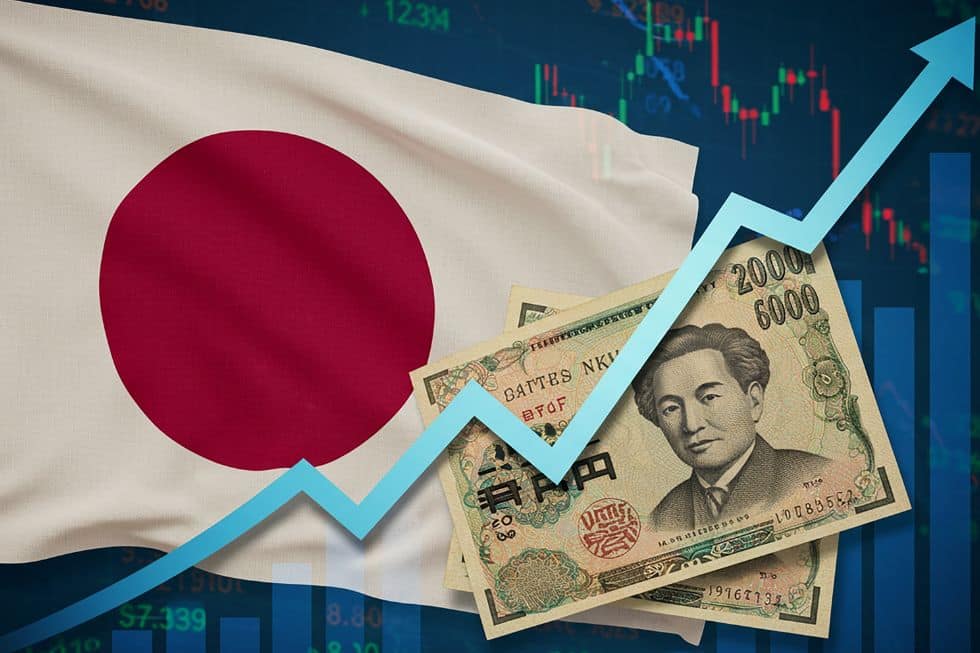



Japan’s economy in 2026 feels like an ocean liner that has finally left the doldrums. For decades, it drifted in a glassy calm — low growth, near-zero inflation and a policy engine running at full throttle just to keep the ship moving. Now the wind has returned. The sails are catching. The wake is visible. But anyone who has ever piloted a large vessel knows the uncomfortable truth: Momentum is a gift and a threat. The same force that finally pushes you forward also makes it harder to turn, harder to stop and far more expensive to make mistakes.
That is the core message you can read between the lines of the International Monetary Fund’s (IMF) 2026 Article IV concluding statement: Japan has displayed impressive resilience, output is running above potential and inflation has been above the Bank of Japan’s (BoJ) 2% target for an extended stretch — but the next phase will be defined less by “escape velocity” than by navigation. With the output gap positive and inflation expected to converge down to the target, the IMF argues that policy should be calibrated to sustain stability while rebuilding fiscal buffers and ensuring labor-market tightness translates into real wage gains. In other words: The liner is moving again; now it must pass through a narrow strait without scraping the rocks.
Goldman Sachs’ outlook harmonizes with that baseline but adds a market practitioner’s edge: The fundamentals look steady — domestic demand, capex and a labor shortage-driven wage cycle — but the policy risks are rising, especially around the timing of BoJ normalization and the durability of expansionary fiscal choices. If the IMF writes like a harbor master, Goldman writes like a weather forecaster watching pressure systems gather. Same sea, different instruments.
A recovery with ballast
Start with what is working. Japan’s growth, in the IMF’s view, has been resilient: it exceeded potential in early 2025 and is projected to remain strong in 2026 even as external demand softens. Domestic demand has stayed firm despite elevated uncertainty and the introduction of US tariffs. This matters because Japan’s post-bubble history is littered with recoveries that depended on foreign tides. A cycle led by domestic demand is like ballast in rough water: it stabilizes the ship.
Goldman’s narrative is similar, and more explicit: 0.8% real GDP growth in 2026, led by consumption and capex, with the economy structurally shifting toward persistent labor scarcity. In that frame, Japan is not merely enjoying a cyclical upswing; it is entering a new regime where labor shortages force wage-setting behavior to change — slowly, unevenly, but meaningfully.
Yet even here the metaphor has teeth. The engine is running, but the passengers are complaining. The IMF notes that nominal wages are rising at a historic pace, but persistent cost-of-living concerns remain because headline inflation has eroded purchasing power and real wages have continued to contract. That is the political economy of 2026: You can tell households the ship is moving again, but they will judge the voyage by how the cabin feels — warmth, food and the price of essentials.
Inflation: the fire in the hearth, not the fire in the walls
Japan’s inflation story is both a triumph and a trial. After three decades of near-zero inflation, prices have been rising faster than the BoJ’s target for three and a half years. For policymakers who spent years trying to light a fire under the economy, this is proof that the hearth is finally warm. But any homeowner knows: Warmth is welcome; smoke is not; and fire in the walls is a disaster.
The IMF’s baseline is that inflation should moderate in 2026 and converge toward the target in 2027, helped by easing global oil and food prices, stabilization in domestic rice prices, and fiscal measures that contain prices. Core inflation, however, may remain more persistent than anticipated, partly because the fiscal stance is projected to be more accommodative.
Goldman’s view is more pointed: Underlying inflation rises moderately amid continued wage growth in the low-3% range, while headline inflation decelerates mainly due to slower food prices. This is the key nuance. Japan may be shifting from a story dominated by imported inflation and commodity spikes to one where service prices — driven by wages — become the durable component. That is exactly the sort of inflation central banks treat as “real,” because it speaks to domestic momentum rather than global weather.
The risk is not simply that inflation stays above target; it is that expectations and wage-setting begin to embed a higher inflation norm before the BoJ has fully regained conventional policy footing. In the metaphor, it’s not the flames you see; it’s the ember you forget, the one that catches later when the wind changes.
Monetary policy: walking the tightrope while the rope is still being strung
Both the IMF and Goldman agree that the BoJ is at a crucial stage. The IMF supports a gradual, data-dependent withdrawal of accommodation, moving toward neutral by 2027, and emphasizes uncertainty around where “neutral” really sits after years at the effective lower bound. This is not cautious for its own sake. It is cautious because Japan’s financial system, wage dynamics and inflation psychology are all being reconditioned at once. The BoJ is trying to tune an instrument while the concert is already underway.
Goldman, by contrast, argues for a faster cadence: shifting from annual hikes to semi-annual, reaching 1% with a 25 basis point hike in July 2026, and aiming for a terminal rate of around 1.5% — its estimate of neutral. It warns that the cost of delaying hikes rises as underlying inflation approaches 2%. Delay too long, and the BoJ might ultimately need to hike into restrictive territory.
These positions are less contradictory than they appear. The IMF is optimizing for stability under uncertainty; Goldman is optimizing for avoiding a “behind-the-curve” catch-up. In metaphorical terms: The IMF says, “Keep both hands on the wheel and don’t oversteer in fog.” Goldman says, “If you wait too long to turn, you may hit the pier.”
What matters most is credibility. The IMF explicitly welcomes Japan’s flexible exchange-rate regime and stresses that BoJ independence and credibility help keep inflation expectations anchored. That independence is not a ceremonial banner; it is a structural beam. If it weakens, policy becomes more expensive: The market demands a premium, the currency becomes more volatile, and every rate move does less work.
Fiscal policy: the sugar rush versus the diet plan
If monetary policy is the tightrope, fiscal policy is the buffet table. The IMF credits Japan’s post-pandemic consolidation — strong revenues and spending restraint — with a primary deficit in 2025 that is estimated to be smaller than in 2019 and among the smallest in the G7. But it also warns that near-term policy should refrain from further loosening, preserving gains in consolidation and explicitly advises against reducing the consumption tax — an untargeted measure that erodes fiscal space and adds to fiscal risks.
Goldman’s analysis lands in the same neighborhood but uses a different street map. It argues that fiscal soundness has been maintained because Japan has enjoyed a “bonus stage” in which nominal growth exceeds the government’s effective interest cost. That makes the debt-to-GDP ratio easier to stabilize — even with deficits — because the denominator grows faster than the interest burden. But Goldman’s warning is sharp: Permanent tax cuts and permanent spending increases can reverse the debt trajectory, and rising market rates eventually raise debt-service costs, making market confidence and debt management more important.
The shared conclusion is straightforward: temporary relief can be affordable; permanent promises are the real danger. A one-off cash transfer is like giving passengers a blanket during a cold night. A permanent tax cut without a funding plan is like removing the ship’s watertight doors because they look bulky — fine until the storm hits.
The IMF’s preference for targeted, temporary, budget-neutral support — and its openness to refundable tax credits — fits this logic. It is easier to steer with a compass than with applause. Fiscal policy should protect the vulnerable without locking in structural deficits that reduce room to maneuver when the next shock arrives.
Financial stability: The tide is rising, and so is the price of duration
Japan’s financial system is broadly resilient, the IMF says, with strong capital and liquidity positions and improved profitability as rates rise. But the sources of risk have shifted. Higher yields can generate valuation losses, and structural vulnerabilities — mark-to-market securities positions, foreign exchange (FX) and cross-currency funding exposures, and pockets of weakness in commercial real estate — remain. Regional banks, in particular, appear more vulnerable due to weaker shock absorbers and demographic headwinds.
This is where normalization becomes real. For years, the BoJ’s outsized participation in the Japanese Government Bond (JGB) market acted like a breakwater, damping volatility. As it reduces its balance sheet and market functioning improves, Japan gets price discovery back — but price discovery is not always gentle. The IMF calls for close monitoring of JGB market liquidity and investor positioning and suggests that the BoJ should be ready for exceptional, targeted interventions if volatility undermines liquidity, while communicating clearly to avoid impairing market functioning.
In plain terms: Japan is learning to sail without training wheels. That is necessary. It is also risky if communication falters or fiscal headlines spook investors.
Structural reform: turning labor shortages into real wage gains
If you want one policy “north star” for 2026, it is real wages. The IMF highlights a stubborn reality: Despite labor shortages, real wage growth has been elusive, and the gap between productivity and wages has widened substantially since the mid-1990s. The diagnosis is institutional: Low mobility reduces competition for skills, weakens worker bargaining power and slows productivity-enhancing reallocation. The prescription is to raise mobility via job-based employment and merit-based pay, correct labor supply distortions, and expand active labor market policies and reskilling — especially to manage AI-driven displacement while capturing productivity gains temporally.
This is where Japan’s macro story becomes a social contract story. An economy with a labor shortage can produce higher wages, but only if the system allows workers to move to higher-productivity areas and firms to compete for talent. Otherwise, you end up with tightness without bargaining power: a paradox that breeds frustration and invites populist fiscal fixes.
The big picture: a strong hull, but watch the steering
Japan in 2026 has sturdier fundamentals than many observers expected: steady growth powered by domestic demand, inflation no longer stuck at zero, corporate investment adapting to labor scarcity and a central bank finally able to move policy rates without fearing immediate relapse into deflation.
But the next test is not whether Japan can grow. It is whether Japan can govern the transition from extraordinary policy to sustainable normalcy. The IMF’s baseline offers the roadmap: calibrate monetary tightening gradually toward neutral, keep fiscal policy from becoming permanently expansionary, rebuild buffers and undertake labor reforms so that real wages rise. Goldman’s overlay adds the caution flags: if the BoJ delays too long, it may have to hike more sharply later; if fiscal expansion turns permanent, the debt trajectory and market confidence can change quickly.
Back to the ocean liner: Japan has regained forward motion. The engines are humming. The sea is not calm, but the ship is seaworthy. Now comes the narrow strait — where small steering errors matter more than raw power. If Japan keeps the wheel steady, uses fiscal policy like a compass rather than confetti and turns labor tightness into durable real wage gains, 2026 can be remembered as the year Japan didn’t just sail again — it learned to steer in open water.
[Kaitlyn Diana edited this piece.]
The views expressed in this article are the author’s own and do not necessarily reflect Fair Observer’s editorial policy.
The Politics of Cheapness: Japan’s Consumption-Tax Truce, the Yen’s Fragility and the Long Shadow of a Weaker Dollar
Japan’s cross-party push to cut the consumption tax ahead of the February 2026 election reflects the seductive politics of cheapness,...
Once an Economic Giant, Japan Now Tests a New Fiscal Path — and the World Is Watching
Global current-account imbalances widened sharply in 2024, revealing a structural divergence driven by entrenched asymmetries between surplus and deficit economies....

Abe and Kishida: The Two Contrasting Visions for Japan’s Political Economy
Japan’s recent economic history is defined by two contrasting visions: Shinzo Abe’s bold reflationary drive centered on monetary innovation and...

Support Fair Observer
We rely on your support for our independence, diversity and quality.
For more than 10 years, Fair Observer has been free, fair and independent. No billionaire owns us, no advertisers control us. We are a reader-supported nonprofit. Unlike many other publications, we keep our content free for readers regardless of where they live or whether they can afford to pay. We have no paywalls and no ads.
In the post-truth era of fake news, echo chambers and filter bubbles, we publish a plurality of perspectives from around the world. Anyone can publish with us, but everyone goes through a rigorous editorial process. So, you get fact-checked, well-reasoned content instead of noise.
We publish 3,000+ voices from 90+ countries. We also conduct education and training programs
on subjects ranging from digital media and journalism to writing and critical thinking. This
doesn’t come cheap. Servers, editors, trainers and web developers cost
money.
Please consider supporting us on a regular basis as a recurring donor or a
sustaining member.
Will you support FO’s journalism?
We rely on your support for our independence, diversity and quality.





Comment