


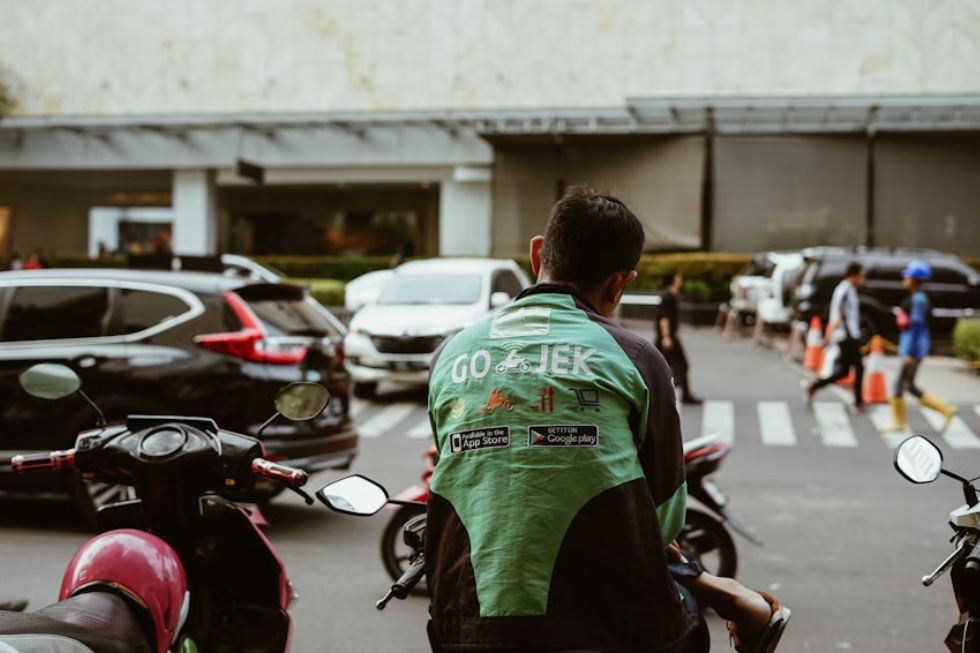




Patrick Walujo’s resignation as GoTo Gojek Tokopedia’s CEO is an intriguing development amid intensifying speculation of a merger between ride-hailing and food delivery firm GoTo and its rival Grab. While management has said in a disclosure to the Indonesia Stock Exchange (IDX) that the upcoming extraordinary shareholders’ meeting in December is not related to any planned corporate actions, the timing of Walujo’s resignation suggests otherwise.
In addition to Walujo, Director of Public Affairs and Communications Ade Mulyana, and Commissioners Pablo Malay and Winanto Kartono, have tendered their resignations.
The market may interpret the leadership change as a preparation for something significant that requires someone with a different view, yet seasoned and familiar enough to take the helm at a critical period focused on merger execution and continued profitability.
Hans Patuwo, who is set to replace Walujo, has led various business lines within the company. As the chief operating officer and president of on-demand services, he oversaw all operations across the ecosystem. Patuwo was once credited by his team as the reason behind the growth, strength and transformation of GoTo’s fintech arm GoPay, thanks to his focus on problem-solving.
As the merger between Southeast Asian giants GoTo and Grab is gaining steam, it’s time to look closer at the potential deal that would dramatically reshape the region’s ride-hailing and food delivery industry. It has direct effects on customers, online drivers, merchants and competitors. However, with Indonesia’s sovereign wealth fund Danantara in the mix, the proposed merger has become a lot more interesting to watch.
Begin (again)
The GoTo-Grab merger speculation began as comes-and-goes industry chatter in the past couple of years, captured initially only by niche business media. Earlier this year, DealStreetAsia reported the resurfacing of talks between the two tech majors, only to be called off in September.
Competition between GoTo and Grab has been costly for both parties due to intense price wars and investments in technology, marketing and expansion. For example, GoTo and Grab have spent 34.5 trillion rupiah (about $2 billion) and 23.55 trillion rupiah (about $1.4 billion), respectively, on sales and marketing expenses to date. That is, on average, about 85% and 19% of their quarterly revenues, respectively.
It indeed makes sense for both companies, as a merger can be seen as an effort to strengthen the balance sheet. The new entity can cut operating expenses, freeing up capital for innovation and expansion. That could mean wider geographical coverage, an unrivaled logistical and digital network.
The merger may restore investor confidence. GoTo could benefit from access to Grab’s stronger international presence and broader capital resources, while Grab could tap into the scale and grasp GoTo has in Indonesia. It remains unclear whether Grab would absorb GoTo or vice versa. Still, data suggests that Grab has much bigger liquidity. By absorbing GoTo, Grab can remove its biggest rival, solidifying dominance in ride-hailing and delivery.
In an interesting turn of events, State Secretary Prasetyo Hadi confirmed that either a merger or an acquisition is afoot between GoTo, Gojek, Tokopedia and Grab Holdings — and that Daya Anagata Nusantara Investment Management Agency (BPI Danantara) is involved to realize such a plan.
Hadi, as quoted by CNBC Indonesia, said the plan was the result of a three-way meeting between President Prabowo Subianto, GoTo and Grab representatives as part of the efforts to create better services for the public, to keep the company running and to create jobs.
Shares of GoTo and Grab had a slight uptick on the next trading day following Hadi’s comment on the potential merger on Friday, July 11th. The following Monday, GoTo’s shares went up to 67 rupiah apiece from 61 rupiah previously. Grab’s shares went up to $5.90 apiece, from $5.56 apiece previously. That being said, both shares are still far below their Initial Public Offering (IPO) prices.
Public concerns
Being the first and largest ride-hailing players in Southeast Asia, GoTo and Grab could control a significant share of the ride-hailing and online food-delivery markets in the region. In other words, a monopoly. In hindsight, it threatens consumer choice and gives the combined entity a potentially unchecked power over pricing and data.
The national commission overseeing business competition in Indonesia, also known as KPPU, can’t do much at this stage. According to Law No. 5/1999, KPPU can only assess mergers and acquisitions that have already happened. In a statement to the media, KPPU Chairman M. Fanshurullah Asa said the commission is open for GoTo and Grab to hold a voluntary consultation with the agency.
KPPU has begun conducting independent research to identify potential impacts from the merger. If the transaction is finally notified to KPPU, the agency can immediately conduct a set of assessments. However, the question remains. If the state is involved and millions of dollars and precious time have been spent to make this merger come true, how far would KPPU maintain its ground?
On the other side, there is also a real possibility that the authority in Singapore will move to block or impose conditions on a merger between GoTo and Grab, especially if the deal risks unfairly reducing competition in the city-state.
The Competition and Consumer Commission of Singapore (CCS) is aware of media reports about the potential merger, but it has not received merger notifications from either of the companies.
Danantara’s involvement is another point of concern. Danantara, Indonesia’s new sovereign wealth fund with 1,000 trillion rupiah (about $59 million) in capital, needs nine months to set up a proper website that includes basic information such as its management and official statements.
As the public continues to question its transparency, the new Sovereign Wealth Fund (SWF) is reportedly exploring a potential minority stake in the combined entity. Danantara is poised to play a government-driven strategic role to ensure commercial return and market balance.
It is still fresh in the memory how the state-owned mobile operator Telkomsel also intended to make a strategic investment in Indonesia’s digital economy by injecting billions of rupiah into GoTo through convertible bonds and equity purchases between 2020 and 2021. It, however, resulted in a major financial loss after GoTo’s shares plunged following its IPO.
The transaction received public criticism, not only due to the massive loss but also because of the potential conflict of interest. Prominent businessman Garibaldi Thohir, who was an independent commissioner of Gojek and later became GoTo’s president commissioner, is the sibling of State-Owned Minister Erick Thohir. Bono Daru Adji, Telkom commissioner, was a legal consultant for GoTo’s IPO.
A name who’s involved in both Telkomsel’s investment in GoTo and potential Danantara’s investment in the GoTo-Grab entity is Pandu Sjahrir. Sjahrir was a commissioner for Indonesia’s Stock Exchange. He has been an early investor in Gojek and later became the president commissioner of GoTo’s financial services arm. These roles placed him, arguably, on the “GoTo side” of the relationship due to his close association with the company.
Now, being the CIO of Danantara, Sjahrir told the media that the transaction will be a business-to-business one. The optics are already murky. Danantara has to ensure nobody has financial or relational ties to GoTo and Grab. The SWF should ensure that no one uses this agency to secure positions or bail out existing positions in GoTo under the cover of “national interest.”
Securing local interests
For Danantara to take a stake in the merged GoTo-Grab entity, one would argue that it signals a major step in state involvement over the nation’s digital economy. It’s clear Danantara has the full support of the state.
Knowing that the foreign entity has access to larger capital, Danantara’s involvement in this potential transaction may be the right way to secure Indonesia’s interest in the deal. It can address concerns over strategic assets and the direction of the digital market. Danantara’s stake could mean safeguarding data sovereignty, ensuring jobs and innovation stay onshore and securing regulatory compliance for the new entity.
However, having Danantara — along with its political influence and access to government data — invest in the new entity, the competition will be a bit tougher, if not impossible, for other ride-hailing companies. The merger itself would arguably create a near-monopoly, giving the platform far greater power to cut incentives, raise commissions and limit alternatives if conditions worsen for drivers, merchants and customers. Political backing will fuel this dominance even more.
Fewer incentives, higher commissions and insensitivity to complaints are detrimental to both the drivers and their customers. The latter would pay more, yet the drivers could get less. In the grand scheme of things, the potential impact could be rising inflation, dropping purchasing power and worsening quality of life.
As the combined entity could control the majority of the ride-hailing market in the region, it will be harder for online drivers — and to some extent merchants and customers too — to voice and advocate their rights. The potential merger has received rejections from the Indonesian Transport Workers Union (SPAI) and Garda Indonesia. They’ve sensed the potential decline of their take-home pay following this merger.
There are looming questions on the deal structure itself: which one will become the surviving entity? What does it mean to have either of the entities as the surviving one? Where would it be based? What kind of taxes should it pay? How much share will Danantara have? Even if it’s not a majority stake, are there any government officials taking positions in the new entity? If so, what will their responsibility be?
There are also questions regarding the customers, the merchants, and the online drivers. What does this merger mean to them? Do they need to pay more to use the ride-hailing service? Will it be more convenient for customers but less bargaining power for merchants?
Just like KPPU and CCS, the public will have to wait for new developments and watch the results closely.
[Zania Morgan edited this piece.]
The views expressed in this article are the author’s own and do not necessarily reflect Fair Observer’s editorial policy.
Should Indonesia’s Sex Workers Be Protected?
In Indonesia, the sex trade is an unspoken topic. Those who work in the industry are ignored.

Coronavirus Makes Indonesians Get Online
The COVID-19 pandemic has changed the perspective of Indonesians when it comes to work and the internet.



Support Fair Observer
We rely on your support for our independence, diversity and quality.
For more than 10 years, Fair Observer has been free, fair and independent. No billionaire owns us, no advertisers control us. We are a reader-supported nonprofit. Unlike many other publications, we keep our content free for readers regardless of where they live or whether they can afford to pay. We have no paywalls and no ads.
In the post-truth era of fake news, echo chambers and filter bubbles, we publish a plurality of perspectives from around the world. Anyone can publish with us, but everyone goes through a rigorous editorial process. So, you get fact-checked, well-reasoned content instead of noise.
We publish 3,000+ voices from 90+ countries. We also conduct education and training programs
on subjects ranging from digital media and journalism to writing and critical thinking. This
doesn’t come cheap. Servers, editors, trainers and web developers cost
money.
Please consider supporting us on a regular basis as a recurring donor or a
sustaining member.
Will you support FO’s journalism?
We rely on your support for our independence, diversity and quality.





Comment