


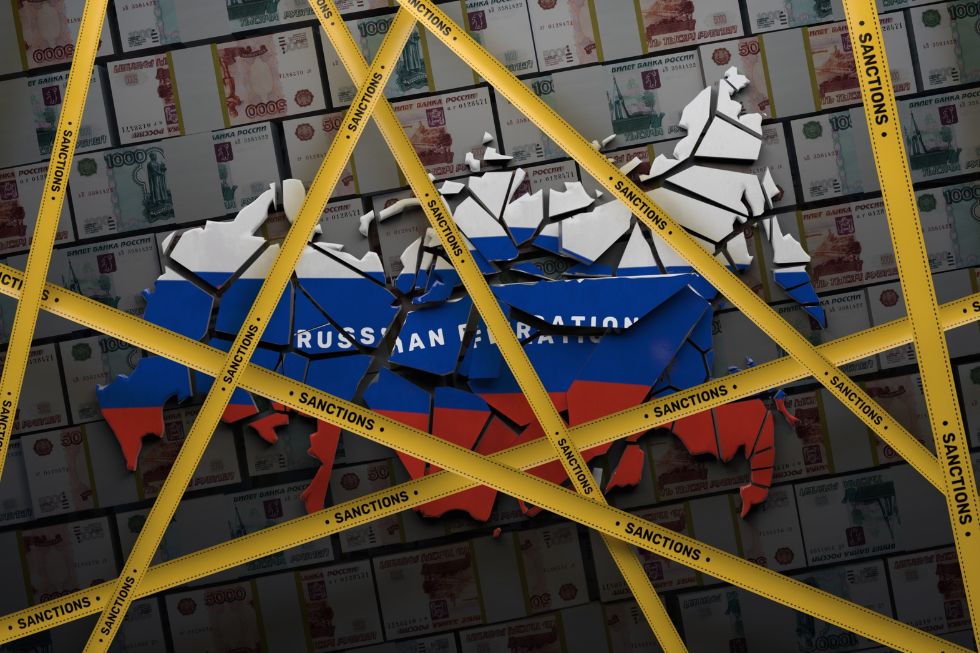



Nosce te ipsum (read yourself)
— Thomas Hobbes.
The intellectual of the 21st century finds himself between a hammer and an anvil. On the one hand, there is freedom of choice and the broad availability of media representing all political orientations and formats, from full-fledged printed newspapers to bloggers with no professional journalistic training.
On the other hand, the emergence of a phenomenon of mass entry into journalism gives rise to autonomous branches of propaganda, whose breadth is equally vast: from old state newspapers to influencers who may lack strong analytical abilities, but who nevertheless possess inherited public trust from the past and a talent for engagement.
As a result, even such powerful authoritarian systems as President Vladimir Putin’s Russia are unable to control and turn into a single mouthpiece of propaganda not only liberal and opposition Russian media and opinion leaders, but even media loyal to the regime itself.
The resulting picture is this: numerous pro-Putin Russian bloggers, independent of federal channel institutions, are able to simultaneously convey different emotional tones to the actions of the authorities, creating meanings without crossing into the opposing camp.
Mythology from below: autonomous propaganda
One blogger, well-read in Russian history, may take Ivan the Terrible’s Oprichnina — as a result of which the tsar acquired the full scope of a punitive apparatus for terror against the elites of that time — and link it to the case when, in the early 2000s, Putin began a struggle against the oligarchs of the “Family” (a clan of businessmen united around Boris Yeltsin), in particular against Mikhail Khodorkovsky, who financed opposition parties.
Without delving into the details, our fictional blogger may fervently compare Putin to Ivan the Terrible. And the image he creates of Putin as a “fighter against traitors,” or, in a more literary form, a “purifier of the Russian land,” has every chance to become fixed and crystallize into a myth.
Especially if one takes into account the recent installation of a monument to Ivan the Terrible in Vologda on November 4, 2025, and the prevailing attitude of the Russian people toward oligarchs. According to a poll, 43% of Russians are unequivocally opposed to the presence of oligarchs in politics.
From another, more sober perspective, Khodorkovsky was simply a rather successful businessman who was in negotiations with ChevronTexaco, an international giant, for a $6.5 billion deal and a stake in his company. Putin’s actions, meanwhile, were more likely reactive behavior, provoked by the factors of the upcoming presidential elections, a strategy of political survival and personal prejudices against the oligarchic “Family.”
As a result, at that time, publications began to appear in the press, both international and Russian, with headlines such as “an attack on business.” All of this, to put it mildly, does not lead to investment or to easing the conduct of business in Russia.
Further on, from another intellectual angle but with similar convictions, a blogger may equate Putin’s rule in the economic sphere with Thatcherism and neoliberalism, basing such judgments on a style of governance grounded in the suppression of elite groups in order to strengthen power.
Under former UK Prime Minister Margaret Thatcher, these were trade union leaders and members of her party; under Putin, oligarchs and opposition parties. The resulting image is that of a tough, classical liberal. Pyotr Stolypin, one of the last reformers before the Russian Civil War, is also often invoked.
And once again, the fictional blogger leads the reader onto the pages of myth, where there is no place for truth about the relationship between the state and business without the analogies of myth-making.
Upon closer examination, the myth of Putin as an economic liberal, ready for harsh measures to rid the market of politicization, does not withstand the facts. Together with his community of security officials, Putin initiated the curtailment of the oligarchs’ economic power precisely in order to remain in power. Putin facilitated this through the destruction of Khodorkovsky, who financed the opposition, and through a strategy of winning elections by exploiting popular hostility toward oligarchs.
As can be seen, in reality, Putin had no plan to construct an economic philosophy of market and law in the new Russia. And while neoliberalism and Thatcherism carry ideas of the primacy of the market over the state, Putin, wishing to preserve his security officials from manipulations against oligarchs, suppresses business for electoral success.
Through his real actions, Putin delivers the final blow to the myth, leaving only the image and a political-technological design.
Mythology from above: state propaganda
If in the previous case the myth arose “from below,” through the numerous interpretations of bloggers and commentators, thereby distancing us from the truth, there also exists a phenomenon opposite in its motivation — when a myth is constructed “from above.”
The myth is constructed through institutions that deliberately shape symbolic meaning. In the second case, the myth ceases to be merely an emotional narrative and becomes an instrument of political design. Let’s illustrate motivation with an example from art:
For genuine conservatives, the value of classical art lies in the traditions of painting. They will create or purchase works by those artists who strive to reproduce the techniques of the old masters and to make copies not for the sake of copying itself, but for the sake of preserving traditional techniques. Here lies a deep metaphor of symbolism that, in this case, explains the features of conservatism.
When repainting a work by an old master, we primarily strive to replicate the technical methods and the master’s tradition. Only afterward do we think of the painting as a copy. The opposite extreme is the purchase of so-called “kitsch” paintings. Such art often has only one aim: to oppose contemporary art while hiding behind the myth of the great art of the past, without any connection to the real traditions of that past.
Here we encounter a new function of myth, also inherent in politics: an appeal to nonexistent traditions. To myths of forgotten customs, resurrected by propaganda and appearing morally outdated for the modern world. A tradition that does not unite contemporary people is a dead tradition. In politics, such an approach, with its appeal to ancient traditions, is considered crudely nonconservative.
In the case of Russia under the authoritarian rule of Putin’s regime, this practice shifts into the mode of propaganda. Since the time of Yeltsin, the appeal to Orthodoxy as a “centuries-old tradition” has ignored the fact that the institutional fabric of the Russian Church was destroyed in the 20th century, and that the religious practice of the majority of Russians today does not correspond to the model presented by the authorities as a “historical norm.”
After the Revolution of 1917 and the persecution of the Church, people, in order to survive, were forced to remain silent about their past and their family religious traditions. And despite the restoration of churches after World War II, Orthodoxy in the USSR remained largely within rural communities, with a loose and selective set of religious rules.
This made it possible to preserve Orthodoxy: according to surveys, about 72% of Russians identify as Orthodox. However, only 10% attend religious services at least once a month. Among the youth, the connection to religion is even more ephemeral: fewer than 34% of those aged 18–25 consider themselves Orthodox.
This delivers a visible blow to the myth of Russia’s religious tradition. For a tradition that does not unite contemporary people slowly dies. Today’s reality is such that religion occupies a symbolic, but not a practical, place in the spiritual and personal enrichment of Russians.
Result: a political institution is created that, as a result of its history, has lost the ability to rely on tradition. It now stands on an imitation of tradition, which does not lead to the unification of society.
Philosophical result: the creation by the authorities of a myth of traditions is dangerous, first of all, because it substitutes the concept of “tradition” with myth. As a result, an illusion of a strong society rooted in tradition is created. In reality, however, dead traditions hinder the formation of human associations and, subsequently, of civil society.
The absence of “civil society” plays directly into the hands of any dictator or autocrat of the Putin type. Today, thanks to the illusion of a strong, traditional society created in Russia, propaganda can justify even the most horrifying adventures, such as the war in Ukraine, which Putin began under the pretext of “protecting the Russian Church and language,” without taking into account the reality of traditions in Ukraine and relying solely on the myth created within Russia.
Reflections on the method of symbolism
The paradox: by recognizing myths of perception, formed at different levels of propaganda (systemic media, bloggers), as false, we risk endangering other people’s right to the otherness of judgment.
At the same time, an unspoken law of intellectuals states that emotions derived from figurative creativity correlate only weakly with a realistic understanding of politics, since they are instruments for creating myth. Thus, a question arises from this paradox: how are we to seek truth in a world where an established myth of perception intertwines with the political tradition of symbolism and the right to dissent?
We cannot eliminate emotions and personal judgments from the linguistic practice of politics. As Aristotle wrote, politics is the highest sphere of the community. By a political community, Aristotle understood a union of people that includes all smaller unions and exists for the sake of the highest good. After all, what is good in one action for a single individual can become a potential good for the entire state.
Yet emotions and symbolic thinking, surprisingly, can also lead to good. For example, by reinterpreting what is happening through art, we can generate new, interesting perspectives and methods of inquiry. But can we also reinterpret it for the highest union itself, for the understanding of the political?
For practice, let us consider an example of a thought experiment using the method of symbolism. Through a method of topologizing the categories of history, sociology and politics, we combine them with metaphors from art, which replaces, in our consciousness, definitions of political categories with images, opening the path to pure cognition of the features of the object under analysis. Let us begin the experiment and take musical genres as metaphors:
Russian waltzes are regime propagandists. Russian marches are the right-wing opposition. Russian absurdist theater is the left-wing opposition. Historically, the theater of the absurd was not popular in Russia and arrived there from abroad. In the same way, the Russian opposition, hiding abroad from Putin, loses trust within the country.
The result of the symbolic analysis: we obtain a new characteristic of the left-wing opposition in Russia (distrust on the part of Russians) while reflecting on musical genres. Such an analysis can also be applied to more complex phenomena. Its main goal is to help thought look at old things through new concepts, which fits perfectly into the work of the intellectual.
And in answering the question of this section, it is necessary to view the task of “debunking myths” without the prism of myths themselves. In a world of information as fast and fluid as shifting sand, it is difficult to get to the truth simply by discarding false options.
The modern intellectual needs not so much a new method as a new strategy of work, a strategy for preserving concepts and ideas. And in order to protect oneself from crisis while doing so, the method of symbolism described above helps to develop ideas through a strategy of acquisition without destruction.
Politics: The path of creativity
The duty and principal challenge of Eastern European conservatives lies in whether they are able to reinterpret the myth of Putin in such a way as to cleanse it of falsehood, while at the same time preserving a space for symbolic thinking, without losing creativity and tolerance for ideas.
In other words, to protect conservatism from the danger of turning into a mythical cult, which threatens our desire to preserve the intellectual tradition of symbolism represented by multifaceted images ranging from Hobbes’s Leviathan to the Ship of Theseus.
Thanks to this tradition, conservatism retains the deep inner meaning of literature and the depth of imagery. In contrast to this symbolic method stands the desire to simplify and fix the image of the political in a way that would be convenient for propagandists, for example: “Putin is the savior of Europe” or “Putin is the defender of traditional values.”
The duty of Russian thinkers, meanwhile, is to free Orthodoxy from the propagandistic myth of an “eternal tradition” and to grant it the respect it deserves within the framework of a real tradition of memory and respect for the past.
[Casey Herrmann edited this piece]
The views expressed in this article are the author’s own and do not necessarily reflect Fair Observer’s editorial policy.
The “Conservative Art” Trap: Reactionary Conservatism Misses the Values That Make Art Great
American conservative efforts to promote “classical realist” art have led to the promotion of kitsch that lacks the innovation that...
Why Putin Is Not a Conservative: The Destruction of Integrity
Since first obtaining Russia’s highest office to start the new millennium, President Vladimir Putin has evolved in many ways, excluding...
Russian Influence in Central Europe Evolves From Disinformation to Democratic Erosion
Russia sees Poland and Romania as key targets for its disinfomation campaigns because they back Ukraine and hold elections. Its...
Outside Ukraine, Russia Is Now Losing Its Grip
Russia may be holding onto the ground in Ukraine with some success, but its power and influence are waning. It...
Support Fair Observer
We rely on your support for our independence, diversity and quality.
For more than 10 years, Fair Observer has been free, fair and independent. No billionaire owns us, no advertisers control us. We are a reader-supported nonprofit. Unlike many other publications, we keep our content free for readers regardless of where they live or whether they can afford to pay. We have no paywalls and no ads.
In the post-truth era of fake news, echo chambers and filter bubbles, we publish a plurality of perspectives from around the world. Anyone can publish with us, but everyone goes through a rigorous editorial process. So, you get fact-checked, well-reasoned content instead of noise.
We publish 3,000+ voices from 90+ countries. We also conduct education and training programs
on subjects ranging from digital media and journalism to writing and critical thinking. This
doesn’t come cheap. Servers, editors, trainers and web developers cost
money.
Please consider supporting us on a regular basis as a recurring donor or a
sustaining member.
Will you support FO’s journalism?
We rely on your support for our independence, diversity and quality.





Comment