


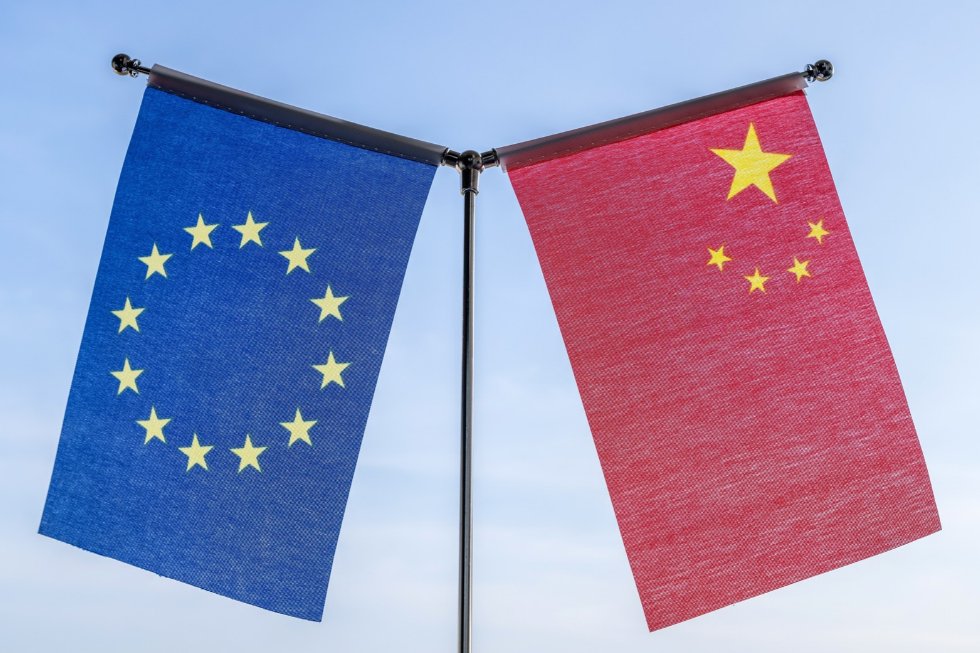



In April, I spent four days in a role nobody photographs. I was the Mandarin–Hungarian translator between Chinese executives and European dealers at Foton Motors’ Global Media Day in Beijing, standing between two men who each thought they understood exactly what the other one had just agreed to. They hadn’t. Not quite. What they’d agreed to was what I’d said.
I remember one conversation where a European representative asked whether production deadlines could be moved forward. The Chinese executive answered almost immediately. Literally translated, his response sounded cautiously optimistic. The problem was that nobody in the room heard the literal sentence. They heard the cultural one. In many Chinese business settings, the phrasing he used often signals that the discussion is effectively over while allowing everyone involved to leave the table without embarrassment. I had a decision to make. Translate the words exactly, and the European side might keep negotiating something that had already been declined. Translate the intention, and the meeting could move forward naturally. Everything moved on without hesitation. That was exactly what I wanted. Good interpreting usually goes unnoticed.
Europe spends a lot of money trying to understand China’s economy, industrial policy and strategic ambitions, from the European Commission’s own standing strategic engagement with China to dedicated research bodies like Berlin’s Mercator Institute for China Studies. Yet surprisingly little attention is paid to the point where those policies become conversations between actual people. The room where a deal succeeds or quietly begins to unravel rarely appears in discussions about Europe-China relations, even though every investment, partnership and joint venture eventually passes through one.
High-context and low-context diplomacy
What made it hard wasn’t vocabulary. More than once I found myself choosing between a translation that was literally accurate and one that communicated what everyone in the room actually understood. What made it hard was that the two sides in that discussion were running on different assumptions about what a sentence was doing. This is the kind of gap anthropologist Edward T. Hall described decades ago as the difference between low-context cultures (where meaning sits mostly in the words spoken) and high-context cultures (where meaning sits in the relationship and what’s deliberately left unsaid). Business researcher Erin Meyer has built a whole practical framework, the Culture Map, around exactly this kind of gap, because it recurs constantly in Sino-European business and isn’t solved by everyone simply speaking better English.
This isn’t a new problem. In 1793, the Macartney Mission arrived in China seeking equal diplomatic relations with the Qing court on Britain’s behalf. By the time the request passed through translation, it read less like a proposal between equals and more like a request for tributary status, a mistranslation historians still cite as a founding moment of centuries of Sino-Western misreading.
A Chinese executive would answer a direct question with something that sounded, in literal translation, like agreement, when what it actually signaled was a soft no that required someone else, later, in private, to close out properly. A European dealer would ask a pointed follow-up question expecting directness back, not realizing that in the room, pushing twice on the same point in front of other people could read as a challenge to someone’s standing, not just a request for clarity.
The misunderstandings rarely flowed in only one direction. European directness could sound confrontational. Chinese indirectness could sound evasive. Most of the friction came from neither side realizing they were following different rules while assuming they were playing the same game.
Neither side was being evasive or aggressive. Both were being completely normal inside their own system. Most of the time, my job wasn’t translating words. It was deciding how much of the unspoken context around those words needed to travel with them so the sentence landed the way it was meant to, not just the way it was said.
Macro-geopolitics and China-Hungary trade
Standing in Beijing also changed how I read the news back home. Before that week, announcements about Chinese investment in Hungary had felt distant, almost abstract. They were measured in millions of euros, production capacity and government statements. After watching those meetings unfold, I started thinking about the conversations that came before the press releases. Every factory announced in Hungary began as a discussion between people trying to bridge different expectations, business cultures and, sometimes, languages.
Hungary has become one of the places where China’s relationship with Europe stops being an abstract geopolitical discussion and becomes ordinary daily work. The Chinese company BYD’s roughly €4 billion electric vehicle plant in Szeged and Contemporary Amperex Technology Co., Limited’s (CATL) €7.3 billion battery plant in Debrecen both sit at exactly this intersection, and the European Commission is currently investigating whether the subsidies attached to the Szeged plant comply with EU state-aid rules. Engineers, managers, suppliers and government officials have to communicate across different professional cultures every day. Those conversations rarely appear in public debates, yet they shape the success of projects that eventually become political talking points.
Why AI can’t replace human intelligence
Most people assume machine translation will eventually solve these problems. I’m less certain. AI has become good at translating vocabulary and grammar. What it still struggles with is intention.
Recent research on tailoring machine translation to audience and intent notes that translation systems have historically been optimized to match a source text, not to serve the underlying purpose a sentence is meant to accomplish, and that gap in purpose-awareness remains an open problem even for current large language models. A sentence can preserve a relationship, soften a disagreement or quietly end a negotiation without saying any of those things directly. That limitation matters most in exactly the meetings where trust has to be built before business can happen.
Lessons learned
When I think back to those four days in Beijing, I don’t remember product launches or presentation slides. I remember conversations that nearly drifted off course before quietly finding their way again. Nobody applauded those moments because nobody noticed them. That’s the strange thing about good interpreting. If it succeeds, it disappears. The investment gets announced, and the headlines move on.
We often measure international cooperation by the agreements that survive. After Beijing, I started thinking more about the conversations that made those agreements possible in the first place. Europe has spent decades investing in understanding China’s economy. It may be time to invest just as seriously in understanding the people expected to turn those economic strategies into working relationships.
[Alexandros Ouzounis edited this piece.]
The views expressed in this article are the author’s own and do not necessarily reflect Fair Observer’s editorial policy.
China’s Economic Crossroads: Growth, Inequality and Geopolitical Pressures
China’s 2025–2026 economic recovery remains uneven, with investment in key sectors declining while exports and industrial profits rise. Urbanization and...
China Watch: China’s Rise and the New Multipolar Global Order
China’s rise is reshaping the global economic order, fostering new regional alliances like BRICS and the Shanghai Cooperation Organisation while...
Support Fair Observer
We rely on your support for our independence, diversity and quality.
For more than 10 years, Fair Observer has been free, fair and independent. No billionaire owns us, no advertisers control us. We are a reader-supported nonprofit. Unlike many other publications, we keep our content free for readers regardless of where they live or whether they can afford to pay. We have no paywalls and no ads.
In the post-truth era of fake news, echo chambers and filter bubbles, we publish a plurality of perspectives from around the world. Anyone can publish with us, but everyone goes through a rigorous editorial process. So, you get fact-checked, well-reasoned content instead of noise.
We publish 3,000+ voices from 90+ countries. We also conduct education and training programs
on subjects ranging from digital media and journalism to writing and critical thinking. This
doesn’t come cheap. Servers, editors, trainers and web developers cost
money.
Please consider supporting us on a regular basis as a recurring donor or a
sustaining member.
Will you support FO’s journalism?
We rely on your support for our independence, diversity and quality.





Comment