Dear FO° Reader,
Over the past few weeks, we have covered tense elections and volatile school, civilian and worker-led protests as flashpoints erupt around the world. Similar underlying grievances surfaced in Paraguay this month, where anticorruption protests took place after a catastrophic bank collapse.
On November 3, Ueno Bank, a major digital bank, collapsed over a solvency crisis. Following leaked news stories and public pressure, regulators discovered the bank did not have enough money to cover potential financial losses, so the central bank (BCP) seized control of the business. The collapsed bank once marketed itself as a leader in financial inclusion, serving more than 60% of working Paraguayan adults, including market vendors who had never before held a bank account.
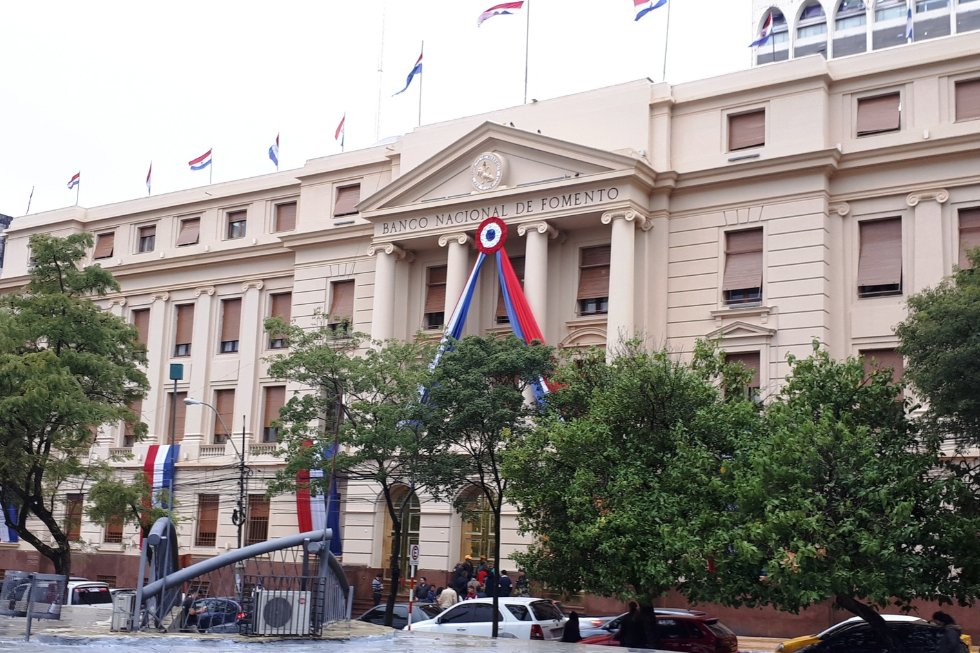
 Via Shutterstock
Paraguay’s President Santiago Peña resigned on November 5, but the Senate unanimously voted to impeach him rather than accept his resignation. Peña once held shares in the bank’s parent company and stands accused of funnelling public pension funds into Ueno. Though opposition figures also attempted to impeach Vice President Pedro Alliana, they did not gain congressional approval. Authorities then arrested Peña on November 6 and swore in Alliana as the new president.
Public trust in digital systems is eroding worldwide, and this is one of many such cases. Though the BCP reimbursed most Ueno depositors, the bank did not properly insure public funds that made up around 70% of the bank’s deposit volume. The reimbursement process left many bank customers without access to their money or a means to buy necessities for several days, endangering many lives.
However, the speed of the protests and uproar highlights the simmering anger at the system. Like many other nations, Paraguay is rejecting corruption after a shocking failure.
Sources:
Paraguay digital bank collapse leaves market traders scrambling for alternatives | Reuters
Paraguay widens ueno bank probe with fresh charge against ex-president Peña | Reuters
Ousted Paraguayan president placed under house arrest after bank collapse | AP
What to Know About Paraguay’s Banking Crisis and Presidential Impeachment | Babel Institute
Crisis-hit Paraguay impeaches Pena, replaces him with VP Alliana | AFP.com
Paraguay swears in new president as Peña is put under house arrest | Reuters
2026 Paraguay banking crisis | Wikipedia
Bank of England and IMF bosses warn of cyber threat to trust in financial system | The Guardian
A troubled country (and economy) in South America
It should be noted that this is far from Paraguay’s first experience of economic instability where the banks are concerned. Between 1995 and 1998, 13 banks and 35 financial firms closed their doors. Subsequently, in 2002, Paraguay also endured a banking crisis triggered by regional fallout from economic crises in Argentina as well as the collapse of Banco Aleman.
Now, in this month’s crisis, millions of Paraguayans were locked out of their bank accounts. Customers opened their mobile banking apps only to discover that the app displayed the following message: “Try Later.” This collapse is especially notable in light of Paraguay’s ambitions to become a low-tax “new Dubai,” and the fact that Paraguay has also presented itself as “a model of economic stability.”
Much of this economic turmoil is a product of Paraguay’s troubled recent history of dictatorship under Alfredo Stroessner (1954–1989). His dictatorship was marked by “severe political repression, endemic corruption, extensive patronage networks and staunch anti-communism.” Since the end of his rule in 1989, the country has also experienced 3 military coups (1996, 1999 and 2000), in addition to the assassination of the country’s vice president in 1999.
After the transition from dictatorial rule under Stroessner in 1989, economic reforms were introduced with the intent of transforming Paraguay into a “market-based system of monetary management.”
The collapse of Ueno is surprising given that, within the last decade, Paraguay has been one of the fastest growing economies in Latin America. Nevertheless, according to a 2024 World Bank memorandum, even though Paraguay saw economic growth from the 2000s until the 2010s, the rate of economic growth has slowed down significantly since then. Paraguay also struggles with acute inequality, as evidenced by the 2021 World Bank Human Capital Index.
Sources:
A Country’s President Led to a Bank’s Stunning Rise, and its Fall | The New York Times
A digital bank’s collapse toppled Paraguay’s president within days – and cracked the myth of the ‘Dubai of South America’ | Fortune
Qué pasará con los ahorros de casi la mitad de los paraguayos el escándalo de Ueno Bank | DW Español
How One Bank Collapsed a Country: the Ueno story | Simply Finance Stories
Economic Growth in Paraguay | Inter-American Development Bank
Paraguay GDP Annual Growth Rate | Trading Economics
From Landlocked To Land Of Opportunity: Paraguay Country Economic Memorandum | World Bank Group
A Transition in Search of Democracy: Democratic Stagnation and Authoritarianism in Paraguay | Latin American Perspectives
The corruption that caused the collapse
Ueno collapsed because the bank’s solvency ratio dropped far below the legal requirement, essentially portraying its capital to risk-weighted assets as insufficient. The central bank then put Ueno into resolution — an action that lets regulators transfer a bank’s money to another institution before liquidating its assets. The government moved funds to accounts at other banks or gave bank customers a new account at assigned commercial institutions.
Ueno leveraged money from borrowers and its loan portfolio to invest in business partners of the bank’s CEO, Miguel Vásquez. Some of Ueno’s agreements were signed by the same names on both sides, according to a former Paraguayan finance minister. The bank even wrongly counted some business costs as assets.
Peña put hundreds of millions from public pension funds into the bank. He was invested in Ueno in 2023 as well, when his presidential term started. His shares amounted to 1.6% of the company’s capital, which he sold by 2025. During his term, prosecutors believe he leveraged his power to make public state-owned institutions keep deposits in Ueno.
He also appointed the previous Ueno leader, Carlos Carvallo, as the head of the BCP in 2023. Both men face charges for breach of trust and administration for personal gain. Prosecutors also added criminal association charges for Peña, who pleaded not guilty, and he is in pretrial detention at a military facility. Authorities arrested and charged Carvallo for producing false public documents, and charged 5 former BCP officials, several Ueno executives and Ueno’s CEO, Vásquez.
Sources:
How a bank collapse left millions in limbo and toppled Paraguay’s president | NPR
How Paraguay’s Ueno collapse is only its latest banking crisis | Al Jazeera
Who is Miguel Vázquez, the millennial banker and athlete at the center of Paraguay’s crisis? | BBC
Paraguay widens ueno bank probe with fresh charge against ex-president Peña | Reuters
The public’s response
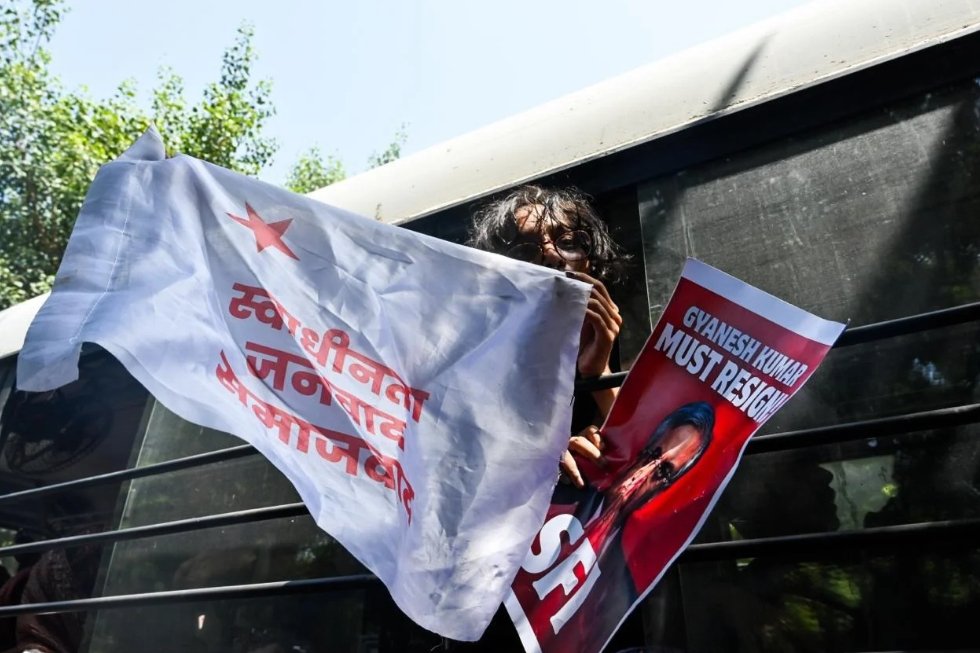
Protests broke out on the streets of Asunción, Paraguay, within hours of the collapse. A crowd of thousands marched towards Congress on the first night, but a police blockade stopped them. Over several days, national police officers deployed pepper spray, water cannons and rubber bullets on protestors. The crowd burned barricades and effigies of Peña and stayed outside his residence to make sure he wouldn’t escape.
Paraguay’s National Deposit Guarantee Fund (FGD) insures regular customers up to 75 times the monthly minimum wage, capable of covering 97% of individual accounts. This is supposed to at least ease the struggles of everyday people. Yet, on November 16, depositors protested outside the central bank headquarters claiming they had not even received their first payment.
On November 7, public school unions also protested and called for an indefinite national strike to guarantee the restoration of public funds, of which the bank held $850 million. Civil servants demand full reimbursement of government-owned Ueno accounts despite its uninsured status.
The central bank analyzed Ueno’s assets and liabilities, assuring legislators that there is enough from Ueno to cover all public funds, and that steps would be taken to make sure that nothing like this disaster would ever happen again. However, the new president of the central bank estimates that losses from Ueno’s collapse could reach up to $1 billion.
Sources:
Video: Police use pepper spray and rubber bullets to repress protesters in Asunción | ABC Color
How Paraguay’s Ueno collapse is only its latest banking crisis | Al Jazeera
2026 Paraguay banking crisis | Wikipedia
Those affected by Ueno demand written guarantees to recover their deposits | HOY Daily
Ueno Bank: Savers protest in front of BCP over outstanding payments and lack of answers | ABC Color
Teachers strike in Paraguay to demand pension fund protections following bank’s collapse | AP
Ueno Bank: BCP told Deputies that there are assets to pay depositors and return public funds | ABC Color
Banks could assume Ueno’s deposits through the transfer of assets and liabilities, according to the director of the Central Bank of Paraguay (BCP) | Nanduti
Losses from Paraguay bank failure could reach $1 bn: Central Bank chief | AFP.com
An uncertain future
Officials promise that Paraguay will recover from this failure, and many are working to return citizens’ lost money. There are many lessons that can be learned from this collapse, from one bank holding so much power over a single nation, to the need for greater oversight over financial institutions and the connections they have to those in power, but they all must be learned quickly.
While the error messages appeared suddenly, the rot that led to them took time to fester, and will take time to dig up. The quick response is inspiring, but action from those at the top must be equally as swift. The country might yet recover, but only if new safeguards are put into place to prevent such corruption from ever taking root again.
Aliyah A. Omar, Casey Herrmann, Alexandros Ouzounis
Assistant Editors













Comment