


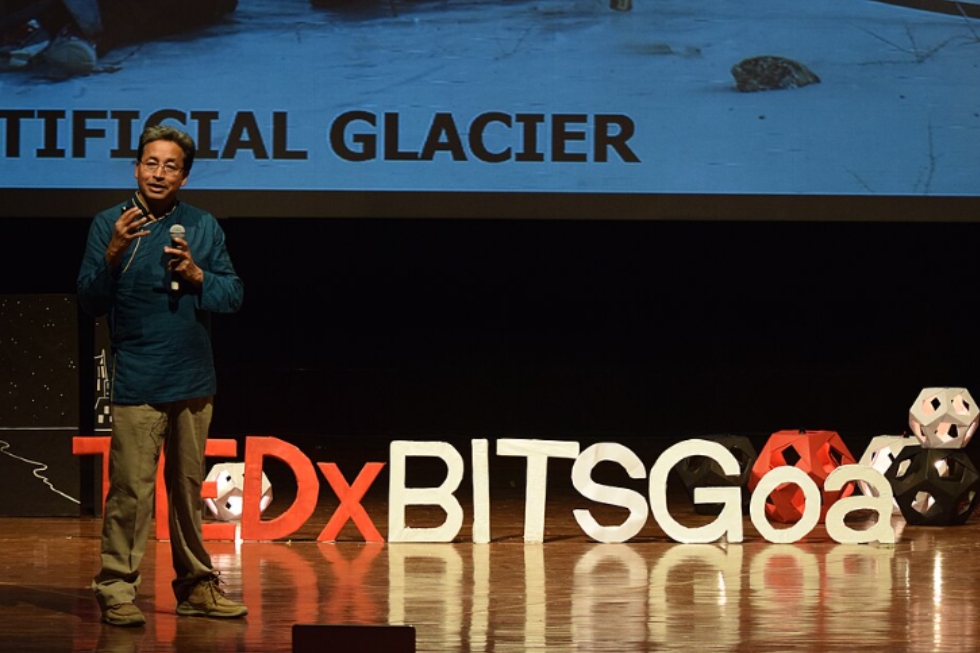



Activist Sonam Wangchuk gained nationwide attention by joining an indefinite hunger strike at Delhi’s Jantar Mantar in solidarity with the Cockroach Janta Party (CJP), a youth-led movement demanding Education Minister Dharmendra Pradhan’s resignation over India’s exam scandals — and pushing for reform of the Indian education system and accountability for the suicides and paper leaks behind it.
Yet over the 26 days of his fast, which ended on July 23, a review of news coverage and institutions’ own public channels finds no comparable statement from any institute, faculty senate or alumni association. This silence is more telling than any official statement could be. These institutions’ prestige rests substantially on the credibility of the exams Wangchuk is protesting, exams that cost students their lives. Still, the contrast is stark: These top institutions rely on the credibility of the very exams Wangchuk was fighting for, yet they remained silent throughout his protest. The silence isn’t neutral; it’s a stance.
The man behind the fast
Wangchuk is an Indian engineer and educator, best known for the Ice Stupa — a low-cost artificial glacier that carries meltwater to farming communities — and for decades of work reforming experiential, hands-on science education. He designed a solar-heated tent for the Indian Army, deployed near the Galwan Valley to keep soldiers warm at high altitude without burning kerosene.
Wangchuk joined the fast on June 28, 2026, at a Jantar Mantar protest site already occupied by the CJP, which had begun online in May as a satirical response to a remark by India’s chief justice, Surya Kant, widely reported as likening the country’s unemployed youth to “cockroaches.” By late June, the movement’s central demand was Pradhan’s resignation over a wave of examination failures.
In May, a leak forced the nationwide cancellation of the National Eligibility cum Entrance Test for Undergraduates (NEET-UG), after a “guess paper” containing roughly 140 of the exam’s questions was found to have circulated in advance. Officials re-administered the exam to more than 2.2 million candidates on June 21, under tighter security. NEET-UG was only the most visible case: over the preceding year, at least half a dozen other major recruitment and board exams were also canceled or re-held after leaks. The scandal fed calls, including from Wangchuk and the CJP, for Education Minister Dharmendra Pradhan to resign.
What the exam scandal cost — and the crackdown that followed
Wangchuk has said the broken exam system had already pushed young people to suicide, and that he wanted accountability from the education department. Outlook India documented at least 13 suicides among NEET aspirants by mid-June. Grieving families and, in some cases, police accounts linked these deaths to the stress of the exam’s cancellation and forced re-test. Al Jazeera separately profiled four students whose families drew the same connection. The exact toll is disputed. The underlying pattern is not.
Wangchuk’s own health deteriorated sharply over the course of the fast. He lost about 11 kilograms and began losing muscle mass. As his condition worsened, opposition leaders stepped up calls for him to stop. On July 15, the 17th or 18th day of the fast, Congress Member of Parliament Shashi Tharoor posted an open letter on X calling the protesters’ agitation “the anguish of a generation” and urged Wangchuk directly to end his fast. A public-interest petition asked the Delhi High Court to order emergency medical care for him; the court sought a response from the federal and Delhi governments.
On July 18 — the 21st day of his fast — Delhi Police in plain clothes removed Wangchuk from Jantar Mantar and took him to hospital; protesters alleged some officers had posed as doctors to get near him. Supporters formed a human chain trying to block the move, and several were injured in the resulting scuffle. Two days later, on July 20, police used lathi charges, tear gas and metal pellet guns against the students who remained at the protest site. Many of those beaten and detained were teenagers who had traveled from small towns for the exam retest; battered and, in some cases, hospitalized, they returned to Jantar Mantar in the days that followed rather than abandon their demands.
Among those left permanently injured was a 28-year-old journalist covering the crackdown, with roughly 20 metallic pellet-like objects still lodged in his body weeks later, according to Outlook India and National Herald. Separately, 19-year-old student Sahil Lochab also had pellets removed at All India Institute of Medical Sciences (AIIMS), and a hospital report attributed a second protester’s ear trauma to a gunshot wound, which police disputed. The Supreme Court subsequently questioned whether the pellet guns’ use exceeded what police rules allow for crowd control, and ordered the Delhi Police to produce its standard operating procedure for their use. A separate Delhi High Court petition raised concerns about undisclosed police surveillance of protesters at the site.
The use of pellet guns against students transformed an examination dispute into a wider question about the state’s response to dissent. That response is now under the same judicial scrutiny as the exam scandal that started it. Wangchuk ended his 26-day fast on July 23, after the government gave him a written assurance that it would hold a parliamentary discussion on the exam system, consider compensation for the families of NEET aspirants who died by suicide, and bring no cases against peaceful protesters. Two days later, on July 25, Pradhan resigned as education minister, and the CJP declared its monthlong agitation a success.
The case for staying quiet
The University of Chicago’s 1967 Kalven Report argued that a university should be a place where different views can be debated, rather than an institution that takes sides on political and social issues. Applied to Wangchuk’s fast, this view would suggest that an Indian university can stay silent without failing in its academic role. It can leave the political debate to its students and faculty.
But the Kalven principle was meant for issues outside the university — wars, elections and foreign policy — where the institution has no direct stake. A disputed entrance exam is different. When the fairness of admissions is in question, the university is not simply taking a side in a political debate; it is addressing the process by which it chooses its own students. A university does not have to support Wangchuk to defend a fair admissions process. If that process’s credibility is at stake, speaking up may align with the principle of institutional neutrality.
A familiar retreat
This caution is not unique to India’s exam scandal. Critics, including opposition leaders and legal commentators, say a comparable pattern has played out elsewhere in the country’s institutions. They point to the Enforcement Directorate’s use against political rivals, and to a 2023 law that reshaped the committee selecting Election Commission leadership, removing the Chief Justice of India from that panel and adding a government-picked Union minister in his place.
The government disputes this framing and denies any bias in how these bodies operate. But the broader argument, that institutions dependent on the executive for funding, appointments, or legal standing tend to fall in line over time, is now a live one in India’s own politics.
Advisories, not silence
Universities depend on central government grants, accreditation and goodwill in much the same way as these other bodies depend on the executive for their budgets and leadership. The Indian Institutes of Technology (IITs) and Indian Institutes of Management (IIMs) at the center of this piece, whose faculty senates and alumni associations have said nothing about exam integrity, are not the only institutions this caution has touched. A handful of other universities did speak, but not to address the substance of the paper leak or defend testing integrity. They spoke to discourage students from protesting it.
In the days after the July 20 crackdown, IIT Roorkee’s registrar’s office issued a notice barring students and staff from making political statements or airing opinions through broadcast, print, or electronic media without administration approval, an order students described online as a gag order and that drew criticism from Trinamool Congress MP Mahua Moitra, who told the institute its funding comes from the public. IIT Roorkee later said the notice was a routine advisory circulated every academic year, not a new directive tied to the protests.
Delhi University issued its own advisory warning students to stay away from Jantar Mantar, citing safety and the risk that a police record could affect their academic standing and future careers, and cautioning them against sharing unverified information online. Congress leader Rahul Gandhi called the advisory an attempt to threaten students out of exercising a democratic right. Jawaharlal Nehru University (JNU) and the Association of Indian Universities followed with similar advisories, urging students to prioritize their exams over the demonstrations.
The distinction matters. Silence from the IITs and IIMs central to this piece could plausibly be read as neutrality, institutions choosing not to weigh in either way. Advisories telling students to stay off the streets are a different kind of act. They are institutions using their authority over students to manage the optics of dissent, while still saying nothing about whether the dissent itself, over a compromised entrance exam, has merit.
The cost of caution
None of this requires India’s universities to weigh in on every contested political question the Kalven Report was written to keep them out of. The exam system is a different case. A faculty senate resolution, an alumni association letter or a joint statement from student unions on testing integrity would not compromise these institutions’ claim to political neutrality, because testing integrity is central to their own legitimacy. Wangchuk, who ended his fast only after securing Pradhan’s resignation, insists he is not a hero, only a citizen doing what citizens are supposed to do. The absence of any comparable statement from schools whose legitimacy rests on confidence in the exams he was protesting says more about India’s academic institutions than it does about him.
The bigger risk is that institutional silence, left unexamined, hardens into institutional dependence. Autonomy is rarely seized outright. More often it’s set down voluntarily, one cautious silence at a time, until a university finds it has little independent standing left to defend when it actually needs it.
[Yash Desai edited this piece.]
The views expressed in this article are the author’s own and do not necessarily reflect Fair Observer’s editorial policy.
India’s Exam System Under Fire as NEET and CBSE Controversies Grow
India’s National Eligibility cum Entrance Test and Central Board of Secondary Education examinations are facing severe crises due to paper...

Declining Standards in Higher Education in India
Indian higher education was once renowned for its intellectual vigor and contributions to knowledge. It has since dramatically declined due...
India’s Ladakh Is a Unique Case of Religious Coexistence
Muslims and Buddhists have come together to demand full autonomy and regular statehood from New Delhi. They have been resolving...
Support Fair Observer
We rely on your support for our independence, diversity and quality.
For more than 10 years, Fair Observer has been free, fair and independent. No billionaire owns us, no advertisers control us. We are a reader-supported nonprofit. Unlike many other publications, we keep our content free for readers regardless of where they live or whether they can afford to pay. We have no paywalls and no ads.
In the post-truth era of fake news, echo chambers and filter bubbles, we publish a plurality of perspectives from around the world. Anyone can publish with us, but everyone goes through a rigorous editorial process. So, you get fact-checked, well-reasoned content instead of noise.
We publish 3,000+ voices from 90+ countries. We also conduct education and training programs
on subjects ranging from digital media and journalism to writing and critical thinking. This
doesn’t come cheap. Servers, editors, trainers and web developers cost
money.
Please consider supporting us on a regular basis as a recurring donor or a
sustaining member.
Will you support FO’s journalism?
We rely on your support for our independence, diversity and quality.





Comment