


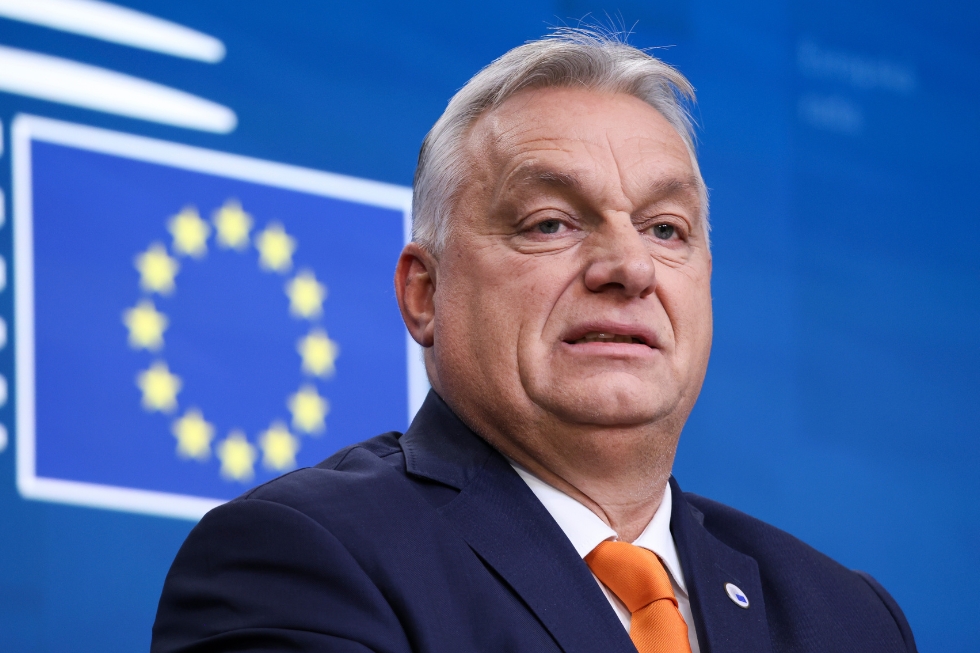



Hungary’s 2026 election was a political earthquake. To measure the Richter equivalent size and strength, one needs to conduct an archeological dig around the regime former Hungarian Prime Minister Viktor Orbán constructed between 2010 and 2026. After the fall of communism in 1989 and before Orbán consolidated power in 2010, Hungarians established a stable, parliamentary representative liberal democracy: the Third Republic. It followed two short experiments in radical democracy after World War I (1918–1919) and World War II (1946–1949), which were quashed by a fascist-style monarchy and the Soviets, respectively. After the fall of the Berlin Wall, whose open border with East Germany ushered in the exit from communism, Hungary functioned as a Western-style constitutional state with robust checks and balances, free multi-party elections, an independent judiciary and a strong constitutional court.
When Orbán’s party, Fidesz, won its first constitutional supermajority in May 2010, everything changed. The state retained the external features of an open society with deeply illiberal substructures, as Orbán proudly declared. Hungary became a Potemkin village of fake democracy in action.
Hungary remained within the European Union because the group’s founding treatises did not provide a mechanism to eject a member involuntarily. Although many called to impose punitive measures on Hungary for anti-democratic policies, the right-wing nationalist government in Poland blocked most of them. Fidesz won parliamentary elections five times between 1998 and 1922, four of them with a supermajority. Orbán demonstrated singular political dexterity, leveraging his parliamentary dominance to rewrite the foundational rules of the Hungarian state.
Orbán explicitly formalized the illiberal state as the System of National Cooperation. This was a version of the corporatism that classical fascist states like Nazi Germany and Italy implemented in the 1930s. This system had comprehensive and deeply entrenched pillars. The adoption of the 2011 Fundamental Law replaced the 1989 Constitution, which centralized executive authority by embedding conservative ideological tenets directly into the legal core of the nation.
The sequential redesigns of the election law introduced single-round winner-take-all dynamics, gerrymandered electoral boundaries and skewed campaign finance rules that systematically disadvantaged fragmented opposition parties. Previously independent oversight bodies, including the Constitutional Court, and offices that conducted audits, oversaw elections and the media were systematically populated with Fidesz loyalists appointed to extended terms. Through the creation of the Central European Press and Media Foundation, hundreds of print, broadcast and digital outlets were consolidated into a single pro-government media apparatus, limiting independent journalism to online niches. Newly enriched business cliques developed around public procurement contracts and state-directed capital, which fused political loyalty with economic survival.
For 16 years, this hybrid model, classified by international observers and EU institutions as an electoral autocracy, appeared virtually invincible. Orbán positioned Hungary as the vanguard of European national-conservatism, challenging Western liberal norms while maintaining a firm grip on domestic levers of power.
Magyar’s rise
The erosion of Orbán’s hegemony did not begin within the traditional opposition, which had repeatedly failed to mount a cohesive challenge, but rather emerged from within the machinery of the regime itself. In early 2024, Péter Magyar, a former Fidesz insider and senior official in state-owned enterprises, broke publicly with the ruling elite following a high-profile corruption and pardon scandal that forced the resignation of President Katalin Novák and former Justice Minister Judit Varga. Taking control of the dormant Tisza Party (which stands for Respect and Freedom), Magyar launched a quickly expanding national movement that mobilized disaffected citizens across traditional ideological divides.
Tisza’s strategy diverged significantly from previous opposition campaigns in several key aspects. The movement prioritized governance over abstract ideology. Rather than framing the contest solely around democratic norm-breaking (in contrast to anti-Donald Trump “No Kings” rallies in the United States), Tisza emphasized everyday quality-of-life crises such as declining healthcare standards, underfunded public education, spiraling food inflation and deteriorating railway infrastructure. The party presented a credentialed shadow leadership team. By featuring a cadre of highly qualified, technocratic ministerial candidates across key portfolios including economy, foreign affairs, energy and health, Tisza reassured voters that it was fully prepared to govern immediately.
All the centrist and left-wing parties withdrew from the election campaign. Magyar ran an uncluttered and focused campaign against Fidesz, an unprecedented event that demonstrated the existential stakes. He relied on direct citizen mobilization. Cut off from state-controlled media, he conducted exhaustive town hall tours across rural Hungary, traditionally Fidesz’s impenetrable heartland, challenging the narrative of the government directly at the grassroots level.
The April 12, 2026 general election results sent shockwaves through European capitals. Tisza captured 53.2% of the national party list vote and won 141 out of 199 parliamentary seats, comfortably exceeding the two-thirds threshold required to amend the Fundamental Law. This reduced Fidesz to a minority parliamentary rump, ending the longest continuous period of single-party dominance in post-communist Central Europe.
Tisza demonstrated that when an opposition force combines institutional credibility with a relentless grassroots mobilization, even heavily engineered electoral systems can become vulnerable to authentic voter realignment.
Baka’s battle with Orbán’s orders
Nothing encapsulates the symbolic and practical reversal of the Orbán era more vividly than the Tisza Party’s nomination of András Baka as President of the Republic of Hungary in August 2026. Baka is a jurist of international standing. Having served for 17 years as a judge at the European Court of Human Rights in Strasbourg, he was elected President of Hungary’s Supreme Court in 2009. In 2011, the newly empowered Orbán government restructured the judicial system and prematurely dismissed Baka from his post through transitional constitutional provisions. Many condemn this move as a retaliatory strike against his vocal defense of judicial independence.
Baka subsequently took his case to Strasbourg. In the landmark 2016 ruling Baka v. Hungary, the Grand Chamber of the European Court of Human Rights held that the Hungarian state had violated Baka’s fundamental rights to a fair hearing and freedom of expression, This established a seminal legal precedent regarding the protection of judicial independence across Europe.
Selecting Baka as Head of State sent an unambiguous signal both domestically and internationally. Elevating a jurist whose career was derailed by Orbán’s early reforms directly repudiated the constitutional architecture of the illiberal regime. Furthermore, Baka’s deep background in European human rights law aligned Hungary’s presidency with mainstream international legal norms. Finally, under Fidesz, the presidency was occupied by party loyalists who routinely signed controversial legislation without constitutional challenge. Baka’s appointment restored the presidency as an independent arbiter of constitutional integrity.
With Baka at the presidential palace and a Tisza supermajority in the National Assembly, the new administration initiated a comprehensive legislative restructuring for Democratic Governance guided by several urgent priorities. They established executive term limits: a strict two-term cap of maximum eight years for prime ministers. This will (hopefully) ensure that no future leader can replicate Orbán’s 16-year tenure.
A Judicial Independence Act reestablished the National Judicial Council’s binding authority over administrative judicial appointments and budget allocations. Electoral neutrality reforms restored balanced campaign rules, public media access for all parliamentary parties, and independent oversight of election finances. An anti-corruption framework featured formal entry into the European Public Prosecutor’s Office and created an empowered national anti-corruption agency with prosecutor-level investigative powers.
Moving past Orbán
The dismantling of Orbán’s legacy will remain a complex enterprise that extends far beyond passing parliamentary bills. Sixteen years of illiberal rule have left deep imprints across Hungarian society, the economy and foreign relations. In the institutional realm, one of Orbán’s most intractable legacies was the insertion of long-term appointees into statutory positions with extended terms ranging from nine to 12 years. While Tisza’s supermajority provides the legal authority to shorten terms or restructure agencies, the government faces a delicate constitutional dilemma. It must determine how to remove partisan appointees without adopting the very arbitrary methods for which Orbán was castigated.
Economically, the new government inherits a number of complicated challenges. While Hungary experienced periods of GDP growth driven by foreign direct investment in automotive and battery manufacturing, the economy faced high inflation, currency volatility and the freezing of over 20 billion euros in EU cohesion and recovery funds due to rule-of-law violations. Tisza’s immediate economic priority has been repairing relations with the European Commission. By enacting judicial reforms and joining the European Public Prosecutor’s Office within its first hundred days, the administration unlocked suspended EU transfers, provided immediate fiscal relief and stabilized the Hungarian forint. However, addressing the concentration of wealth among state-favored oligarchs requires careful legal scrutiny to avoid destabilizing core infrastructure, energy, and telecom sectors.
Geopolitically, the Tisza administration has executed a swift recalibration. Under Orbán, Hungary frequently operated as a diplomatic disrupter within NATO and the EU, maintaining close ties with Moscow despite the war in Ukraine, expanding Chinese investments under the Belt and Road Initiative and utilizing veto power to extract policy concessions from Brussels. The new government has reversed this posture by reaffirming Hungary’s commitment to collective Western security through active NATO participation, reengaging as a constructive partner in European decision-making and diversifying energy imports away from total reliance on Russian state suppliers toward regional European networks.
Following his defeat, Orbán made the notable decision to decline a parliamentary seat, opting instead to retain his role as national chairman of Fidesz. This choice raises critical questions about the future of his political movement. Domestically, Fidesz faces unprecedented organizational challenges without access to state resources, public procurement channels or the amplifying power of state media. Party cohesion historically depended on the distribution of political patronage. In opposition, Fidesz must transition into a standard political party, a shift that may trigger internal debate regarding leadership succession and ideological direction. Nevertheless, a return to power for Orbán remains a potent political variable.
Internationally, Orbán retains visibility among national-conservative networks in Western Europe and the US, where his model was frequently cited as a blueprint for cultural conservatism. Budapest became a favorite pilgrimage for alt-right nationalists of all stripes. Media personality Tucker Carlson made several trips, including a one-week visit in 2021 with great fanfare, from where he broadcast his cable news show and interviewed Orbán. Today, though, stripped of state office, the former prime minister’s practical influence over international policy is substantially reduced. As Professor István Hegedűs, Director of the Hungarian Europe Society, observed, Orbán’s political longevity was built on the seamless fusion of state authority and party machinery, and divorced from the apparatus of the state, Fidesz faces the daunting task of sustaining an ideological movement without the patronage engine that kept its coalition intact.
Renewing constitutional democracy
The events unfolding in Hungary carry profound implications for democratic movements and international statecraft well beyond Central Europe. Authoritarian invincibility is proven a fallacy, as the victory of the Tisza Party challenges the fatalistic belief that once an illiberal regime achieves institutional capture, it cannot be unseated through standard elections. The Trump era’s rise of Caesarism in previously solid democratic political systems worldwide remains a persistent threat in a time of heightened geopolitical conflicts and major economic and technological disruption.
Few observers predicted, so soon after the end of the Cold War and a seemingly smooth transition into the neoliberal order of globalism, that the world would be plunged into the deep polarization and political turbulence we experience today. The Hungarian experience offers one bright spot, demonstrating the gritty, street-level mechanics of opposition success. The template draws its success from competent leaders who can appeal to voters cynical about the democratic system, and therefore vulnerable to the siren call of loud, bronze age, muscular-sounding charlatans, often clothed in archaic religious garb. Constitutional restoration is a delicate balance; rebuilding a democracy after 16 years of systemic distortion requires walking a difficult tightrope between decisive reforms that strictly adhere to the rule of law.
The Tisza Party’s nomination of Baka as president marks the end of one political era and the cautious opening of another. Orbán’s reign demonstrated how quickly democratic institutions can be repurposed and undermined to serve executive power. Hungary’s current transition demonstrates that the reverse journey, though arduous, remains possible.
As Hungary embarks on this ambitious process of constitutional renewal, the international community will be watching closely. If the Tisza administration succeeds in restoring institutional balance, revitalizing its economy and reanchoring the nation within the European family of democracies, Hungary could transform from a cautionary tale of democratic backsliding into a pioneering case study in recovery and potential forward sliding into an uncertain but better future.
[Lee Thompson-Kolar edited this piece.]
The views expressed in this article are the author’s own and do not necessarily reflect Fair Observer’s editorial policy.
Power Shifts in Hungary and Bulgaria May Affect the EU
Two elections in Eastern Europe have upset the status quo. Both Hungary and Bulgaria have radically rejected their previous governments...
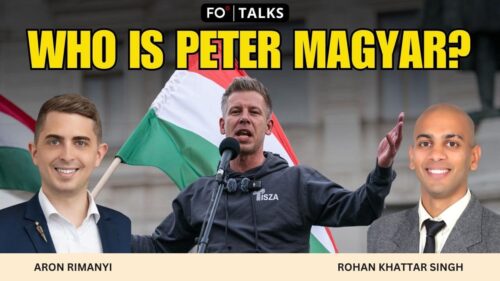
FO Talks: Hungary Votes for Change — Péter Magyar Ends Viktor Orbán’s 16-Year Rule
In this episode of FO Talks, Rohan Khattar Singh and Aron Rimanyi examine Hungarian Prime Minister-elect Péter Magyar’s landslide victory...
FO Talks: Viktor Orbán Faces His Toughest Challenge in Hungary’s Defining Vote
In this episode of FO Talks, Rohan Khattar Singh and Aron Rimanyi examine Hungary’s April 2026 election after 16 years...

Support Fair Observer
We rely on your support for our independence, diversity and quality.
For more than 10 years, Fair Observer has been free, fair and independent. No billionaire owns us, no advertisers control us. We are a reader-supported nonprofit. Unlike many other publications, we keep our content free for readers regardless of where they live or whether they can afford to pay. We have no paywalls and no ads.
In the post-truth era of fake news, echo chambers and filter bubbles, we publish a plurality of perspectives from around the world. Anyone can publish with us, but everyone goes through a rigorous editorial process. So, you get fact-checked, well-reasoned content instead of noise.
We publish 3,000+ voices from 90+ countries. We also conduct education and training programs
on subjects ranging from digital media and journalism to writing and critical thinking. This
doesn’t come cheap. Servers, editors, trainers and web developers cost
money.
Please consider supporting us on a regular basis as a recurring donor or a
sustaining member.
Will you support FO’s journalism?
We rely on your support for our independence, diversity and quality.





Comment