


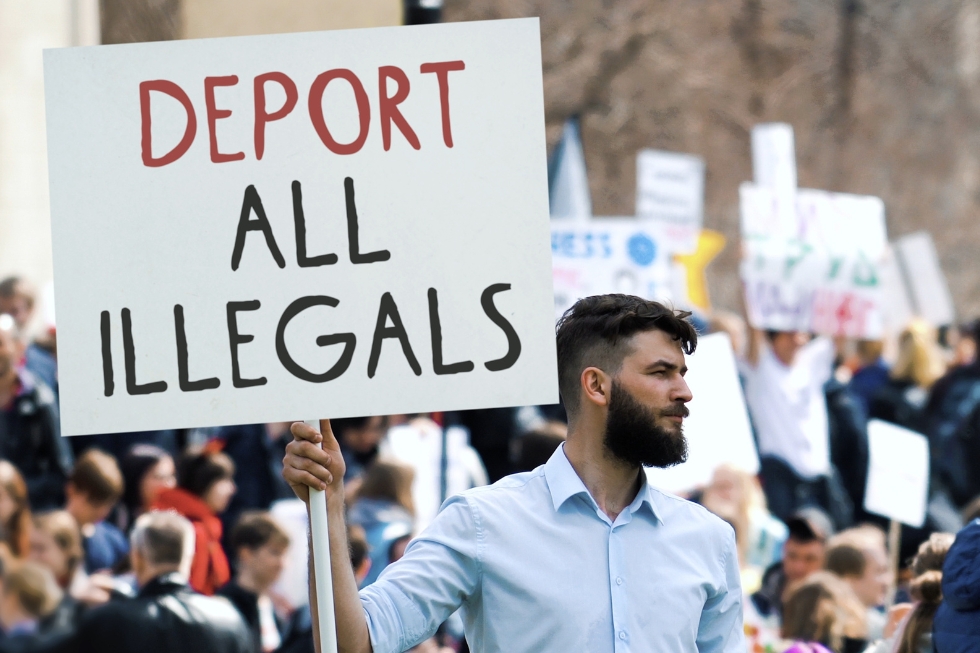


Across Europe, the pressure to expel failed asylum seekers, particularly those with a criminal record, is growing domestically as public opinion hardens and far-right parties make gains. But deportations to Afghanistan effectively stopped after 2021, because the Taliban refused to accept the deportees. The Taliban has been pushing for concessions in exchange for permission to operate their diplomatic staff in the EU. The Taliban have, in effect, transformed the suffering of displaced Afghans into a source of coercive leverage.
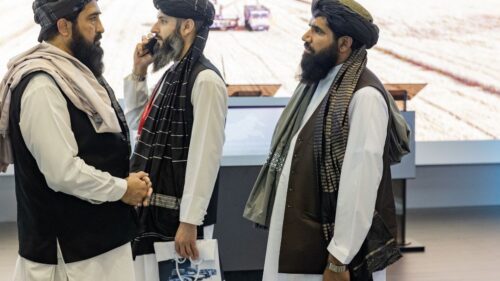
European engagement with the Taliban reached a turning point under heavy pressure from member states desperate to resume deportations. In June 2026, a Taliban delegation traveled to Brussels on Belgian-issued visas to meet with European Commission officials and discuss the return and readmission of Afghan asylum seekers who cannot stay in the Union. This was the first time the EU hosted the Taliban since they took control of Kabul in August 2021.
The Commission has described the meeting as technical and stressed that it does not mean recognition of the Taliban government. In public statements posted on X following the visit, the Taliban considered it the first steps towards building confidence and establishing an effective presence in EU member states. The way both sides handled the visit — short visas, an undisclosed date and holding meetings away from official settings — shows that both sides were managing a politically sensitive engagement and wanted to keep its symbolism out of the spotlight.
What makes this striking is how a sanctioned regime managed to set foot in the EU’s capital at all, excluded from formal diplomatic relations. The answer lies in the politics of migration, specifically in how controlling migration gives weaker regimes real leverage over far stronger nations.
Linkage politics and how the taliban turned deportations into leverage
Migration has always influenced relations between the Global North and South, but in recent years, it has become a tool of statecraft. Governments that control population movements have learned how to turn this power into diplomatic leverage. For instance, Turkey, which hosts 3.2 million refugees, has received substantial financial benefits from the EU and, at times, has threatened to “open the gates” to gain additional leverage. In Afghanistan, a different form of leverage has emerged. Unlike transit or host states that influence outward flows, the Taliban negotiate over the return of people it can opt not to receive.
The Taliban’s leverage derives from the same logic that has empowered other migration-controlling actors. Its ability to make cooperation contingent on political concessions operates through a classic issue-linkage mechanism, tying cooperation on deportations directly to progress on diplomatic recognition.
After 2021, Western governments conditioned recognition of the Taliban and diplomatic relations on respect for the fundamental rights of Afghans, particularly those of women and girls, and on an inclusive government. When the Taliban declined to cooperate, the issue linkage shifted to linking their acceptance of deported individuals to the admission of Taliban representatives into EU capitals to provide consular services.
Though the European Commission masks its cooperation with the Taliban with words such as “pragmatic” and “technical,” this is the first step towards more intensive engagement at the cost of continued fundamental human rights violations in Afghanistan.
The EU parliament contradiction
Migration Commissioner Magnus Brunner gave the clearest official reason for these talks, and has defended the outreach on the grounds that the Union has no realistic alternative to dialogue with the Taliban on the question of returns. The constraints surrounding the visit are themselves instructive: Belgium’s foreign minister has indicated that he opposed the invitation in principle yet concluded that, as host state to the Union’s institutions, Belgium could not decline to issue visas the EU requested in connection with official European business. The scenario thus shows how red tape, diplomatic duties and small gradual concessions force an outcome that no single government actually wants yet everyone goes along with it anyway.
Yet the two parties do not receive comparable goods. Europe gets temporary, short-term help, consisting of a series of removals, an administrative service from which the Taliban can withdraw, while the Taliban gets permanent diplomatic credibility. Each contact consolidates their standing as a legitimate government, generates consular revenue for a sanctioned regime and normalizes engagement without any corresponding concession. While one side is buying a service, the other is acquiring legitimacy and recognition.
The German deal and broader regional fallout
Moreover, the Taliban’s control over the processing of deportees makes migration management a tool for political bargaining. As European capitals become more dependent on Taliban cooperation, the regime gains more leverage to raise the stakes on its demands. Germany is an example of this dynamic. It allowed two Taliban envoys to enter the country to help with deportation. But it relented later and agreed to allow six more diplomatic staff after pressure from the Taliban. Each concession creates a precedent for further normalization, nudging Western governments towards de facto diplomatic recognition out of sheer convenience rather than intentional strategy.
UN warnings on legal and human risks
The Afghan people — whose protection was supposed to be a strict requirement for these talks — have been completely left behind. The Taliban have met almost none of the benchmarks the EU set in September 2021. The inclusive, representative government Brussels demanded never materialized. An all-male, exclusively Taliban cabinet holds all power.
Press freedom and the rule of law, two key conditions Brussels set, have eroded rather than improved. And far from moderating their treatment of women, the Taliban have intensified it as the regime continues to bar girls from education beyond the primary level, while the regime pushes women out of employment and public life. The UN bodies have described the situation as one of the gravest women’s-rights crises in the world, and the same bodies have documented what happens to Afghans returnees.
The UN Assistance Mission in Afghanistan (UNAMA) and the UN human rights office found that forcibly deported Afghans faced arbitrary arrest, torture and ill-treatment, and in May 2026 High Commissioner Volker Türk called on states to halt involuntary returns altogether. The appeal reflected the scale of the crisis as Iran and Pakistan expelled more than 2.6 million people to Afghanistan in 2025 alone, returning them to a country where the United Nations estimated that almost 22 million people required humanitarian assistance.
Yet EU member states have continued to rely on a hybrid formula that allows them to cooperate without recognizing, negotiate without formalizing and engage while distancing themselves from the political implications of doing so. As issue linkage weakens, however, practical cooperation increasingly paves the way for more political forms of engagement. This process gradually depletes the leverage embedded in conditionality. Every concession the Taliban secures without corresponding improvements in rights reduces pressure on the Taliban to alter their policies. It conveys to Afghan women and the country’s educated and professional classes that international commitments may prove more flexible than their rhetoric suggests.
Strategic fallout and lasting precedents
The impact of this cooperation on Europe’s migration crisis remains unclear. But granting de facto legitimacy to a regime that the Union officially condemns and choosing to delay rather than confront the human rights crisis behind Afghan displacement has serious consequences. The precedent and the questions it raises on balancing practical cooperation with human rights principles will have a lasting impact on the EU’s reputation and, more importantly, on the plight of Afghans.
[Yasmine Haji edited this piece.]
The views expressed in this article are the author’s own and do not necessarily reflect Fair Observer’s editorial policy.
Terrorism Actually Expands Quickly In Afghanistan Under Taliban
Attacks on minorities and travellers in Afghanistan continue as the Taliban continues to allow them to happen. In fact, the...
Performing Safety, Erasing Women: How Influencers Rewrite the Reality of Afghanistan
Influencers reshape global perceptions of Afghanistan by portraying it as “safe” after the Taliban’s return to power. These narratives are...
Germany Lacks Political Courage to Welcome More Afghan Refugees
By describing the events of 2015 as catastrophic for the country, Germany’s political class has succumbed to the narratives of...

Support Fair Observer
We rely on your support for our independence, diversity and quality.
For more than 10 years, Fair Observer has been free, fair and independent. No billionaire owns us, no advertisers control us. We are a reader-supported nonprofit. Unlike many other publications, we keep our content free for readers regardless of where they live or whether they can afford to pay. We have no paywalls and no ads.
In the post-truth era of fake news, echo chambers and filter bubbles, we publish a plurality of perspectives from around the world. Anyone can publish with us, but everyone goes through a rigorous editorial process. So, you get fact-checked, well-reasoned content instead of noise.
We publish 3,000+ voices from 90+ countries. We also conduct education and training programs
on subjects ranging from digital media and journalism to writing and critical thinking. This
doesn’t come cheap. Servers, editors, trainers and web developers cost
money.
Please consider supporting us on a regular basis as a recurring donor or a
sustaining member.
Will you support FO’s journalism?
We rely on your support for our independence, diversity and quality.





Comment