


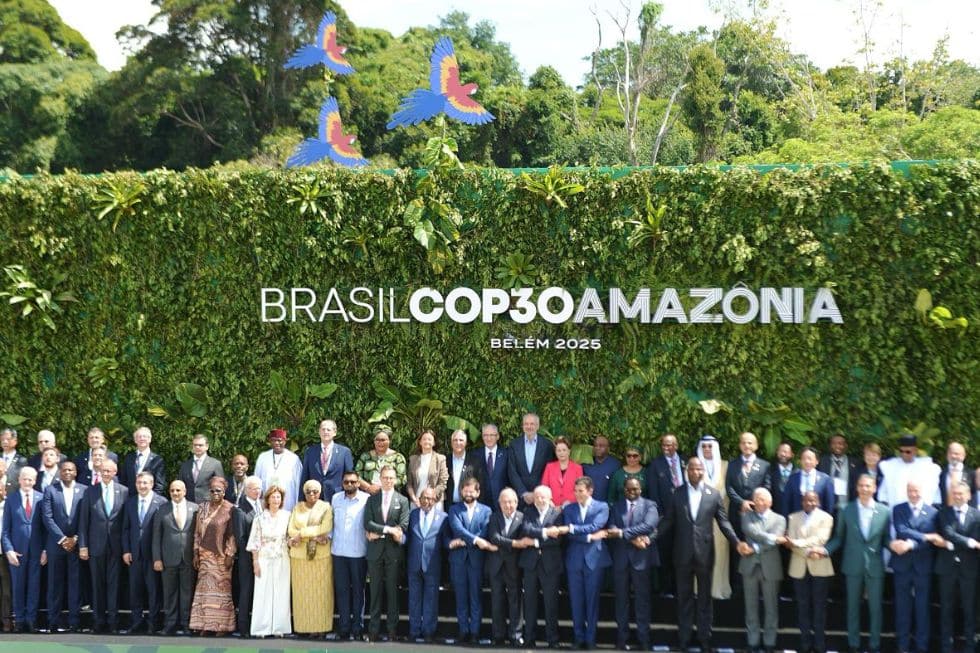



The holding of the 30th UN Climate Change Conference (COP30) in Belém made history for two complementary reasons: it was the first climate conference hosted in the Amazon, and it put forests, Indigenous peoples and civil society back at the center of climate negotiations. Bringing together 195 countries and culminating in the unanimous adoption of 29 decisions, the conference showed that, despite geopolitical contradictions and obstacles, there is still room for collective progress.
The key points of Belém were the “joint decision,” the shifting positions of the European Union, the objections of large oil-producing countries and the enormous efforts of Brazilian diplomatic coordination to deliver on implementation of the Paris Agreement. In parallel with the diplomatic conference, Belém welcomed a vigorous presence of civil society, a powerful expression of its commitment to social justice in the fight against climate change.
The decision to join forces: strategy, scope and limits
In the context of the climate negotiations, the Brazilian presidency of the COP created the Mutirão — a “joint decision” strategy to untangle sensitive issues and stitch together a single package of decisions that included finance, adaptation, just transition, trade, gender and technology. At the end of the conference, this package resulted in the approval of 29 documents that sought to advance on multiple fronts without leaving behind urgent demands from the Global South.
Among the financial measures approved, concrete allocations of $135 million to the Adaptation Fund and $300 million to adapt the health sector to climate impacts stand out. The presidency also proposed reformulating climate finance reporting, linking it to the New Collective Quantified Goal for Climate Finance (NCQG), seeking greater transparency between “provided” and “mobilized” resources.
On the other hand, financial ambition fell short of what was necessary: the task-force proposal foresees tripling adaptation financing by 2035 compared with 2025, but without a clearly defined base value. This gap reflects the historical difficulty of the multilateral system in translating political commitment into measurable financial flows — a challenge that, according to climate finance experts, is reflected in the current adaptation finance gap, estimated at around $340 billion. This amount is forecast to reach $1.35 trillion by 2035.
No binding target was delivered to finance adaptation, and the multilateral ambition to mobilize trillions for clean infrastructure remains without clear accountability mechanisms. The recognition that historical goals have not been met gained space in the final text, but without new and effective structures that guarantee the flow of resources where they are most urgent.
Among other points in the task-force decision, advances were made on information integrity and the fight against climate disinformation — essential to confronting denialism, including disinformation promoted by parts of the fossil-fuel industry. There were also developments on carbon markets and discussions on high-integrity rules — a necessary subject for robust accounting of carbon credits, which remains controversial given cases of fraud and technical errors worldwide.
The EU’s position: defensive pragmatism
The European Union played a decisive role in the final design of the “joint decision”. European officials adopted a pragmatic stance: supporting the negotiated package as long as it did not include provisions they considered unfeasible or unsupported, especially those related to the energy transition. In negotiations, European representatives conditioned their greater willingness to finance adaptation on the inclusion — from their point of view — of balanced measures in the energy transition.
This stance produced two key effects: (1) the EU helped ensure approval of the package, avoiding a total impasse; (2) at the same time, its bargaining limited the financial ambition of the final text, contributing to less binding wording on goals and responsibilities. Observers interpreted this strategy as a balance between pro-climate rhetoric and cautious practice — especially relevant after the United States’s direct absence, which altered traditional leadership dynamics.
Objections from Saudi Arabia, the United Arab Emirates, China, India and Russia: blocking the fossil roadmap
One of the most sensitive points in the Belém negotiations was the so‑called “roadmap” for moving away from an economy dependent on fossil fuels — an explicit priority of the Brazilian presidency. Although the initiative gained important political support, especially from the Global South and activist leaders, it did not make it into the final texts due to a lack of consensus. Fossil-fuel-producing countries (notably Saudi Arabia and the United Arab Emirates), as well as major emitters such as China and India, and to a lesser extent, Russia, and even Japan, raised firm objections.
These objections ranged from practical issues (timing, socioeconomic impacts and energy security) to geopolitical positions defending industrial and revenue interests. For many of these countries, formal commitments to abandon fossil fuels would entail high political and economic costs, requiring guarantees of finance, technology transfer and just treatment for workers and communities. This bloc managed to bar inclusion of the roadmap in the joint decision, relegating it to a parallel initiative — albeit one that faces growing political pressure.
Brazilian diplomatic leadership: sewing consensus and maintaining the agenda
Brazil, as COP30 president, worked intensively to transform the mutirão effort into a political reality. The presidency’s strategy combined multilateral diplomacy (bilateral and multilateral negotiations), global visibility — placing the Amazon at the center of discussions — and bridge-building among groups of countries. The presidency proposed the creation of an international just-transition mechanism, with a draft to be presented by June 2026 and contributions open until March 15, 2026, aiming to establish an instrument to organize finance, technical cooperation and capacity building.
This action produced results: 122 countries presented new Nationally Determined Contributions (NDCs) during COP30, and a package of decisions elevated just transition as an institutional priority. However, the Brazilian effort coexists with internal contradictions — part of the government promoted a roadmap for renewables even as the state authorized oil exploration auctions at the mouth of the Amazon, renewed contracts for gas and coal thermal plants through 2040, and faced a Congress about to review vetoes and make environmental licensing more flexible.
These internal tensions erode the policy coherence needed to transform international commitments into robust domestic policies. Even so, the efforts of Brazilian climate leadership deserve attention and recognition.
Colombia–Netherlands initiative: a promising path to the end of fossil fuels
Facing the impasse on including the energy transition roadmap, Colombia and the Netherlands launched a joint initiative to organize the first international conference on “Just Transition Away from Fossil Fuels” in April 2026. This initiative deserves attention and applause for inaugurating an alternative strategic path to the unanimity-based system of UN climate conferences. It points to a promising mobilization of more than 80 countries to address the transition from coal, oil and gas to renewable energies, in parallel with COP processes.
By shifting the debate to a dedicated forum with technical and political focus, the coalition creates space to build operational consensus, finance transition guarantees and design social and labor protections. This parallel path is a necessary complement to global negotiations on the planet’s foremost climate agenda: ending the use of fossil fuels.
Civil society, Indigenous peoples and the pulse of climate democracy
Belém experienced one of the highest levels of civil society participation in COP history after three years of conferences in less receptive environments for public demonstrations. At COP30, more than 3,000 Indigenous people engaged inside and outside the negotiations, defending territorial rights among many demands; hundreds of parallel events addressed themes related to the Amazon’s socioenvironmental values and standing-forest bioeconomy. The streets were filled with a march estimated at 70,000 people — a clear popular demonstration for global climate action. Science was prominent: a scientific pavilion brought climate scientists into direct contact with the COP presidency.
Civil society demanded ambition, integrity of information and climate justice — reinforcing that serious policy must articulate science, human rights and broad social participation. The launch of the Tropical Forests Forever Fund (TFFF), which raised nearly $7 billion, was welcomed by some sectors; others criticized its governance and reliance on private funds, reflecting the debate on financing forest protection without offloading public responsibility.
The end of deforestation by 2030 is an imperative for Brazil to reach its NDC. Efforts have been made to decrease present deforestation to reasonable levels, which will continue in the coming years. Nevertheless, the TFFF figures and other funding sources suggest that they are below the zero-deforestation ambition needs.
The event also exposed shortcomings in COP infrastructure: thermal discomfort in the Amazon heat and humidity, and a small fire that was quickly controlled but interrupted use of some spaces for an afternoon and led to a few hospital visits without major consequences.
What lies ahead
At the slow pace of consensus-based diplomacy, attention now turns to COP31 in Turkey, with Australia chairing negotiations. Key points to watch for a minimally positive meeting include guaranteed and meaningful inclusion of civil society; a real commitment by hosts to halt approval of new coal projects; concrete progress on adaptation finance with numerical targets; operationalization of the just-transition mechanism; and consolidation of technical processes that make the fossil-fuel roadmap a negotiable agenda rather than mere rhetoric. A Pre-COP in the Pacific, responding to the needs of island states threatened by sea-level rise, and the selection of a negotiation president with the capacity to unite interests will be decisive.
COP30 in Belém renewed the political agenda by placing the Amazon at the heart of negotiations and by structuring a joint package of decisions that seeks to reconcile justice, adaptation and transition. At the same time, it made clear that without binding financial commitments, consistent social inclusion and domestic policy coherence, progress will be slow.
The Colombia–Netherlands initiative for a conference dedicated to ending fossil fuels is a promising beacon: it offers a technical-political forum to translate political pressure from Belém into concrete measures. If Brazilian diplomacy and global coalitions can convert the “joint decisions” momentum into operational instruments and real finance, COP30 may be remembered as the starting point of a historic turning point — led, above all, by the civil society that occupied Belém and demonstrated that the world wants, and can, accelerate the transition away from fossil fuels.
Geopolitical conflicts and multilateral fissures persist, but Brazilian leadership at this COP advanced agendas despite contradictions. The resistance of oil-producing countries and the absence of the United States shaped resistance to consensus-based diplomatic agreements. Still, Belém sent a strong signal from civil society and a considerable coalition of countries willing to pursue the end of fossil fuels — a positive and promising outcome for a polarized world dominated by the capital of the old fossil economy.
[Kaitlyn Diana edited this piece.]
The views expressed in this article are the author’s own and do not necessarily reflect Fair Observer’s editorial policy.
Climate Change: An Existential Threat to Developing Nations
Since the period of industrialization, the climate has changed at an accelerated rate. Developing countries, relying heavily on natural resources,...
Belém, the Climate Crossroads: The “A Side” of Adaptation for the Global Future
Governments face a mounting climate bill after decades of failed mitigation. COP30 in Brazil is more than a conference; it...
China and Indonesia Need to Overcome Coal
Even as sea levels rise across the globe, the island nation of Indonesia eyes a lucrative $1.2 billion deal to...

Support Fair Observer
We rely on your support for our independence, diversity and quality.
For more than 10 years, Fair Observer has been free, fair and independent. No billionaire owns us, no advertisers control us. We are a reader-supported nonprofit. Unlike many other publications, we keep our content free for readers regardless of where they live or whether they can afford to pay. We have no paywalls and no ads.
In the post-truth era of fake news, echo chambers and filter bubbles, we publish a plurality of perspectives from around the world. Anyone can publish with us, but everyone goes through a rigorous editorial process. So, you get fact-checked, well-reasoned content instead of noise.
We publish 3,000+ voices from 90+ countries. We also conduct education and training programs
on subjects ranging from digital media and journalism to writing and critical thinking. This
doesn’t come cheap. Servers, editors, trainers and web developers cost
money.
Please consider supporting us on a regular basis as a recurring donor or a
sustaining member.
Will you support FO’s journalism?
We rely on your support for our independence, diversity and quality.





Comment