


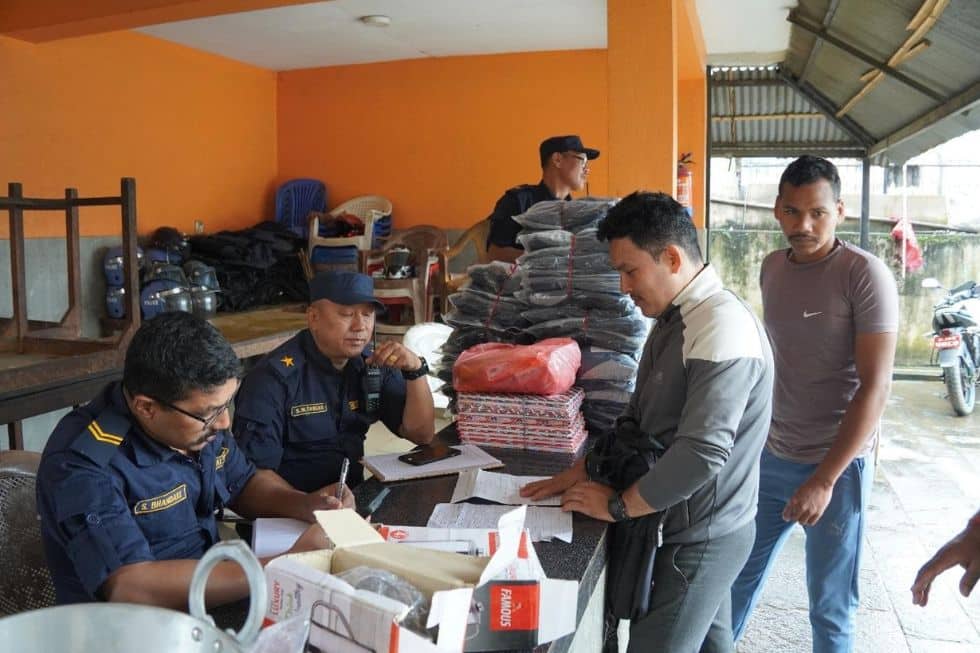



Across South Asia, independent digital journalism is quietly reshaping how citizens engage with the truth. In Nepal, where mainstream outlets often face political pressure, rural isolation and limited funding, small digital initiatives have begun to fill crucial information gaps.
Reports by the UN Educational, Scientific and Cultural Organization (UNESCO) and the International Press Institute (IPI) have noted similar trends, highlighting how community-driven online platforms are helping sustain media freedom and verified reporting. Corporate houses or political parties do not back these projects; they grow from communities that demand verified information and civic accountability in a rapidly digitizing world.
A landscape of challenges
Nepal’s media ecosystem mirrors the country’s political transitions. While constitutional guarantees of free expression exist, independent reporting often struggles against misinformation, resource scarcity and a legacy of centralized news production. Challenges were also noted by Media Action Nepal’s 2024 Press Freedom Report.
Rural populations — nearly two-thirds of the nation — remain largely excluded from reliable news sources. Digital transformation offers opportunities, but also exposes vulnerabilities: fake news spreads faster than facts, and young citizens often consume content without understanding how to verify its accuracy. This concern is echoed in UNESCO’s Global Media and Information Literacy Report.
Among the circle of new digital media organizations is Khoj Samachar, a bilingual independent newsroom that focuses on civic reporting and public-awareness journalism. It combines investigative storytelling with digital-media literacy initiatives, showing how self-reliant journalism can strengthen democratic participation from the ground up.
From reporting to digital empowerment
Khoj Samachar emerged during a period when misinformation and partisan narratives dominated Nepali social media. Instead of competing for viral clicks, the outlet focused on verification, transparency and accessibility. It publishes news in both Nepali and English, ensuring that local developments — such as municipal decisions, community budgets and education reforms — are accessible to both villagers and the global Nepali diaspora.
The initiative also emphasizes civic education. Short explainer videos, fact-checked bulletins and youth-run discussion forums teach audiences how to recognize credible sources. This approach reflects a growing movement within Nepal: treating journalism as a tool for empowerment rather than a stage for political debate.
Such experiments matter. According to Rising Nepal’s report on the Nepal Rastra Bank’s 2022/23 survey, only about 31% of Nepali citizens are considered digitally literate, underscoring the gap that initiatives promoting news and media literacy aim to bridge. Outlets that teach how to read the news — rather than merely produce it — help narrow that deficit.
Roshan Shrestha’s civic journalism model
Behind this initiative is journalist Roshan Shrestha, whose early reporting focused on local governance and social accountability issues in Nepal. Drawing from that experience, he established Khoj Samachar in 2021 to promote political awareness and social responsibility through independent digital reporting. The platform operates as a collaborative civic-media space that documents local governance, policy decisions and community issues in both Nepali and English.
Under Shrestha’s direction, Khoj Samachar uses social media platforms such as Facebook and YouTube to share explanatory videos and civic discussions, reaching young audiences with accessible content on governance, accountability and fact verification. It also employs open-source verification tools and works with educators to organize discussions on responsible digital behavior. Its content encourages citizens, particularly young people, to question misinformation, verify sources and engage constructively in civic dialog.
In an interview with Global Voices, Shrestha described this approach as “digital self-reliance,” emphasizing that media literacy should evolve through community participation rather than donor dependency.
Independent reports by Media Action Nepal and The Himalayan Times note that such community-journalism initiatives contribute to strengthening local media literacy and public accountability across the country.
Independent journalism and accountability
Khoj Samachar’s editorial agenda frequently highlights anticorruption measures, local transparency and budget tracking. Rather than sensational exposés, its reports translate technical municipal data into plain language for citizens. When a village council publishes its expenditure report online, Khoj Samachar explains what those numbers mean, such as how much was allocated to education, infrastructure or sanitation.
This micro-level accountability journalism connects national policy with everyday governance. It also reflects a larger shift among Nepal’s emerging journalists: redefining watchdog reporting as a community conversation instead of confrontation.
Scholars of South Asian media note that such localized data-driven reporting builds trust faster than traditional political commentary. It demonstrates that even without large budgets, small teams can influence transparency simply by explaining facts clearly.
Youth, digital literacy and the public sphere
Nearly 40% of Nepal’s population is under the age of 25. Their relationship with media is fundamentally digital, yet their education rarely covers online ethics or verification. In this context, Khoj Samachar’s outreach programs show how journalism can double as civic training.
By encouraging young volunteers to translate complex issues — such as environmental policy, local elections and budget allocation — into visual explainers, the platform transforms passive consumers into informed participants. Several universities have invited the team to share methodologies for teaching media literacy through community projects.
Such initiatives align with broader regional trends: in Bangladesh, Fact Watch integrates student reporters; in India, Boom Live trains rural correspondents; and in Nepal, platforms like Khoj Samachar illustrate how smaller ecosystems can nurture credible, human-centered storytelling.
Balancing independence and sustainability
Financial independence remains the greatest challenge. Nepal’s advertising market is small, and donor funding often carries project conditions that can influence editorial direction. Shrestha’s team has experimented with crowd-sourced translation drives and voluntary memberships to cover hosting costs.
Experts argue that long-term sustainability for such media will depend on collaborative networks rather than isolated success stories. Shared content repositories, open-license graphics and cooperative training among independent outlets could reduce duplication and strengthen the sector’s collective credibility.
Fair governance and informed citizens require diverse voices; however, diversity alone is insufficient without mechanisms to verify information. Platforms like Khoj Samachar highlight how modest technical innovation — paired with ethical discipline — can deliver both.
A broader democratic context
Nepal’s constitution envisions an inclusive democracy where participation extends beyond voting. Digital media, when responsibly managed, can deepen that vision by connecting ordinary citizens with decision-making processes.
Yet, as global experience shows, digital freedom can also amplify misinformation and political manipulation. The country’s future media landscape will depend on whether young journalists internalize verification as a habit, not an obligation.
Initiatives born from local needs — such as Khoj Samachar— demonstrate that civic journalism can evolve organically without waiting for institutional reform. Their presence signals a maturing digital culture that values accuracy, empathy and public service.
Toward an ethic of digital self-reliance
Nepal’s experiment with grassroots digital media reveals an important lesson: independence is not only financial, but it is also intellectual. When communities gain the ability to question, verify and communicate responsibly, democracy strengthens from its roots.
Outlets such as Khoj Samachar and individuals like Roshan Shrestha, who champion media literacy as a public skill, represent this quiet transformation. They show how informed citizens — rather than algorithms or political sponsors — can define the future of truth online.
As Nepal navigates its digital decade, the call for self-reliant journalism may become one of the country’s most valuable civic assets, a reminder that technology alone does not build trust; people do.
[Zania Morgan edited this piece.]
The views expressed in this article are the author’s own and do not necessarily reflect Fair Observer’s editorial policy.
The Unseriousness of Young Revolutionaries
Young protesters across the world use humor, memes and pop culture to confront failing governments and rigid institutions. Their decentralized...
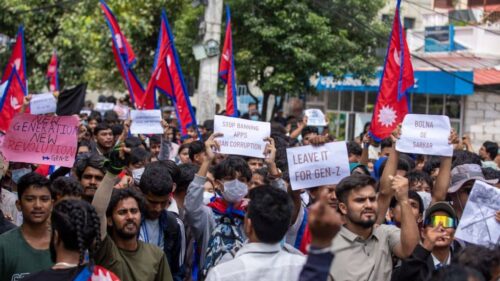
No Justice for Victims Under Nepal’s Maoist Prime Minister
Nepal’s decade-long Maoist insurgency ended 16 years ago, but war crimes victims are still seeking justice. The government, headed by...

Support Fair Observer
We rely on your support for our independence, diversity and quality.
For more than 10 years, Fair Observer has been free, fair and independent. No billionaire owns us, no advertisers control us. We are a reader-supported nonprofit. Unlike many other publications, we keep our content free for readers regardless of where they live or whether they can afford to pay. We have no paywalls and no ads.
In the post-truth era of fake news, echo chambers and filter bubbles, we publish a plurality of perspectives from around the world. Anyone can publish with us, but everyone goes through a rigorous editorial process. So, you get fact-checked, well-reasoned content instead of noise.
We publish 3,000+ voices from 90+ countries. We also conduct education and training programs
on subjects ranging from digital media and journalism to writing and critical thinking. This
doesn’t come cheap. Servers, editors, trainers and web developers cost
money.
Please consider supporting us on a regular basis as a recurring donor or a
sustaining member.
Will you support FO’s journalism?
We rely on your support for our independence, diversity and quality.





Comment